 Apache County Land Services
Septic Systems • Septic Installation • Rural Wastewater • Site Development
Connect With Local Septic Professionals
(928) 543-6447
Apache County Land Services
Septic Systems • Septic Installation • Rural Wastewater • Site Development
Connect With Local Septic Professionals
(928) 543-6447⭐ Septic System Installation • Rural Septic Systems • Septic Site Planning • Wastewater Systems • Septic Services Across Apache County Arizona
Need a septic system for your rural property? Apache County Land Services connects property owners with experienced septic system installation and wastewater professionals for homes, cabins, ranches, manufactured homes, livestock properties, and off-grid developments throughout Apache County. Get connected for new septic system installation, septic site planning, septic tank and drainfield systems, rural wastewater solutions, and related excavation and site work based on your property's location, soil and site conditions, intended use, access, and development plans.
Connecting property owners with septic professionals serving St. Johns, Concho, Vernon, Sanders, Springerville, Eagar, Alpine, Greer, Nutrioso, McNary, Ganado, Window Rock, and surrounding Apache County communities.
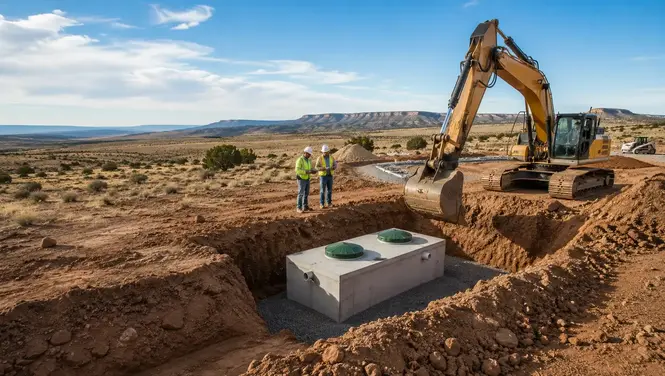
A septic system is an onsite wastewater treatment system designed to handle wastewater where a public sewer connection is not available. For a rural Apache County property, installing the system is only one part of the process. The property first needs to be evaluated to determine how wastewater can be treated and dispersed while fitting within the site's other development constraints.
A typical residential septic project may involve site evaluation, wastewater system design, permitting, septic tank installation, distribution components, drainfield or dispersal-area construction, wastewater piping, excavation, inspection, and final site restoration. The exact components depend on the approved system and the conditions found on the property.
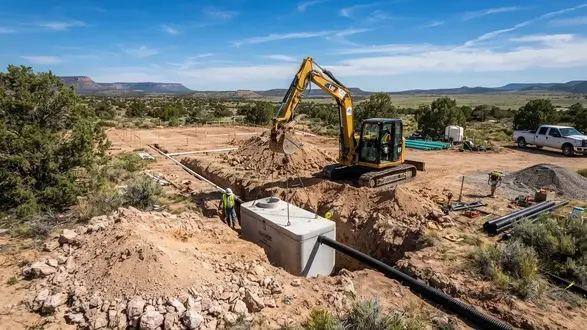
Rural septic installation involves coordinated excavation, septic tank placement, wastewater piping, and construction of the approved dispersal system.
Septic planning in Apache County cannot be reduced to choosing an open area and installing a tank. Properties throughout the county can have very different combinations of elevation, slope, rock, soil, vegetation, drainage patterns, access conditions, groundwater considerations, and available building area. Those differences can affect where an onsite wastewater system can be located and how it needs to be constructed.
Excavation conditions matter because septic installation requires excavation for tanks, wastewater piping, distribution components, and the approved dispersal system. Hard rock, volcanic material, coarse soils, shallow soil, or buried obstructions can increase excavation difficulty and affect equipment requirements.
A sloped parcel is not automatically unsuitable for septic, but elevation changes can influence the relationship between the house, septic tank, dispersal area, wastewater piping, driveway, and other improvements. A site that looks spacious from the road may have substantially less usable area once slope and required separation areas are taken into account.
Septic installation equipment needs to reach the work area. Narrow gates, rough roads, steep approaches, soft ground, seasonal snow, vegetation, and limited staging areas can turn an otherwise straightforward installation into a more complicated construction project.
Natural drainage needs to be considered before choosing a wastewater area. Water moving across the property, washes, low areas, and seasonal runoff can affect both construction access and the long-term layout of the site.
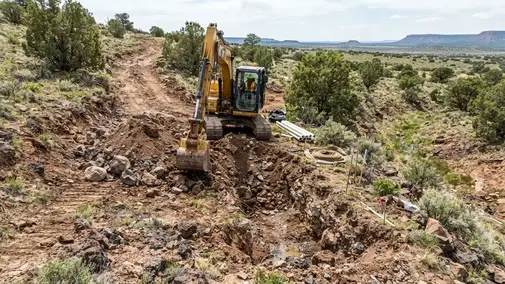
Rocky ground, slopes, drainage, vegetation, and limited access can all influence septic installation planning on rural Apache County properties.
Landowners purchasing undeveloped Apache County property should think about septic placement before major site work begins. On raw land, the future wastewater system has to fit within the same limited usable area as the house, private well, driveway, utilities, drainage, outbuildings, and other improvements. Planning these elements together can help prevent expensive conflicts later in the development process.
Start by determining whether the property will support a full-time residence, seasonal cabin, manufactured home, ranch residence, recreational property, or another permitted use. Expected occupancy and wastewater use can influence the appropriate system planning.
Establish the likely location of the future house, cabin, or manufactured home before selecting a septic area. The building site, wastewater system, private well, driveway, and utilities need to work together rather than being planned independently.
If the property will use a private well, identify potential well locations early. The relationship between the water supply and onsite wastewater system can affect how much usable land remains for the overall development layout.
The potential septic area should be evaluated for soil and subsurface conditions, topography, drainage, groundwater considerations, available space, access, and applicable separation requirements. An apparently open portion of the property may not necessarily be suitable for wastewater dispersal.
Establish the primary driveway and construction access before finalizing the site layout. Rural septic installation requires equipment access, and the driveway should be coordinated with the house, well, septic system, drainage features, and future improvements.
Plan electrical service, water lines, communications, and other underground underground utility routes in relation to the proposed septic system. Establishing utility corridors early can reduce the likelihood of later excavation through completed wastewater infrastructure or other finished improvements.
Review slopes, washes, low areas, seasonal runoff, and natural drainage patterns before committing to the wastewater layout. Apache County properties can have significant elevation and drainage differences, particularly across larger or undeveloped parcels, which may require careful grading and drainage planning.
Consider future garages, shops, barns, additions, cabins, storage buildings, livestock areas, and other planned improvements before using available land for the initial development. Reserving future building areas can prevent conflicts with the septic tank and dispersal area later.
Once the overall property layout is understood, the appropriate septic professional can evaluate the site and establish the wastewater system according to applicable Arizona requirements. The approved design and permitting process should determine the final system configuration and location.
Construction should be coordinated around the approved septic layout and the rest of the property development plan. Excavation, grading, driveway construction, well installation, utility trenching, septic installation, and house-pad work should be sequenced so completed improvements are not unnecessarily disturbed.
One of the biggest planning mistakes on raw rural property is choosing the house, driveway, and other improvements first and then trying to fit the septic system into whatever space remains. A parcel can appear to have abundant open ground while having considerably less usable wastewater area after terrain, soil conditions, drainage, the private well, property boundaries, and required separation areas are considered.
A better approach is to treat the septic system as one of the property's core infrastructure components from the beginning. The future home, well, septic area, driveway, utilities, drainage, and additional improvements should be considered together as part of an overall rural land development plan before major construction changes the property.
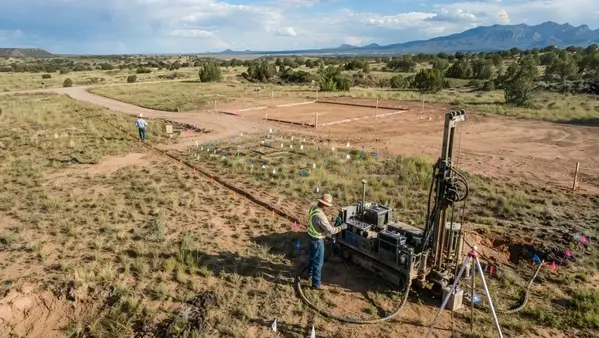
Septic planning on raw land should be coordinated with the future home, private well, driveway, utilities, drainage, and other property improvements.
If you're starting with undeveloped acreage, septic planning should happen before the house pad, driveway, private well, utilities, and other major improvements are finalized. We can connect you with septic and rural property development professionals who can help evaluate how the wastewater system should fit into the larger site plan and determine the appropriate next steps for your property.
Call (928) 543-6447Rural properties frequently need both a private water source and an onsite wastewater system. That makes well and septic planning a site-layout problem as much as a plumbing problem. Both systems need appropriate locations, and the usable portion of the property can become surprisingly constrained once the house, driveway, slopes, drainage, utilities, and required separation areas are included.
A well should not simply be drilled wherever the drilling rig can reach, and a septic system should not automatically be placed in whatever open area remains afterward. The two systems should be considered together with the future building location and the rest of the property infrastructure.
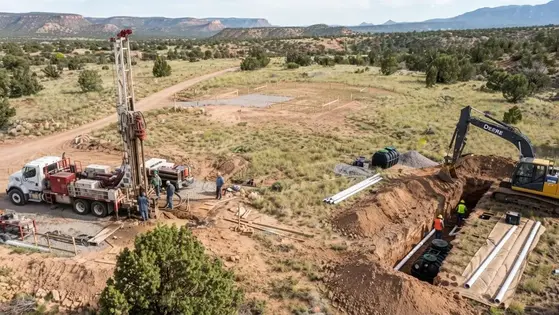
Private wells and onsite wastewater systems should be planned together with the future home, access routes, utilities, and available usable area.
A septic system becomes much easier to build when it is treated as part of the property's overall infrastructure plan. On rural Apache County land, the wastewater system may need to coexist with a house pad, driveway, private well, utility trenches, drainage features, solar equipment, barns, shops, fencing, and future additions.
Establish the future building area before committing to the wastewater layout. The septic tank, dispersal area, wastewater piping, and required separation areas should be considered in relation to the planned house, cabin, or manufactured-home location.
Preserve equipment access while avoiding conflicts with the septic tank and dispersal area. Driveway construction, future road improvements, and equipment routes should be considered before the wastewater area is established.
Coordinate the private private water source and wastewater system from the beginning. Well location, septic location, future water lines, property layout, and applicable separation requirements should be considered together rather than planning each system independently.
Plan electrical, communications, and water-line routes around the approved septic area. Coordinating underground utilities before excavation can help reduce conflicts with the septic tank, wastewater piping, dispersal area, and future construction.
Avoid creating grading or runoff conditions conditions that interfere with the wastewater area. Existing drainage patterns, washes, low areas, seasonal runoff, and future drainage improvements should be considered when planning the overall property layout.
Reserve space for shops, garages, barns, cabins, additions, and other improvements. Treating the septic area as part of the long-term off-grid property development plan can help prevent future construction from creating conflicts with the wastewater system or its required usable and reserve areas.
On raw Apache County property, the septic system should not be treated as an isolated installation that gets added after the driveway, house pad, well, utilities, and other improvements are already complete. The wastewater area can influence how the rest of the property is organized.
Planning these components together can help reduce the possibility of having to relocate infrastructure, cross completed improvements with new utility trenches, or disturb finished areas because the original septic location was not considered early enough.
For rural property development in Apache County, septic planning works best when it is coordinated with the house site, private well, driveway, utilities, drainage, and future improvements before major excavation and construction begin.
Not every rural property will use the same type of onsite wastewater system. A conventional septic configuration may be appropriate when the site's conditions and approved design support it, while other properties may require or benefit from an alternative system. The correct choice should come from the property's site evaluation, wastewater flow, soil and site conditions, available area, and applicable Arizona requirements.
Conventional systems commonly use a septic tank followed by a soil-based dispersal system. They can be appropriate for qualifying residential properties when site conditions and the approved design support that configuration.
Some properties require a different treatment or dispersal approach because of site limitations, wastewater characteristics, available area, or other project requirements. Alternative systems can involve additional components and design considerations.
The important question is not simply which septic system has the lowest initial cost. The system needs to fit the property's actual site conditions, intended wastewater use, available area, and applicable requirements.
Selecting the wastewater system after the property has been properly evaluated can help reduce the possibility of redesign, relocation, or construction changes later. On raw rural land, septic planning should also account for the future house, private well, driveway, utilities, drainage, and other planned improvements.
Septic system selection should be based on the individual Apache County property and the applicable approved design rather than assuming that every rural parcel can use the same wastewater configuration.
A private septic system treats and disperses household wastewater on the property rather than sending it to a municipal sewer system. While the exact configuration depends on the approved design and site conditions, most onsite wastewater systems include a septic tank, wastewater piping, and a soil-based or alternative dispersal system.
Understanding how these components work together helps rural property owners understand why septic planning involves more than choosing a tank location. The tank, wastewater piping, dispersal area, access, surrounding soil, drainage, private well, and future development all need to work together as part of the property's overall infrastructure.
Wastewater from toilets, sinks, showers, laundry, and other household fixtures flows through the property's wastewater plumbing toward the septic tank. The system is designed around the expected wastewater use of the property.
The septic tank provides a controlled location where wastewater is held and separated. Solids settle while lighter materials remain near the surface, allowing clarified effluent to continue toward the approved dispersal portion of the system.
Depending on the approved system, wastewater moves from the septic tank through distribution piping or other components toward the designated treatment and dispersal area. The layout must follow the approved design for the property.
The dispersal area provides the location where treated effluent is distributed into the soil or through an approved alternative treatment or dispersal system. Soil and site conditions are important considerations when establishing this area.
In soil-based systems, the surrounding soil provides an important part of the treatment process as wastewater moves through the subsurface. Soil characteristics and restrictive conditions therefore matter when determining whether a proposed area is suitable.
The completed system also needs practical access for inspection, pumping, maintenance, and future service. The septic area should remain protected from construction, heavy traffic, drainage changes, and other activities that could interfere with its operation.
Unlike a municipal sewer connection, an onsite wastewater system depends on infrastructure located on the property itself. That makes the available wastewater area, soil conditions, terrain, drainage, access, and relationship to the private well important parts of rural septic planning.
Septic system capacity is not determined by property acreage alone. The wastewater system needs to be appropriate for the expected use of the property, the proposed residence or structure, wastewater flow, site conditions, and applicable design requirements.
For residential properties, the planned number of bedrooms can be an important factor in determining expected wastewater demand. Other characteristics of the development may also need to be considered, particularly when a property includes cabins, additional structures, unusual wastewater sources, or uses beyond a typical single-family residence.
The planned number of bedrooms can help establish the expected residential wastewater demand used when determining the appropriate system design and capacity.
A full-time rural home may have different wastewater demands than a small seasonal property. The proposed use should be established before the system is designed.
Cabins and recreational properties still require an appropriately planned wastewater system. Seasonal occupancy does not eliminate the need to evaluate the proposed use and site conditions.
A manufactured home needs its wastewater system coordinated with the home's planned location, water source, access, utility routes, and other permanent site improvements.
Shops, cabins, guest spaces, or other structures may affect property planning when they create additional wastewater needs or require future infrastructure around the approved septic area.
The system ultimately needs to accommodate the expected wastewater flow for the approved use. Capacity should therefore be based on the actual project rather than simply choosing the largest or least expensive tank available.
Larger rural properties can have uses beyond a standard residence. Household wastewater and other potential wastewater sources should be evaluated appropriately rather than assuming every use can share a residential system.
The system must fit within the portion of the property that can appropriately support the approved wastewater design while maintaining required separation and protecting the area for future use.
The final system configuration should be based on the property's actual conditions, proposed use, site evaluation, design requirements, and applicable Arizona wastewater regulations.
There is no single septic tank size that is correct for every Apache County property. A three-bedroom home, seasonal cabin, manufactured home, and larger rural residence may have different wastewater requirements. The appropriate system should be determined from the proposed use and the property's approved wastewater design rather than from acreage alone.
A septic system cannot be properly planned by looking at acreage alone. The useful question is how much of the property can actually accommodate the wastewater system after the site's physical and regulatory constraints are considered.
The septic drainfield or approved dispersal area should not simply be placed in the largest open portion of a rural property. Its location needs to work with the site's physical conditions, required separation areas, wastewater design, access, drainage, private well, and long-term development plans.
This is especially important on undeveloped Apache County acreage. A location that appears convenient from the road may later conflict with a house pad, driveway, well, utility trench, drainage improvement, shop, barn, or other planned construction.
The proposed dispersal area needs to be evaluated based on the site's soil and subsurface characteristics. Rock, restrictive layers, and other ground conditions can affect the available wastewater area.
Slopes and elevation changes can influence wastewater piping, tank placement, dispersal layout, construction access, and the relationship between the home and the wastewater area.
Properties using a private well need the water source and wastewater system coordinated with applicable separation requirements and the overall development layout.
Natural drainage, washes, runoff, and low areas should be considered when planning the wastewater area so future grading and surface water movement do not create conflicts.
The septic tank and dispersal area need practical construction and maintenance access. Driveways and access routes should be planned without unnecessarily restricting the wastewater area.
Electrical, communications, water lines, and other underground utilities should be routed with the approved septic area in mind to reduce future conflicts and unnecessary excavation.
The wastewater area should be protected from future homes, additions, garages, shops, barns, driveways, and other improvements that could interfere with its operation.
Applicable separation requirements can reduce the portion of a parcel that is practically available for the wastewater system. These constraints should be considered before the property layout is finalized.
An apparently open area may not be appropriate once soil, slope, drainage, well location, access, required separations, and future development are considered. The wastewater area should be established through the applicable site evaluation and approved design rather than simply selecting the most convenient open ground.
Septic installation in Apache County is more than an excavation project. A rural property without public sewer service may require an approved onsite wastewater treatment system, and the project needs to follow the applicable Arizona onsite wastewater requirements, county permitting procedures, system design requirements, construction requirements, inspections, and final discharge authorization.
Arizona's onsite wastewater program is administered by the Arizona Department of Environmental Quality (ADEQ), with permitting authority delegated to Arizona's counties. For an Apache County property, the appropriate application and supporting documentation should be submitted through the applicable county permitting process. Property owners can review the current Arizona ADEQ onsite wastewater and septic system requirements before beginning the project.
The exact septic permitting process depends on the proposed wastewater system, property conditions, wastewater flow, site limitations, and applicable requirements. A typical rural residential septic project may move through several stages before the system is authorized for operation.
The process begins by evaluating the property and determining whether the proposed wastewater area can support the intended onsite wastewater system. Soil conditions, terrain, drainage, groundwater considerations, usable area, existing improvements, setbacks, access, and future development plans can all affect the proposed septic layout.
On raw land, this evaluation should occur before the final locations of the house, private well, driveway, utility corridors, and other major improvements are committed. Planning the septic area early can help prevent conflicts with future construction.
The proposed onsite wastewater system needs to be matched to the property's actual conditions and intended wastewater use. Depending on the project, the design may address the septic tank, wastewater piping, treatment components, dispersal area, reserve area, grading considerations, and other system requirements.
The goal is not simply to find an empty portion of the property. The septic design needs to work within the overall rural site plan while maintaining the applicable separation distances and protecting the wastewater area from future conflicts.
Once the proposed wastewater system and site have been evaluated, the applicable permit application and supporting documentation can be prepared. Depending on the project, documentation may include the proposed system design, site information, wastewater flow information, property details, and other materials required for review.
Property owners looking for information about an Apache County septic permit, septic permit requirements in Apache County AZ, or an Arizona onsite wastewater permit should verify the current application requirements before submitting a project.
Septic construction should not begin simply because a property owner has selected a tank or identified a potential drainfield area. The required authorization needs to be obtained before construction proceeds, and the installation should follow the approved system design and applicable requirements.
Arizona's Type 4 general permit process can involve a Notice of Intent to Construct, construction authorization, construction within the applicable authorization period, and subsequent post-construction requirements. Current requirements should be verified before work begins.
After authorization, the approved septic system can be constructed. Depending on the system, construction may include excavation for the septic tank, wastewater piping, distribution components, treatment equipment, and the approved dispersal area.
Required inspections and construction documentation must be completed according to the applicable permit and system requirements. Rocky ground, steep terrain, limited access, vegetation, washes, and other Apache County site conditions can also affect how the installation is performed.
Completing physical installation does not necessarily mean the permitting process is finished. After construction, the applicable post-construction review, inspection, testing, documentation, and request for discharge authorization must be completed.
ADEQ explains that, for applicable Type 4 general permits, discharge authorization is issued after the required design, construction, testing, and operational requirements have been verified. This final step is what moves the approved system into its authorized operating status.
Rural property owners sometimes think of septic installation as simply excavating a hole, placing a septic tank, and installing a drainfield. In reality, an onsite wastewater system needs to be evaluated and approved for the specific property and intended use before construction proceeds.
This is especially important when developing raw land in Apache County. The septic area may need to be coordinated with a private well, future house pad, driveway, utility trenches, drainage improvements, outbuildings, and other planned improvements. Moving the wastewater system after other construction has already occurred can create unnecessary excavation, redesign, access, and site-development problems.
For current Arizona requirements, forms, general permits, and onsite wastewater resources, property owners can review the Arizona Department of Environmental Quality onsite wastewater program . ADEQ also provides information about current Type 4 general permits and the associated construction and discharge authorization process.
Septic permitting requirements can change, and the applicable requirements depend on the proposed system, wastewater flow, property conditions, and project circumstances. Confirm current requirements with the appropriate Apache County and Arizona authorities before beginning septic construction.
Once the septic site has been evaluated and the required system has been approved, construction becomes a carefully sequenced excavation and installation project. On rural Apache County property, the installation process can also be affected by rocky ground, slopes, limited access, vegetation, drainage, and the distance between the septic area and the future home.
The exact construction sequence depends on the approved onsite wastewater system and property conditions. However, a typical rural septic installation can involve several distinct stages from establishing the approved layout through final site restoration.
The septic tank, wastewater piping, dispersal area, reserve area, and other system components are located according to the approved plans. The installation layout should also be coordinated with the future house, driveway, private well, utilities, drainage, and other existing or planned improvements.
Excavation equipment, septic tanks, piping, materials, and other construction resources need a workable route to the installation area. On remote Apache County properties, narrow gates, rough driveways and access roads, steep approaches, soft ground, vegetation, or limited staging space can affect equipment access and site preparation.
Excavation may include the septic tank area, wastewater piping trenches, distribution components, and the approved dispersal area. Actual excavation conditions can vary considerably across Apache County, particularly where rock, volcanic material, shallow soil, steep terrain, or other difficult ground conditions are encountered.
The approved septic tank and associated components are installed according to the system design. Construction can include tank placement, inlet and outlet connections, wastewater piping, distribution components, treatment equipment, and other system components required by the approved design.
The approved drainfield or alternative wastewater dispersal system is constructed according to the approved design. Its location, dimensions, configuration, and construction requirements depend on the specific system and the property's evaluated conditions.
Applicable inspections, testing, documentation, and construction requirements are completed according to the project approval. Required inspections should be completed before portions of the system are covered or placed into service when the applicable requirements call for inspection at those stages.
After the approved septic components have been installed and required construction steps have been completed, disturbed areas can be restored as appropriate. Restoration should account for drainage and erosion, future access, and protecting the septic tank, piping, and dispersal area from damaging traffic or future construction.
Final project requirements and applicable discharge authorization steps are completed according to the system approval. The completed wastewater system should remain accessible for future inspection, maintenance, pumping, and other required servicing.
On undeveloped Apache County land, the physical septic installation is only one part of the construction project. Equipment access, excavation conditions, wastewater piping, dispersal-area construction, drainage, and coordination with the property's other infrastructure can all affect how the work is performed.
This is why septic installation should be coordinated with the overall property development plan. A future house pad, private well, driveway, utility trench, drainage improvement, shop, barn, or other structure can affect where construction equipment can travel and where the wastewater system can remain protected after installation.
If you are planning septic installation on rural land in Apache County, the approved wastewater system, construction access, excavation requirements, future building locations, private well, driveway, utilities, and drainage should be considered together before major site work begins.
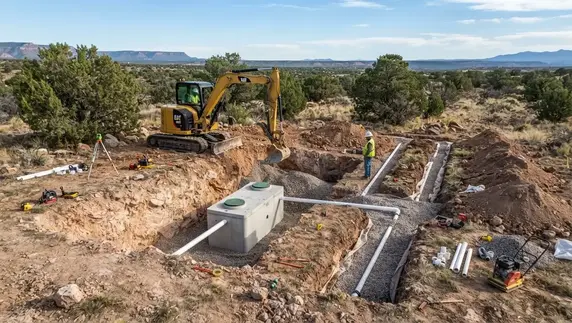
Septic construction can include tank excavation, wastewater piping, distribution components, dispersal-area construction, inspection, and final site restoration.
If you are developing rural land in Apache County without access to public sewer, early septic planning can help coordinate the wastewater system with your future home, private well, driveway, utility trenches, drainage, and other property improvements. Getting the septic layout considered before major excavation can help reduce conflicts and unnecessary site work later.
Call (928) 543-6447Not every rural property in Apache County presents the same septic installation conditions. Some parcels offer relatively straightforward access and usable ground, while others have limited wastewater areas because of rock, slopes, drainage, remote access, existing improvements, or the property's overall development plan.
Rock, volcanic material, shallow soil, and other difficult subsurface conditions can make septic excavation more demanding. Tank excavations, wastewater piping, and dispersal-area construction may require additional excavation effort and specialized equipment depending on the conditions encountered.
Slopes and elevation changes can affect the relationship between the future home, septic tank, dispersal area, wastewater piping, driveway, and equipment access. A large parcel may have considerably less practical septic area once terrain and applicable separation requirements are considered.
Smaller Apache County parcels may have limited room for a septic system after the house, private well, driveway, utilities, drainage, property boundaries, and other required separation areas are considered. Early wastewater planning is especially important when available usable space is limited.
Remote septic installation can require additional attention to private roads, gates, turning areas, staging space, and equipment access. Long or rough access routes and seasonal conditions can make mobilization more complicated than installation on an easily accessible residential property.
Septic planning on an off-grid property should be coordinated with the private well, solar or electrical system, water storage, future home or cabin, driveway, and utility routes. Reserving the wastewater area early can help prevent conflicts as other off-grid improvements are added.
Existing homes, cabins, driveways, wells, utility lines, outbuildings, drainage features, or previous septic components can reduce the available options for a new system. Existing improvements should be identified before the proposed wastewater area and installation layout are finalized.
Natural drainage patterns, washes, low areas, and seasonal runoff can affect septic planning and construction access. The wastewater area should be evaluated in relation to how water moves across the property so future grading and drainage work do not create conflicts with the approved septic system.
A rural parcel may eventually include a home, cabin, shop, barn, garage, livestock area, or additional structures. Septic planning should account for long-term property development so future construction does not interfere with the wastewater system or consume space needed for its continued operation.
Septic construction requires practical access for excavation equipment, septic tanks, piping, materials, and workers. Narrow driveways, restricted entrances, steep approaches, soft ground, or limited staging areas can affect how equipment reaches the approved installation location.
Apache County contains large rural areas where terrain, rock, access, drainage, and development patterns can vary significantly from one parcel to another. A property that looks suitable from the road may have considerably less usable space once the wastewater area, private well, house location, driveway, drainage, and other site constraints are considered.
Evaluating these conditions before construction can help identify potential conflicts with the proposed septic system and the property's broader development plan. Rocky ground, limited access, drainage concerns, existing improvements, and future buildings are all easier to address before major site work has already been completed.
Septic planning in Apache County can vary depending on how a rural property will be used. A full-time home, seasonal cabin, manufactured home, ranch, or off-grid homesite may have different wastewater demands and site-planning considerations. The septic system should be coordinated with the property's intended use, available space, and surrounding improvements.
Rural homes outside public sewer service typically require an approved onsite wastewater system. Septic planning should coordinate the tank, dispersal area, wastewater piping, house location, private well, driveway, drainage, and future improvements across the Apache County property.
Seasonal cabins and recreational properties still need an appropriate wastewater solution when wastewater is generated onsite. Planning should consider expected use, occupancy, access, available wastewater area, and whether the cabin could eventually become a full-time rural residence.
Properties used for weekends, hunting trips, recreation, or seasonal stays still require wastewater planning appropriate for their intended use. The septic system should be coordinated with occupancy patterns, water use, property access, future improvements, and the site's available wastewater area.
Septic planning for a manufactured home should occur before the final home location and surrounding site improvements are established. The wastewater system needs to work with the home placement and site preparation, private well, utility routes, driveway, grading, and available space on the Apache County parcel.
Ranch properties may include a residence along with barns, shops, livestock areas, equipment storage, and other improvements. Residential septic planning should account for the property's broader layout so future ranch development does not interfere with the approved wastewater area or required access.
Off-grid homes need septic planning that works alongside private wells, solar power, batteries, water storage, driveways, and other independent infrastructure. Reserving the wastewater area early can help prevent conflicts as the Apache County property develops into a complete off-grid homesite.
Raw land buyers should consider septic feasibility before investing heavily in roads, grading, building pads, wells, or other improvements. Identifying a practical wastewater area early can help organize the future homesite while preserving usable space for long-term rural property development.
Properties with garages, workshops, barns, guest structures, or other outbuildings require careful septic site planning. Future construction should be positioned so it does not conflict with the septic tank, dispersal area, required access, or other portions of the approved wastewater system.
Replacing an older or failing septic system can involve different considerations than installing one on completely undeveloped land. Existing tanks, wastewater areas, structures, wells, utilities, drainage, access, and previous site work should all be considered when planning the replacement system.
A septic system should be treated as part of the property's larger infrastructure plan, not as an improvement that can simply be added after everything else is built. The future home, cabin, private well, driveway, utilities, drainage, outbuildings, and other planned improvements can all affect the usable area available for wastewater planning.
Addressing septic feasibility early can help property owners avoid placing future roads, buildings, utility trenches, or other improvements where they could interfere with the wastewater system. The appropriate system and final layout should be based on the property's conditions, intended use, approved design, and applicable requirements.
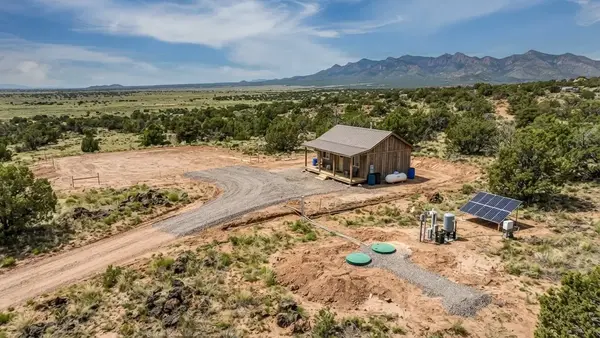
Septic systems are an important part of developing rural and off-grid Apache County properties alongside private wells, access roads, utilities, solar power, and future buildings.
There is no reliable single price for septic installation across Apache County. Two rural properties with the same acreage can have very different septic costs because wastewater requirements, soil conditions, excavation difficulty, access, terrain, system design, and required components can vary substantially from one property to another.
The total cost of an Apache County septic installation depends on what the property requires rather than simply how large the parcel is. A straightforward residential septic installation on accessible ground can be very different from a system requiring difficult excavation, extensive site preparation, specialized components, or construction on a remote rural parcel.
Common factors that can affect the cost of installing a septic system include:
A septic installation quote should reflect the actual conditions of the property rather than relying on a generic per-acre or flat-rate price. A rural parcel with easy access, suitable ground, and a straightforward approved system can have very different costs from a remote property with rock, steep terrain, long piping runs, limited usable space, or additional system requirements.
Property owners should also consider the septic system as part of the overall development budget. The location of the future home, private well, driveway, utility trenches, drainage improvements, and other structures can affect where the wastewater system can ultimately be installed and how much site work is required.
Septic installation costs vary by property and project requirements. Actual pricing should be determined after the proposed wastewater system, site conditions, access, excavation requirements, and applicable design and permitting requirements have been evaluated.
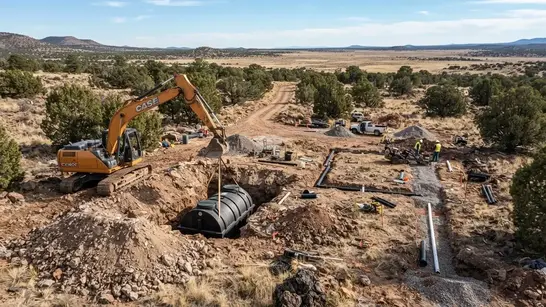
A reasonable planning range for a typical residential septic installation in Apache County is approximately $8,000–$20,000+, although actual project costs can fall below or above that range depending on the property and approved system. Rocky ground, difficult access, alternative systems, larger homes, long wastewater runs, and challenging site conditions can increase the total investment.
Septic installation costs may include site evaluation, system design, permitting, excavation, septic tank installation, wastewater piping, drainfield construction, inspections, and final restoration. The final price should be based on the actual property, wastewater requirements, and approved system rather than acreage alone.
Approximately $8,000–$20,000+
A typical rural residential system may include the tank, wastewater piping, dispersal area, excavation, inspection, and restoration. Actual cost depends on the approved system and property conditions.
Often included in the overall project
Tank and drainfield costs depend on system requirements, wastewater flow, soil, dispersal-area design, excavation, and the distance between the home and wastewater system.
Potentially $15,000–$30,000+
Rock, volcanic material, caliche, shallow soil, and dense ground can increase excavation time and equipment requirements. Difficult subsurface conditions can substantially increase septic installation costs.
Property-Specific Estimate
Smaller parcels may have limited wastewater space after the home, well, driveway, utilities, drainage, and separation areas are considered. Limited usable space can require additional planning or specialized system design.
Often $10,000–$25,000+
Remote properties may have rough roads, narrow gates, steep approaches, or limited staging areas. Equipment mobilization, access preparation, and difficult terrain can increase the overall project cost.
Often $15,000–$30,000+
Alternative treatment or dispersal systems can require additional pumps, controls, treatment equipment, or specialized components. The approved design determines the final system and investment.
Additional project cost
Site evaluation, wastewater system design, permit applications, professional services, and required approvals may add to the overall septic project cost. Requirements vary by property and proposed system.
Additional excavation cost
A distant septic tank or dispersal area can require longer wastewater piping and additional trench excavation. Distance, elevation changes, rock, crossings, and access can all affect the final price.
Approximately $10,000–$25,000+
Replacing an existing septic system can involve old tanks, drainfields, utilities, structures, and restricted space. Existing conditions can make replacement more involved than a new raw-land installation.
The $8,000–$20,000+ range is intended as a general planning figure, not a guaranteed quote. Two Apache County properties with the same acreage can have very different septic costs because of soil, rock, terrain, access, wastewater demand, available space, and system requirements.
A more accurate estimate should account for the complete project, including site evaluation, system design, permitting, excavation, tank installation, dispersal construction, wastewater piping, inspection, and restoration. Difficult or alternative systems can push the total substantially higher.
Septic installation costs depend on the property's wastewater requirements, terrain, soil and rock conditions, equipment access, system design, excavation, and other site-specific factors. A property-specific project discussion is the best way to determine what your septic installation may involve.
Call (928) 543-6447Septic installation should be planned as part of the overall development sequence rather than treated as an isolated construction project. On rural Apache County property, the wastewater system may need to coordinate with the future home, private well, driveway, grading, drainage, utility trenches, access routes, and other improvements.
The ideal sequence varies from property to property because the approved wastewater design, soil and site conditions, terrain, available area, access, and intended use all affect how the project should proceed. Planning the septic system early helps prevent permanent improvements from consuming potential wastewater areas or making equipment access more difficult later.
Septic systems in Arizona are subject to state onsite wastewater requirements, with permitting authority delegated to the counties. For Apache County properties, the septic approval process is therefore an important part of rural development planning rather than something that should be left until after the house, driveway, well, and other improvements have already been established.
Review terrain, soils, drainage, access, existing improvements, intended property use, and available development area before major construction decisions are made.
Identify the future home, cabin, or manufactured-home location so the wastewater system can be coordinated with the building area and surrounding site constraints.
Consider private well and septic locations together with applicable separation requirements, water lines, access, drainage, and the property's long-term layout.
Establish practical construction access before permanent improvements are installed. Equipment routes should work with both the septic installation area and future site access.
Review slopes, washes, natural drainage, and planned earthwork before finalizing the wastewater area so future runoff and grading do not create conflicts.
Complete the applicable site evaluation, wastewater design, permitting, and approval requirements before physical septic construction proceeds on the property.
Plan electrical, communications, water, and other underground utilities around the approved wastewater area and future structures to reduce construction conflicts.
Major access improvements, grading, and related excavation can be sequenced around the approved wastewater layout and the equipment requirements of the septic project.
The approved tank, wastewater piping, dispersal system, and related components are installed according to the applicable design, construction, and inspection requirements.
Remaining utilities, home construction, landscaping, outbuildings, fencing, and other improvements can proceed while protecting the approved wastewater area.
Planning a septic system early does not necessarily mean physically installing the septic tank and dispersal system before every other improvement. The important step is to establish and protect the wastewater area early enough that the property's house pad, driveway, private well, grading, drainage, and utility routes do not eliminate practical options.
Apache County's residential building guidance identifies septic documentation or a septic Construction Authorization as an early step in the building process. The county also requires applicable septic inspections during construction, so the wastewater system should be incorporated into the development schedule rather than treated as an afterthought.
For example, a rural property may require driveway and access improvements before heavy septic equipment can reach the installation area, while another parcel may require different sequencing because of terrain, drainage, existing improvements, or the approved wastewater design. The actual construction order should follow the approved plans and applicable project requirements.
This becomes particularly important when planning a septic system for rural property in Apache County. Large parcels can contain significant elevation changes, rocky ground, washes, long private access routes, private wells, and widely separated future improvements. A wastewater area that appears easy to accommodate at the beginning of a project can become much harder to access after the rest of the property has been developed around it.
For landowners wondering when to install a septic system on raw land in Apache County, the better question is when the wastewater system should be incorporated into the property's overall development plan. Establishing the septic area early, coordinating it with the private well and homesite, and sequencing excavation around the approved design can help reduce conflicts as rural property development moves forward.
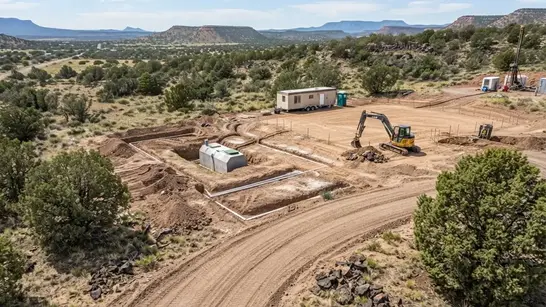
Septic planning should be coordinated with the future homesite, private well, driveway, grading, drainage, and underground utilities before major improvements are completed.
The more information available about the property, the easier it is for a septic professional to understand the proposed project, identify potential site constraints, and determine the appropriate next steps. You do not need to have the final septic system design completed before requesting an initial quote or project discussion.
For rural Apache County properties, useful information can include the parcel location, intended use, future home plans, existing improvements, access conditions, private well information, and any known site limitations. Providing these details early can help identify issues that may affect septic installation before equipment and construction are scheduled.
Before requesting a septic installation estimate in Apache County, consider having the following information available:
Many rural landowners contact a septic professional before they know exactly where the house, driveway, well, and other improvements will go. That is not necessarily a problem. In fact, discussing the wastewater system early can help identify important site-planning considerations before permanent improvements are constructed.
If you are developing raw land in Apache County, the septic area should not simply be treated as whatever space remains after the house, driveway, private well, utilities, and other improvements have been placed. Early coordination can help protect potential wastewater areas and preserve practical access for future septic construction.
The information provided during an initial conversation does not replace the required site evaluation, system design, permitting, or other professional requirements. Those requirements depend on the property, proposed wastewater system, intended use, and applicable Arizona and Apache County requirements.
If you are looking for a septic quote in Apache County, AZ, having the property location, intended use, homesite plans, well information, access conditions, and known site limitations available can make the initial project discussion much more productive. If you are still in the early planning stage, that is useful information too.
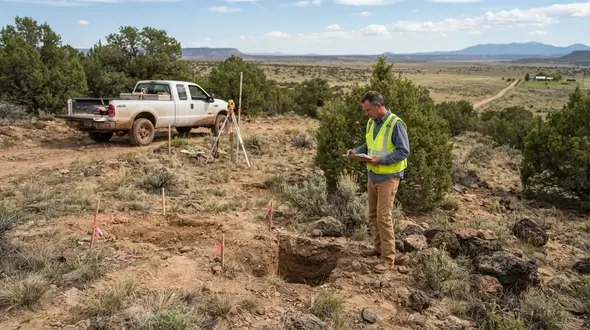
Property location, access, terrain, drainage, well placement, future improvements, and site conditions are important considerations when planning a rural septic project.
Septic installation does not end when the tank, piping, and dispersal system are installed. A properly functioning onsite wastewater system also depends on protecting the wastewater area, maintaining access to serviceable components, and preventing future construction, drainage, or heavy equipment activity from damaging the system.
Keep vehicles, heavy equipment, structures, and unnecessary excavation away from the approved dispersal area. Compaction or damage to the soil can interfere with the system's ability to properly receive and treat wastewater.
Keep the septic tank and required service areas accessible for inspection, pumping, maintenance, and future repairs. Avoid placing permanent structures, fencing, landscaping, or other improvements where they could block access.
Drainage improvements, roof runoff, grading, and surface water should be planned so concentrated runoff does not flow toward the wastewater area. Changes to site drainage can affect both the septic system and surrounding ground conditions.
Future homes, additions, shops, garages, driveways, outbuildings, fencing, and landscaping should be planned around the existing septic layout. Protecting the approved wastewater area helps preserve the system as the property develops.
On rural Apache County properties, it can be tempting to treat the open area around a septic system as available space for future construction or equipment access. However, the tank, wastewater piping, dispersal area, and associated usable area should remain protected after installation.
Before adding a driveway, building, grading project, drainage improvement, fence, or other major property improvement, review the existing septic layout and make sure the proposed work will not interfere with the wastewater system.
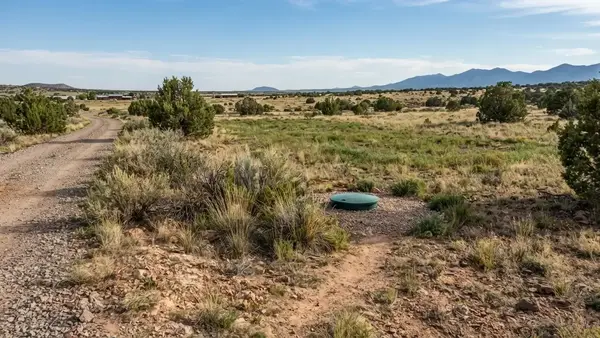
A properly maintained septic system requires protecting the drainfield, maintaining access to serviceable components, and keeping future construction and drainage improvements away from the wastewater area.
Not every septic project involves installing a system on completely undeveloped land. Apache County properties may already have an older septic tank, existing drainfield, abandoned system, damaged components, or a wastewater system that is no longer performing as expected.
A replacement project should begin with an evaluation of the existing system and property rather than assuming that a new tank can simply be installed in the same location. Existing wells, buildings, driveways, utilities, drainage, property improvements, and current site conditions may affect the available replacement options.
Slow drains, sewage surfacing, odors, unusually wet areas, or other problems can indicate that an existing wastewater system needs professional evaluation before repair or replacement decisions are made.
Older tanks and components can deteriorate or become difficult to maintain. The condition and location of the existing system should be evaluated before determining whether repair, replacement, or another approved approach is appropriate.
A drainfield that no longer properly accepts or treats wastewater may require more than simply replacing the tank. The available property area and site conditions need to be evaluated for the appropriate wastewater solution.
Some rural properties change ownership without complete information about an older septic installation. Identifying the existing tank, wastewater area, and related infrastructure can be an important first step before future development.
Replacement planning must account for the structure already occupying the property, along with existing plumbing, driveway access, well location, utilities, landscaping, and other permanent improvements.
A property may have had adequate space for an older system but have fewer practical options today because of new buildings, driveways, wells, grading, utilities, or other improvements.
A replacement system should be evaluated around the property's current conditions and intended future use. The appropriate design depends on the site and applicable wastewater requirements.
Septic replacement is not automatically the same as ordinary excavation. Applicable wastewater approvals, design requirements, inspections, and construction procedures should be confirmed before replacement work begins.
The answer depends on the condition of the existing system, the cause of the problem, the available site area, current property improvements, and applicable wastewater requirements. A professional evaluation can help determine whether repair, replacement, or another approved solution is appropriate for the property.
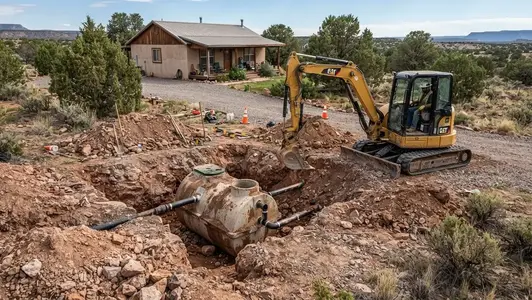
Septic replacement can require careful excavation around existing tanks, wastewater piping, drainfields, utilities, and other established improvements on a rural property.
If an existing septic system is failing, damaged, outdated, difficult to locate, or no longer fits the property's current development plans, an evaluation can help determine what needs to be addressed before repair or replacement work begins.
Call (928) 543-6447Many septic problems begin before the installation crew ever arrives. On rural Apache County properties, wastewater planning can become more difficult when the septic system is treated as an isolated project instead of being coordinated with the homesite, private well, driveway, grading, drainage, utilities, and future development.
Placing the home before evaluating wastewater options can consume valuable usable space. The homesite, septic area, well location, driveway, and required separation areas should be considered together before permanent construction begins. The future house pad should be evaluated as part of that overall layout.
A private well and septic system both require carefully selected locations. Establishing one without considering the other can create unnecessary layout conflicts or reduce the remaining area available for the home's wastewater system.
Open ground is not automatically suitable for septic installation. Soil conditions, slope, drainage, rock, setbacks, existing improvements, and future development can make an apparently convenient area unsuitable or impractical.
A property may have a workable wastewater location but still present construction challenges if excavation equipment cannot reach it efficiently. Roads, gates, slopes, turning areas, and staging space should be considered before installation.
A driveway planned without considering the septic layout can restrict equipment access or consume space needed for wastewater infrastructure. Major access routes should be coordinated with the approved septic location and future site plan.
Major grading can change drainage patterns, elevations, and surface conditions around a wastewater area. Earthwork should be coordinated with the septic layout so future runoff or excavation does not interfere with the approved system.
Shops, garages, additions, barns, driveways, and other improvements can eliminate space that may be important to the septic system. Future development should be considered before the wastewater area is finalized.
A large Apache County parcel can still have limited usable wastewater area. Rock, steep terrain, drainage, wells, structures, property boundaries, access, and other site constraints can significantly reduce the practical development area.
Delaying septic planning until the house pad, driveway, well, and utilities are already established can leave fewer practical options. Early wastewater planning gives the overall property layout more flexibility before major site work is completed.
The best time to identify septic constraints is before major money is invested in the homesite, driveway, well, grading, utilities, or other improvements. Looking at the property as one coordinated development project can reveal conflicts while there is still time to adjust the layout.
For rural Apache County land, the septic system should be considered alongside the property's terrain, soil conditions, drainage, private water supply, access, and long-term development plans. The final wastewater system and construction sequence should follow the applicable evaluation, design, approval, and installation requirements for the property.
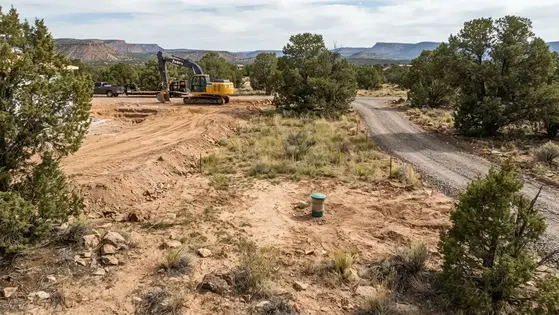
Septic planning should be coordinated with the future homesite, private well, driveway, utilities, drainage, and other permanent improvements before major construction begins.
Rural Apache County properties can be deceptively large. A parcel may contain dozens of acres yet have only certain portions that make practical sense for a homesite and its supporting infrastructure. Distance from paved roads, rough access, elevation changes, rocky ground, seasonal weather, natural drainage, vegetation, and existing improvements can all affect how efficiently the property can be developed.
Apache County also includes a wide range of rural development conditions, from established residential areas to remote recreational properties, ranch land, mountain acreage, and undeveloped parcels. A septic system that works for one property should not automatically be assumed to work the same way on another property simply because the parcels have similar acreage. Soil characteristics, available wastewater area, slope, drainage, groundwater considerations, proposed wastewater flow, and applicable separation requirements can all influence the final site layout.
A septic system should be considered as part of the property's overall infrastructure map rather than as an isolated tank-and-drainfield installation. The wastewater area, private well, house pad, driveway, utility corridors, drainage improvements, solar equipment, outbuildings, and future development all compete for usable space and equipment access.
This becomes especially important when developing raw land. Moving a planned house location or driveway during the early planning stage may be relatively simple. Discovering later that the approved wastewater area conflicts with a completed building pad, private well, driveway, utility trench, or other permanent improvement can be considerably more difficult.
Septic feasibility is about more than finding an open portion of the property. The proposed wastewater area needs to be considered in relation to soil and subsurface conditions, topography, drainage, groundwater considerations, property improvements, access, and the intended wastewater use. The amount of land shown on a deed does not necessarily represent the amount of land that can practically support a septic system and the rest of the planned development.
Slopes, rocky ground, shallow soil, elevation changes, and subsurface conditions can affect where wastewater infrastructure can be placed and how much of the parcel is practically available for septic development.
Long private roads, gates, rough approaches, limited turning areas, and remote installation locations can affect equipment mobilization, excavation, material delivery, staging, and the overall construction approach.
Properties using private wells need the water source and wastewater system considered together with the homesite, applicable separation requirements, drainage, access, underground water lines, and the property's long-term development plan.
Homes, cabins, shops, garages, barns, livestock areas, driveways, solar equipment, utilities, and future additions can consume space that may be important to the wastewater system and its required service and usable areas.
For a landowner starting with raw Apache County acreage, the more useful planning question is often where the wastewater system can be located while still allowing the property to develop as intended. That means considering the septic area alongside the future home, private well, driveway, grading, drainage, utilities, and other improvements.
Identifying these relationships early can give the property owner and qualified wastewater professionals a clearer picture of the site's constraints before major construction decisions are made. It can also help prevent a common rural development problem: building permanent improvements first and discovering afterward that the remaining usable area is difficult to use for wastewater infrastructure.
The final septic system, site evaluation, design, approvals, and installation requirements should always be determined according to the property's actual conditions, intended wastewater use, approved plans, and applicable Arizona requirements.
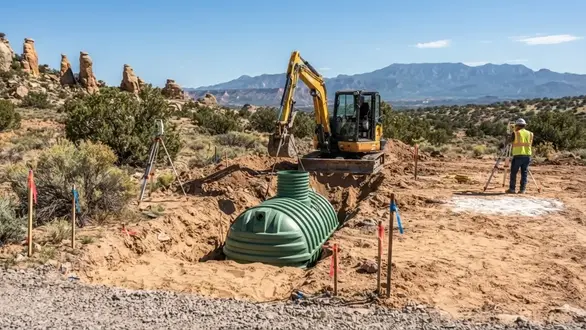
Remote Apache County properties may require septic planning around terrain, rocky ground, private wells, access roads, drainage, and future rural development.
We connect rural property owners with septic system installation and onsite wastewater professionals throughout Apache County, Arizona. Our service area supports homeowners, cabin owners, ranchers, landowners, livestock property owners, manufactured home owners, and off-grid property owners who need an approved private wastewater system where public sewer service is unavailable. Septic projects may include site evaluation, septic system design, septic tank installation, drainfield installation, wastewater piping, excavation, and related onsite wastewater infrastructure based on the property's location, soil and site conditions, intended use, access, and development plans.
If your property is located anywhere in Apache County or the surrounding rural communities, we can help connect you with a septic professional who can evaluate your property's location, soil and site conditions, available drainfield area, access, topography, intended wastewater use, and applicable Arizona requirements. Septic installation conditions can vary significantly across the county, particularly on large-acreage parcels, remote homesites, rocky or sloped properties, ranch land, and undeveloped or off-grid parcels. Your wastewater system should be evaluated according to the property's specific conditions and applicable requirements rather than assuming the same septic system will work everywhere.
Developing rural property in Apache County often requires a properly planned onsite wastewater system when public sewer is unavailable. Septic installation involves much more than placing a septic tank in the ground. Soil conditions, site topography, wastewater design, setbacks, property layout, access, permitting, drainfield location, future development plans, and applicable Arizona requirements can all affect the project. The answers below address common questions about septic systems and onsite wastewater installation throughout Apache County, Arizona.
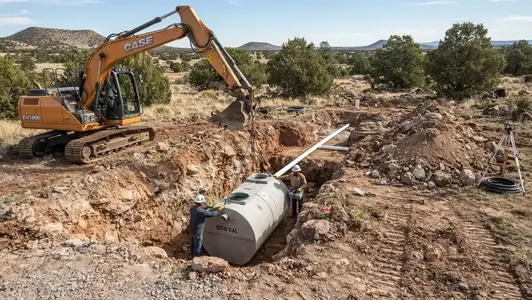
Septic installation on rural property can involve excavation, tank placement, wastewater piping, dispersal-area construction, inspections, and final site restoration.
Get your rural property evaluated for the onsite wastewater requirements needed to support your planned development. Whether you are building a site-built home, manufactured home, cabin, ranch residence, seasonal property, or off-grid homesite, septic installation involves more than placing a tank in the ground. The wastewater area, soil and site conditions, terrain, drainage, private well, equipment access, driveway, utility routes, future buildings, and applicable permitting requirements should all be considered as part of the property's larger development plan. Contact Apache County Land Services to discuss your property and get connected with qualified septic and onsite wastewater professionals who can evaluate the site's conditions, intended use, and project requirements.
Call (928) 543-6447