
⭐ Land Clearing • Brush Removal • Tree Clearing • Access Clearing • Rural Property Preparation Across Apache County Arizona
Professional Land Clearing Services in Apache County, Arizona
Clearing raw land is the first step toward creating a usable property ready for homes, cabins, ranch improvements, and off-grid development. Apache County Land Services provides complete land clearing solutions including brush removal, tree clearing, vegetation management, lot clearing, access creation, debris removal, and rural property preparation for homesites, ranches, cabins, agricultural projects, and off‑grid developments throughout Apache County.
Serving St. Johns, Concho, Vernon, Sanders, Springerville, Eagar, Alpine, Greer, Nutrioso, Show Low and surrounding communities.
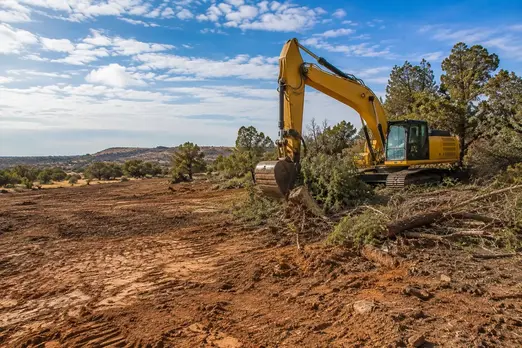
Why Professional Land Clearing Matters Before Developing Apache County Property
Land clearing is more than removing trees and brush. For rural properties throughout Apache County, professional clearing creates the foundation for successful development by improving access, revealing site conditions, protecting future improvements, and making raw acreage more usable. Proper planning helps property owners avoid expensive mistakes when preparing land for homes, cabins, ranches, driveways, utilities, wells, septic systems, and off-grid living.
These are the most important reasons Apache County property owners invest in professional land clearing before beginning construction or property improvements:
-
Improved Property Access & Equipment Entry
Many rural Apache County parcels have limited access due to overgrown vegetation, uneven terrain, trees, and natural obstacles. Professional clearing creates safer entry routes for trucks, excavators, builders, utility contractors, and future property owners while improving long-term accessibility. -
Preparation for Homesites, Cabins & Rural Buildings
Clearing removes obstacles that prevent proper evaluation of potential building locations. A properly cleared area allows property owners to identify suitable locations for homes, cabins, workshops, barns, garages, and other structures while preparing the site for future grading and excavation. -
Brush Removal, Tree Clearing & Vegetation Management
Apache County properties can contain juniper, pinyon pine, scrub brush, fallen timber, dense vegetation, and overgrown areas that limit usable land. Selective clearing improves property functionality while allowing owners to maintain valuable natural features when desired. -
Better Understanding of Drainage & Natural Water Flow
Raw land can hide important drainage characteristics beneath vegetation. Clearing helps reveal slopes, washes, runoff paths, and low areas that should be considered before grading, building pads, roads, septic systems, and other improvements are installed. -
Creates a Better Foundation for Future Excavation
Land clearing is often the first phase of complete property development. Removing vegetation and obstacles allows excavation work including grading, driveway construction, building pads, drainage improvements, utility trenching, and other site preparation. to be completed more efficiently. -
Wildfire Mitigation & Defensible Space Improvements
Many Arizona property owners use vegetation management to reduce excessive brush and overgrowth near homes, cabins, access roads, and important structures. Strategic clearing can improve maintenance access and create safer defensible areas around developed portions of a property. -
Better Planning for Off-Grid Development
Remote Apache County properties often require careful planning for solar systems, wells, septic systems, driveways, storage buildings, and future construction.. Clearing helps create usable areas and allows owners to plan development around the property's actual terrain and conditions. -
Improves Ranch, Agricultural & Recreational Property Use
Large acreage properties often need selective clearing for fencing, livestock areas, equipment access, hunting areas, trails, agricultural improvements, and future expansion. A thoughtful clearing plan helps maximize usable acreage without unnecessary disturbance. -
Reveals Hidden Property Conditions Before Construction
Overgrown land can hide rocks, uneven terrain, drainage issues, old debris, and difficult soil conditions. Clearing provides a clearer understanding of the property before investing in expensive construction, utilities, or infrastructure improvements. -
Helps Prevent Costly Development Mistakes
Poor planning can lead to relocating driveways, rebuilding access routes, correcting drainage issues, or removing obstacles after construction begins. Professional clearing creates a smarter starting point and helps property owners make better decisions about future improvements.
Every Apache County property has different challenges depending on elevation, vegetation, soil conditions, terrain, access, and future goals. A professional land clearing evaluation helps determine the right approach for your specific acreage whether you are preparing a rural homesite near St. Johns, a mountain cabin near Greer or Alpine, a ranch property, or a remote off-grid parcel.
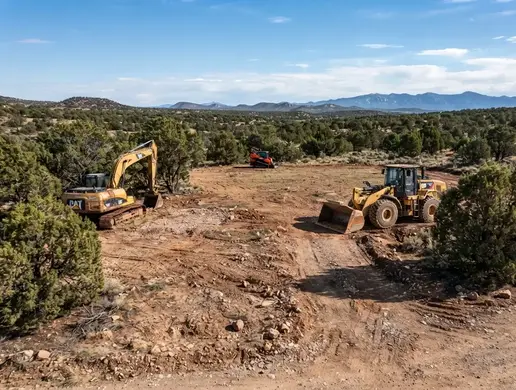
Professional land clearing transforms overgrown Apache County acreage into a usable, accessible foundation for future homesites, driveways, utilities, and off‑grid development. Selective clearing preserves natural juniper and piñon while improving terrain visibility and long‑term property access.
Our Land Clearing Process for Apache County Properties
Successful land clearing starts with understanding the property, not simply removing vegetation. Apache County properties vary widely from high desert acreage near St. Johns and Concho to forested mountain areas near Springerville, Eagar, Greer, and Alpine. Our clearing approach considers terrain, access, drainage, vegetation, and future development plans to create a property that is ready for the next stage of improvement.
A typical land clearing project follows these important steps:
-
Property Evaluation & Site Assessment
The first step is understanding the land conditions. We evaluate acreage size, vegetation density, terrain, access points, slopes, drainage patterns, and the owner's goals for the property. This helps determine the best clearing strategy before equipment begins work. -
Clearing Plan & Development Layout
Every property has different priorities. Some owners need a homesite cleared, while others need driveway access, ranch improvements, utility corridors, recreational areas, or complete off-grid preparation. Planning the clearing locations first helps preserve useful land and avoid unnecessary disturbance. -
Brush Removal & Vegetation Clearing
Dense brush, unwanted vegetation, small trees, fallen timber, and overgrowth are removed to improve property usability. Selective clearing can preserve desirable trees and natural features while opening areas needed for future improvements. -
Access Clearing & Equipment Preparation
Remote Arizona properties often require improved access before additional work can begin. Clearing entry paths and work areas allows equipment, delivery vehicles, and future contractors to safely reach the property. -
Debris Removal & Site Cleanup
Cleared material may include brush piles, fallen branches, unwanted vegetation, and existing debris. Proper cleanup creates a safer and more usable property while preparing the area for grading, excavation, construction, or future improvements. -
Terrain Review & Future Site Preparation
Once vegetation is removed, property owners can better understand the land's natural characteristics. This allows future planning for building pads, driveways, drainage improvements, wells, septic systems, fencing, and other rural development projects. -
Coordination With Excavation & Development Services
Many Apache County projects require multiple phases. Land clearing can be coordinated with grading, excavation, road construction, utility trenching, house pad preparation, and other site development services to create a complete property improvement plan. -
Final Walkthrough & Next-Step Recommendations
After clearing is complete, property owners can identify the next improvements needed for their goals. Whether preparing for construction, recreation, agriculture, or off-grid living, a properly cleared property provides a stronger starting point.
Proper land clearing is an investment in the future usability of your property. By approaching each project with local knowledge of Apache County terrain, vegetation, weather conditions, and rural development needs, landowners can create a better foundation for long-term improvements.
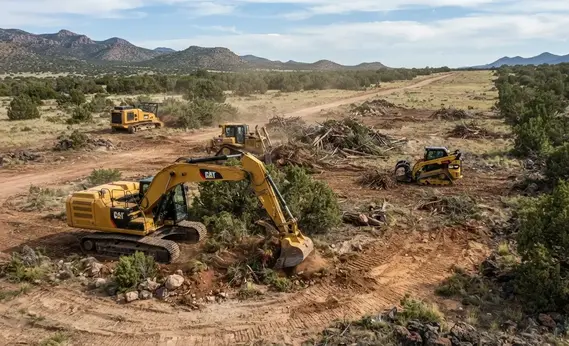
Professional clearing uses the right equipment and sequence to remove vegetation, improve access, manage debris, and prepare rural acreage for the next phase of development.
Ready to Plan Land Clearing for Your Apache County Property?
The right clearing approach depends on vegetation density, terrain, access, drainage, property size, and what you plan to do with the land afterward. Whether you need a homesite cleared, access opened, brush removed, or acreage prepared for future development, tell us about the property and the areas you need cleared.
Call (928) 543-6447Common Land Clearing Challenges in Apache County, Arizona
Land clearing in Apache County requires more than removing vegetation. Rural properties throughout northeastern Arizona can have unique conditions including remote access, changing elevations, native vegetation, rocky soils, drainage concerns, and future development requirements. Understanding these challenges allows land clearing to be completed correctly the first time while preparing the property for homes, cabins, ranches, driveways, utilities, wells, septic systems, and off-grid land development.
Apache County Land Services helps property owners overcome common land preparation challenges by evaluating each property individually and developing a clearing approach based on terrain, access, vegetation, and long-term goals.
Dense Brush, Juniper & Native Vegetation
Many undeveloped Apache County properties contain juniper, pinyon pine, scrub brush, fallen timber, and thick vegetation that limits access and usable space. Professional clearing removes unwanted growth while allowing property owners to preserve important trees and natural features when desired.
Uneven Terrain & Elevation Changes
Apache County includes high desert areas, rolling terrain, and mountainous regions near the White Mountains. Slopes, elevation changes, rocky areas, and uneven ground affect equipment access, clearing methods, and future grading requirements.
Remote Access & Difficult Property Entrances
Many rural parcels have limited access due to overgrown entrances, rough roads, narrow paths, or undeveloped terrain. Creating reliable access routes allows equipment, contractors, deliveries, and future maintenance vehicles to safely reach the property.
Drainage, Washes & Monsoon Runoff
Seasonal Arizona storms can create significant water movement across undeveloped land. Proper clearing considers natural drainage paths, washes, slopes, and runoff patterns to help prevent future erosion and prepare the property for grading and construction.
Rocky Ground & Variable Soil Conditions
Apache County properties can contain sandy soils, clay areas, volcanic material, and rocky ground conditions. Understanding the terrain helps determine the right equipment and prepares the property for future excavation, roads, and building areas.
Preparing Land for Off-Grid Development
Remote property owners often need clearing for cabins, solar systems, wells, septic systems, driveways, and future structures. Planning the clearing around future improvements prevents unnecessary rework and helps maximize usable acreage.
Brush Management & Wildfire Preparation
Excess vegetation around homesites, cabins, and access roads can create maintenance challenges. Strategic vegetation management helps create cleaner property areas and improves accessibility for ongoing maintenance.
Large Acreage & Ranch Property Clearing
Large parcels require careful planning to determine which areas should be opened, preserved, or improved. Selective clearing can create space for fencing, livestock areas, equipment access, agriculture, recreation, and future expansion.
Every Apache County property has different conditions that influence the best clearing approach. By understanding local terrain, vegetation, access limitations, and future development goals, professional land clearing creates a stronger foundation for the next phase of your property improvement project.
Land Clearing vs Excavation vs Grading: Understanding the Difference
Rural property development in Apache County often requires several stages of preparation before land is ready for construction. Understanding the difference between land clearing, excavation, grading, and complete site preparation helps homeowners, ranch owners, and off-grid land buyers plan projects correctly, avoid unnecessary costs, and create a property that is prepared for long-term use.
These services work together but solve different challenges. Land clearing removes vegetation and obstacles, excavation shapes the earth for construction needs, grading creates proper elevations and drainage patterns, and complete site preparation combines these services into a coordinated plan for future development.
Throughout Apache County, Arizona, raw acreage can include brush, juniper, pinyon pine, uneven terrain, volcanic soils, natural washes, elevation changes, and remote access challenges. A properly planned approach helps prepare properties for homesites, cabins, ranch improvements, private roads, utilities, wells, septic systems, solar installations, and off-grid development.
Land Clearing: Removing Vegetation & Obstacles
Land clearing is usually the first stage when preparing undeveloped Apache County property. The goal is to remove vegetation, trees, brush, debris, and natural obstacles that prevent access or limit how the land can be used.
Professional clearing helps reveal the actual condition of the property, including terrain, slopes, drainage patterns, usable building areas, and potential locations for future improvements.
Common land clearing projects include:
- Brush and overgrown vegetation removal
- Juniper, pinyon pine, and small tree clearing
- Selective clearing around homesites
- Access road and driveway clearing
- Ranch and recreational property improvements
- Fire mitigation vegetation management
Excavation: Moving & Shaping Earth
Excavation involves cutting, filling, removing, and relocating soil to create the physical features required for construction and infrastructure. It typically follows clearing once equipment can safely access the property.
Rural Apache County properties often require excavation because of uneven terrain, elevation changes, drainage concerns, or the need for specialized construction areas.
Common excavation projects include:
- House pad and cabin site excavation
- Foundation preparation
- Utility trenching for power and water
- Septic system preparation
- Driveway and private road excavation
- Drainage and earthwork improvements
Grading: Creating Proper Slopes & Drainage
Grading shapes the surface of the property by creating proper elevations, slopes, and drainage paths. A properly graded site improves stability, controls runoff, and prepares surfaces for roads, buildings, and future improvements.
Apache County properties require careful grading because of seasonal monsoon storms, natural washes, elevation changes, freeze conditions, and varying soil characteristics.
Common grading projects include:
- Building pad leveling and finish grading
- Driveway and private road shaping
- Drainage swales and runoff management
- Slope correction
- Erosion control improvements
- Final site preparation
Complete Site Preparation Planning
Many Apache County properties require multiple services before they are ready for construction. Coordinating clearing, excavation, grading, and future improvements creates a more efficient development process and reduces expensive rework.
A complete site preparation plan considers the property's long-term goals including homes, cabins, ranch buildings, driveways, wells, septic systems, solar installations, and future structures.
Complete preparation may include:
- Future homesite and building area planning
- Off-grid property development preparation
- Equipment access planning
- Utility route coordination
- Drainage and erosion considerations
- Long-term acreage improvement strategy
How These Services Work Together on Apache County Properties
Many rural property improvement projects throughout Apache County require a combination of clearing, excavation, and grading. Completing these steps in the correct order helps prevent unnecessary work, reduces future problems, and creates a smoother path toward development.
A typical rural land preparation project may begin with clearing brush, trees, and obstacles to create equipment access. Excavation can then create building pads, utility trenches, driveway cuts, drainage improvements, or other earthwork features. Grading completes the process by shaping the final terrain and preparing stable surfaces for future construction.
For example, an off-grid property near St. Johns, Concho, Springerville, Eagar, Alpine, or the White Mountains region may require driveway grading, utility routes, drainage planning, and additional site preparation before a cabin, solar system, well, or septic system can be installed.
Understanding the correct order of work helps property owners avoid common mistakes such as building on unstable ground, creating drainage issues, relocating access roads later, or paying for duplicate earthwork. A complete land preparation strategy creates a stronger foundation for future development throughout Apache County, Arizona.
Why Apache County Conditions Change Every Land Clearing Project
Land clearing in Apache County requires a different approach than many other parts of Arizona. From the high desert around St. Johns to the forested White Mountains near Alpine and Greer, terrain, vegetation, soils, weather, and access conditions all influence how a property should be cleared. Understanding these local conditions helps protect your investment while creating a property that's easier to develop, maintain, and enjoy.
High Desert Terrain
Large areas around St. Johns, Concho, Sanders, Chambers, and Adamana feature open high-desert landscapes with scattered juniper, volcanic soils, exposed rock, and rolling terrain. Land clearing often focuses on creating homesites, improving access, and preserving natural drainage across wide-open acreage.
White Mountains Forests
Properties near Springerville, Eagar, Alpine, Greer, Nutrioso, and McNary typically contain dense pine forests, heavier vegetation, steeper slopes, and higher elevations. Selective clearing, wildfire mitigation, and erosion-conscious planning become especially important in these mountain environments.
Rocky & Volcanic Soils
Many Apache County properties contain lava rock, shallow bedrock, volcanic soils, and uneven ground. These conditions influence equipment selection, clearing methods, future excavation, and the amount of grading required before construction can begin.
Monsoon Drainage
Summer monsoon storms can produce fast-moving runoff through washes and low areas. Clearing should always consider natural drainage patterns so future grading, driveways, and building sites remain protected from erosion and standing water.
Remote Property Access
Many Apache County parcels are located several miles from paved roads with little existing infrastructure. Proper access planning during land clearing helps construction equipment, utility crews, deliveries, property owners, contractors, and emergency responders reach the property more safely while reducing the need for future access improvements.
Off-Grid Property Development
Apache County has become a popular destination for off-grid living because of its affordable rural acreage, wide-open landscapes, and opportunities for independent property development. Many land clearing projects are planned around future homes, cabins, solar systems, wells, septic systems, workshops, barns, and long private driveways, making thoughtful planning essential before development begins.
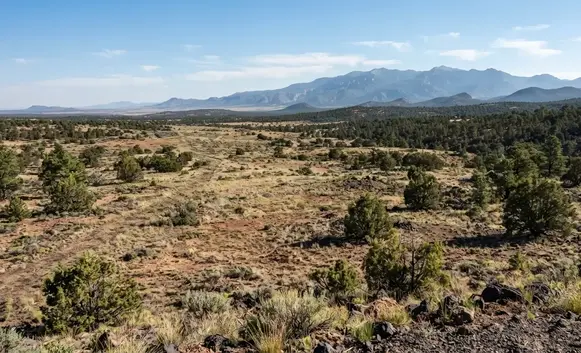
Apache County spans open high-desert acreage and mountainous forest environments, so vegetation, terrain, soil, drainage, and equipment access can vary significantly from property to property.
Have Difficult Terrain or Vegetation on Your Apache County Property?
Rocky ground, dense juniper, forest vegetation, slopes, remote access, and drainage conditions can all change how land should be cleared. If your property has challenging terrain or you are unsure how much clearing is needed before construction or other improvements, tell us about the acreage and what you are planning.
Call (928) 543-6447Types of Land We Clear Throughout Apache County
Apache County contains some of Arizona's most diverse rural properties, ranging from open high-desert acreage and ranch land to heavily wooded mountain parcels and remote off-grid properties. Each type of land presents different challenges based on vegetation, terrain, access, drainage, and future goals.
Apache County Land Services provides professional land clearing for property owners preparing land for homes, cabins, ranch improvements, agriculture, recreation, investment, and long-term rural development. The right clearing strategy depends on how the property will be used after vegetation and obstacles are removed.
Raw Acreage
Undeveloped acreage often includes brush, scattered trees, rocky terrain, and limited access. Clearing opens usable space, improves visibility, and prepares key areas for future homesites, driveways, and utilities.
Ranches & Horse Properties
Ranch land may need clearing for livestock areas, fencing lines, barns, arenas, and equipment routes. Work focuses on improving functionality while preserving shade trees and natural windbreaks.
Cabin Lots & Mountain Properties
Mountain parcels often require selective clearing due to forest growth, slopes, and wildfire concerns. Clearing creates space for cabins, parking, access roads, and defensible zones.
Forest Lots & Timbered Parcels
Timbered properties may contain dense vegetation and fallen timber. Clearing improves access, reduces hazardous growth, and prepares selected areas for construction while protecting valuable trees.
Commercial & Development Sites
Commercial sites often require clearing before construction, parking layout, utility work, and drainage improvements. Proper clearing creates a clean starting point for grading and infrastructure installation.
Agricultural Land
Agricultural parcels may need vegetation management for fields, fencing, livestock areas, and equipment access. Clearing supports soil protection, drainage planning, and long-term farming goals.
Recreational & Hunting Property
Recreational land often requires clearing for trails, campsites, RV pads, hunting access, and parking. Work improves usability while preserving wildlife habitat and natural scenery.
Investment & Development Property
Investors clear acreage to improve access, reveal buildable areas, and increase usability. Prepared land is easier to evaluate, market, and develop for future buyers or projects, making site conditions an important consideration when buying land in Apache County.
Off-Grid Properties
Off-grid parcels often need clearing for cabins, solar arrays, wells, septic systems, and private roads. Strategic clearing supports long-term self-sufficient living and future infrastructure.
Subdivision & Residential Lots
Residential lots may require clearing before homes, utilities, driveways, or drainage work. Proper clearing considers setbacks, access, building envelopes, and long-term construction needs.
Juniper & Brush Covered Acreage
Thick juniper and native brush can limit access and hide the land’s true layout. Clearing improves visibility, opens usable space, and reduces excessive vegetation for future improvements.
Mountain & Remote Access Properties
Remote mountain parcels often require specialized clearing due to slopes, rocky terrain, elevation, and limited access. Work improves accessibility and prepares the land for cabins, roads, and future off-grid development.
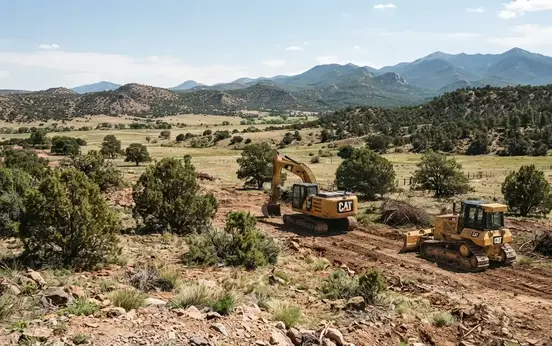
Land clearing can support many types of Apache County properties, from ranches and mountain parcels to recreational acreage, cabin lots, and off-grid development sites.
Choosing the Right Areas to Clear First
Strategic land clearing focuses on removing only what’s necessary to support development while preserving the natural features that add long-term value. In Apache County, clearing decisions must account for terrain, vegetation density, access limitations, drainage patterns, zoning rules, and future development plans. A well‑planned approach reduces cost, prevents unnecessary disturbance, and ensures the property remains functional as your project grows.
Clearing the correct areas first also prevents issues with grading, utility installation, septic placement, driveway alignment, and county permitting. Below are the core priorities every rural landowner should evaluate before clearing begins.
Start With the Future Homesite
The homesite determines nearly every other improvement on the property. Clearing this area first reveals slopes, soil conditions, drainage paths, and natural obstacles that influence pad preparation and driveway placement.
- Identify the most stable, buildable ground
- Ensure space for zoning setbacks and building envelopes
- Preserve shade trees and natural windbreaks
- Confirm access for excavation and construction equipment
Establish Permanent Access
A reliable access route prevents multiple temporary paths from damaging the land. Permanent access should be cleared early so construction crews, utility providers, and delivery vehicles can reach the property safely.
- Choose the most direct, stable route to the homesite
- Avoid low areas prone to monsoon runoff
- Plan for future driveway surfacing or gravel
- Ensure emergency access meets county requirements
Plan Utility Corridors
Clearing utility corridors early prevents duplicate vegetation removal and ensures trenching routes follow the most efficient path. Utility placement must also comply with county setbacks and service provider rules.
- Plan routes for electrical, water, and communication lines
- Maintain required separation between utilities and septic
- Clear only the width needed for trenching and maintenance
- Coordinate with APS, Navopache, or solar installers
Reserve Areas for Wells & Septic
Apache County Environmental Health requires specific distances between wells, septic tanks, drain fields, and structures. Clearing these areas early ensures compliance and prevents costly redesigns once construction begins.
- Maintain required well-to-septic separation distances
- Leave space for future maintenance access
- Avoid clearing too close to natural drainage paths
- Confirm soil suitability for septic drain fields
Preserve Valuable Trees
Selective clearing protects the natural character of your land. Mature juniper, piñon, and shade trees can increase property value, reduce wind exposure, and improve long‑term comfort around the homesite.
- Identify trees that provide shade or privacy
- Remove only trees that interfere with development
- Preserve natural windbreaks in high‑desert areas
- Avoid removing trees that stabilize slopes or washes
Leave Room for Future Expansion
Most rural properties evolve over time. Planning for future structures during the clearing phase prevents unnecessary earthwork and keeps the property organized as new improvements are added.
- Reserve space for barns, shops, garages, or guest cabins
- Plan fencing lines and livestock areas early
- Keep access routes open for future equipment
- Ensure expansion areas comply with zoning setbacks
Zoning, Permitting & Regulatory Considerations
Apache County requires certain improvements, such as driveways, septic systems, wells, and new structures, to meet zoning and permitting standards. Clearing the correct areas first helps ensure your project complies with county regulations and avoids delays.
- Verify zoning classification (AG, RU, R‑Single Family, etc.)
- Confirm required setbacks before clearing building areas
- Ensure access routes meet fire and emergency access standards
- Coordinate clearing with septic and well permit requirements
- Avoid clearing in protected drainage easements or flood zones
Thoughtful land clearing creates a property that’s easier to build on, easier to maintain, and more adaptable as your plans evolve. By prioritizing homesites, access, utilities, septic and well locations, tree preservation, and zoning compliance, you maximize usable acreage while minimizing unnecessary disturbance to the land.
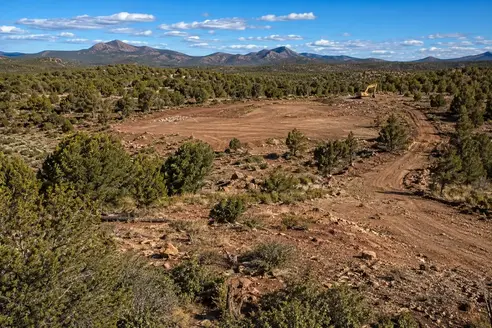
Strategic clearing begins with the future layout of the property, including the homesite, permanent access, utility corridors, drainage, and areas that should remain undisturbed.
What Does Your Apache County Property Need After Land Clearing?
Clearing is often only the first step. Depending on your property and development plans, the next phase may involve driveway improvements, grading, drainage work, a building pad, utility trenching, a well, septic preparation, solar installation, or other site work. Tell us what you are planning so the next stages of your property development can be considered together.
Call (928) 543-6447What Apache County Landowners Should Check Before Clearing Begins
Before heavy equipment arrives, property owners should confirm that the proposed clearing work fits the property's zoning, access rights, development plans, and applicable environmental or construction requirements. Land clearing is often the first physical step in a larger rural development project, so decisions made before clearing begins can affect driveways, homesites, wells, septic systems, drainage, utilities, and future construction.
Requirements can vary depending on the location of the property, the type and extent of work, the amount of ground disturbance, and what will be constructed afterward. A property owner should not assume that clearing vegetation automatically has the same permitting requirements as building, grading, installing utilities, or developing a septic system. Instead, the clearing plan should be evaluated as part of the property's overall development strategy.
Confirm Property Zoning & Development Rules
Apache County properties can have different zoning classifications and development requirements. Before clearing a future homesite, accessory structure area, driveway, utility corridor, or other improvement, confirm that the proposed use and location are consistent with the property's applicable zoning and development requirements.
This is especially important on rural acreage where owners may purchase land intending to build a home, cabin, workshop, agricultural structure, or off-grid residence. Clearing first and discovering a setback or development limitation later can result in unnecessary work and expensive changes.
Verify Legal Access & Existing Easements
Physical access and legal access are not always the same thing. A visible road, trail, or driveway across rural property does not necessarily establish ownership or permanent access rights. Before clearing a new entrance or access route, property owners should understand recorded easements, rights-of-way, shared access arrangements, and any restrictions affecting the property.
Clearing the wrong route can create problems with neighboring properties, utilities, road access, or future construction. Confirming the intended access corridor before vegetation is removed helps keep the project aligned with the property's legal and physical constraints.
Identify Property Lines Before Major Clearing
Large rural parcels can make it difficult to determine exactly where property boundaries fall on the ground. Fences, old roads, vegetation changes, and informal trails should not automatically be treated as surveyed property lines.
Before substantial clearing near a boundary, property owners should establish the intended clearing limits and obtain professional surveying assistance when necessary. This is particularly important when clearing for driveways, fencing, structures, utility corridors, or improvements close to neighboring parcels.
Plan the Future Building Area First
Clearing a large area without knowing where the future building envelope will be can create unnecessary disturbance. The homesite should be considered together with setbacks, driveway access, utility routes, septic requirements, drainage, and space for future structures.
A well-planned clearing footprint can expose the ground needed for evaluation while preserving desirable trees, natural windbreaks, privacy vegetation, and portions of the property that do not need to be disturbed.
Coordinate Wells & Septic Systems
Rural development often requires water and wastewater planning before the final homesite layout is established. Apache County's own residential development guidance directs property owners to address septic requirements as part of the building process, and new septic systems require appropriate authorization through the county's environmental health process.
Clearing should therefore account for the intended locations of the home, well, septic system, reserve areas, access, and maintenance space rather than treating the homesite as an isolated clearing project.
Check Drainage, Washes & Floodplain Conditions
Natural washes, low areas, drainage paths, and flood-prone portions of a parcel can influence where development should occur. Clearing vegetation without understanding existing water movement can expose soil to erosion or create problems that become more expensive to correct during grading and construction.
If the property is affected by floodplain requirements or other drainage restrictions, those issues should be addressed before the clearing footprint is finalized. Clearing should support the site's drainage strategy rather than unintentionally blocking or redirecting natural water movement.
Consider Construction Stormwater Requirements
Large-scale clearing can become part of a broader construction activity that involves grading, excavation, road work, utilities, or building preparation. Arizona's Construction General Permit can apply to qualifying construction activity that disturbs one acre or more, as well as certain smaller projects that are part of a larger common plan of development.
Where applicable, stormwater permitting and a Stormwater Pollution Prevention Plan (SWPPP) must be addressed before covered ground disturbance begins. Property owners planning substantial development should determine whether their project falls under Arizona's current stormwater requirements rather than assuming that vegetation removal is exempt.
Plan Utility & Infrastructure Corridors
Clearing decisions can affect where future electrical service, water lines, communications, solar equipment, utility trenches, and other infrastructure can be installed. Establishing likely utility corridors before major clearing helps prevent unnecessary vegetation removal and reduces the chance that newly cleared areas will need to be disturbed again.
For off-grid properties, this planning can be especially important because wells, septic systems, solar equipment, battery systems, generators, water storage, and access routes may all need to work together within the overall site layout.
Consider Fire & Vegetation Management Goals
Clearing around a homesite or access route may be intended partly to reduce excessive vegetation and improve defensible space. However, wildfire mitigation does not always mean removing every tree or clearing an entire parcel.
A thoughtful vegetation plan can distinguish between trees and brush that interfere with development, vegetation that should be reduced for maintenance or fire-safety objectives, and natural features worth preserving.
Decide How Cleared Material Will Be Handled
Cutting vegetation is only one part of a clearing project. Brush, logs, stumps, slash, and other material may need to be mulched, chipped, stacked, processed, hauled away, or otherwise managed depending on the project.
Disposal and cleanup should be discussed before work begins because material handling can substantially change project cost. Leaving large piles in future driveway, building, or drainage areas can also create additional work during the next phase of development.
A Simple Pre-Clearing Checklist
Before scheduling major land clearing, Apache County property owners should have a clear understanding of the following:
- Property Location & Zoning: Confirm the parcel and applicable development requirements.
- Legal Access: Identify the intended entrance, access road, easements, and rights-of-way.
- Future Homesite: Establish the general building area before clearing unnecessarily large portions of the property.
- Water & Septic: Account for future well, septic, reserve, and maintenance areas.
- Drainage: Identify washes, low areas, runoff paths, and potential floodplain considerations.
- Utilities: Plan likely routes for electrical, water, communications, solar, and other infrastructure.
- Ground Disturbance: Determine whether the broader development project may trigger Arizona stormwater requirements.
- Vegetation to Preserve: Mark desirable trees, natural features, windbreaks, privacy areas, and vegetation that should remain.
- Material Handling: Decide whether cleared material will be mulched, chipped, stacked, hauled away, or otherwise managed.
The goal is not to create unnecessary red tape before clearing. The goal is to make sure the clearing work supports the property owner's actual development plan. Spending time on the layout before equipment arrives can prevent clearing the wrong area, disturbing land that later needs to remain natural, or creating access and drainage problems that have to be corrected during construction.
For larger Apache County properties, especially parcels being prepared for homes, cabins, ranch improvements, septic systems, private roads, utilities, or off-grid development, clearing should be treated as part of the overall site-development plan rather than as an isolated vegetation-removal project.
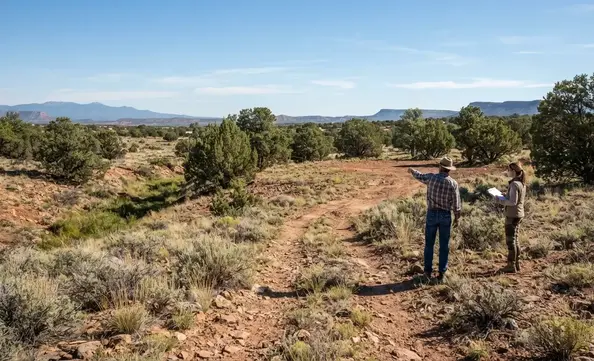
Careful pre-clearing planning helps establish future homesites, access routes, utility corridors, drainage areas, and vegetation to preserve before heavy equipment arrives.
What Happens After Land Clearing? Your Apache County Property Development Roadmap
Land clearing is often only the beginning of a larger rural property improvement project. Once unwanted vegetation, trees, brush, and debris have been removed, the next steps depend on what you plan to build or use the property for. A cleared parcel may still require grading, access improvements, drainage work, utility installation, a building pad, septic preparation, or other site-development work before construction can begin.
Planning these steps in the right sequence can help prevent unnecessary excavation, rework, and disturbance. For Apache County properties, the ideal progression depends on terrain, soil and rock conditions, drainage, access, the future building location, and whether the property is being developed for a home, cabin, ranch, agricultural use, recreation, or an off-grid project.
1. Evaluate the Cleared Site
After vegetation is removed, the underlying property becomes easier to evaluate. Clearing can reveal exposed rock, uneven ground, drainage patterns, old debris, stumps, buried obstacles, and other conditions that were difficult to identify through dense vegetation.
This is an important point to review the site before moving immediately into the next phase. The cleared area can be compared with the intended homesite, driveway, utilities, septic area, drainage paths, and other planned improvements.
2. Establish Access & Driveways
Once the property is cleared, the next priority may be creating or improving dependable access. A future homesite or development area needs a practical route for construction equipment, material deliveries, service vehicles, and eventually everyday property access.
Depending on site conditions, this may involve driveway clearing, excavation, grading, drainage improvements, rock work, or placement of gravel and other suitable materials. Access planning should account for the property's terrain rather than simply following the shortest route.
3. Grade & Prepare the Building Area
If the cleared property will support a home, cabin, garage, workshop, or other structure, the next stage may involve grading and preparation of the building area. The objective is to create a stable and appropriately shaped area that works with the property's existing terrain and planned construction.
Depending on the project, site preparation can include cutting and filling, leveling, removal of remaining obstacles, rough grading, compaction, and coordination with drainage and access improvements. Clearing and grading should work together rather than treating them as unrelated projects.
4. Address Drainage & Site Runoff
Clearing can change how water moves across exposed ground, making drainage planning an important part of the next development phase. Natural washes, slopes, low areas, and existing runoff paths should be considered before major grading or construction begins.
Depending on the property, drainage work may include shaping the site, establishing appropriate grades, improving driveway drainage, protecting exposed soil, or directing runoff away from areas where standing water or erosion could become a problem.
5. Install Utilities & Site Infrastructure
With access and major site layout established, the property may move into utility and infrastructure work. Rural development can require electrical service, utility trenching, water systems, wells, septic infrastructure, communications, solar equipment, or other improvements.
Planning these installations after the major site layout is established can help coordinate trench routes, equipment access, building locations, and future maintenance areas. Off-grid properties may require additional coordination between wells, septic systems, solar power, water storage, generators, and other systems.
6. Move Toward Construction or Property Use
Once clearing, access, grading, drainage, and required infrastructure are addressed, the property may be ready for the next stage of development. Depending on the project, this could mean building a home or cabin, constructing a shop or agricultural structure, establishing a recreational area, or continuing an off-grid development plan.
Not every property needs every step, and some projects may require additional work between phases. The important goal is to establish a practical sequence that matches the property's intended use, site conditions, and construction plans.
A Practical Order for Rural Site Development
While every Apache County property is different, a typical rural development project may progress through several connected stages:
- Land Clearing: Remove unwanted vegetation and establish the initial working area.
- Access Improvements: Establish or improve the driveway and construction access route.
- Drainage Planning: Account for natural runoff, washes, slopes, and site drainage.
- Grading: Shape and level areas needed for buildings, access, and other improvements.
- Utilities: Coordinate water, septic, electrical, communications, solar, and other infrastructure.
- Construction: Move into the building or property-use phase once the site is appropriately prepared.
The advantage of thinking beyond the initial clearing work is that each phase can support the next one. Clearing the right areas, preserving important vegetation, establishing practical access, protecting drainage paths, and coordinating future infrastructure can reduce unnecessary disturbance and make the overall property-development process more efficient.
For Apache County landowners developing rural acreage, the cleared property should be viewed as the starting point for the next phase rather than the finished product. Whether the goal is a homesite, cabin, ranch, recreational property, agricultural operation, or off-grid development, a coordinated site plan can help determine what should happen next and in what order.
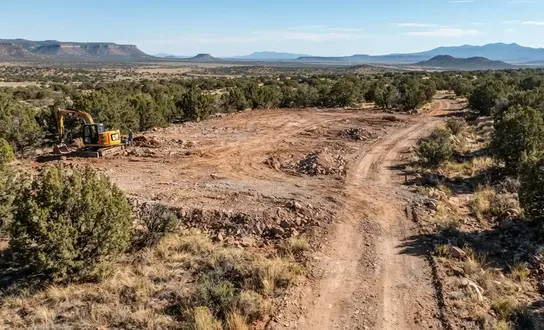
Land clearing is often the first stage of rural property development, creating the working area needed for access, grading, drainage, utilities, and future construction.
Best Time To Clear Land in Apache County, Arizona
The best time for land clearing in Apache County depends on vegetation conditions, weather, terrain, and the future goals for the property. Planning clearing at the right time can improve equipment efficiency, reduce unnecessary disturbance, and prepare the land for future construction.
Apache County experiences major differences between high desert areas near St. Johns and Concho and forested mountain regions near Alpine, Greer, and Springerville. Seasonal conditions can affect access, soil moisture, vegetation management, and overall project planning.
Cooler Months
Fall, winter, and early spring often provide favorable conditions for clearing. Cooler temperatures reduce heat stress on operators, and vegetation is easier to manage before spring growth begins.
Before Construction Begins
Clearing should typically happen before excavation, grading, utilities, driveway work, or building preparation. Early clearing helps future improvements follow a more organized and efficient layout.
Avoiding Weather Challenges
Heavy storms, muddy terrain, extreme heat, and difficult access can slow down clearing projects. Planning around seasonal conditions helps ensure smoother and safer operations.
A professional evaluation helps determine the best clearing schedule based on your property's location, vegetation, terrain, access, and development plans.
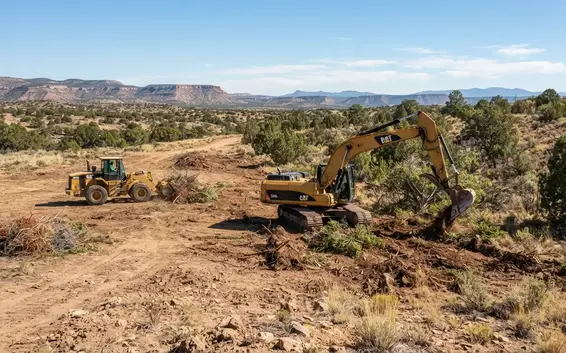
Seasonal ground conditions, vegetation, weather, and property access can all influence when land clearing is most practical in Apache County.
Selective Clearing vs Complete Clearing
Not every Apache County property requires complete vegetation removal. The right approach depends on how the land will be used, the terrain, and which natural features should remain.
Selective Clearing
Selective clearing removes targeted vegetation while preserving desirable trees, natural features, privacy, shade, and the character of the property.
- Homesite preparation
- Tree preservation
- Access improvements
- Fire mitigation areas
Complete Clearing
Complete clearing removes most vegetation and obstacles from a defined area when maximum usable space is needed for construction or development.
- Building pads
- Large development areas
- Agricultural improvements
- Major site preparation
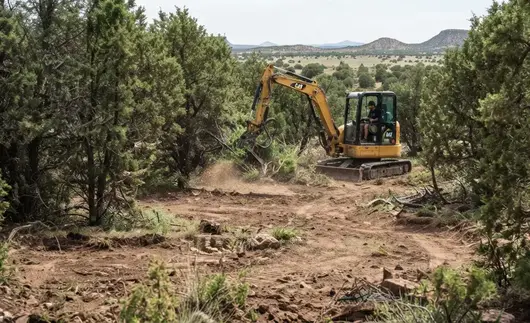
Selective clearing can open homesites, access routes, and improvement areas while preserving desirable juniper, piñon, privacy vegetation, and natural features.
Need Help Planning What Areas of Your Apache County Property to Clear?
Clearing the right areas first can help coordinate the future homesite, driveway, utilities, well, septic system, drainage, and other improvements while preserving vegetation that does not need to be removed. If you are preparing rural acreage for development, tell us about the property, what you plan to build, and the areas you believe need to be cleared.
Call (928) 543-6447Land Clearing vs Forestry Mulching
Apache County landowners often ask whether traditional land clearing or forestry mulching is the better option for their property. Both methods can improve overgrown acreage, but each serves a different purpose. The right choice depends on your terrain, vegetation type, access conditions, and long‑term development plans.
From high‑desert juniper flats near St. Johns and Concho to heavily wooded mountain parcels in Alpine, Greer, Nutrioso, and Springerville, understanding the difference between clearing and mulching helps you choose the most effective approach for homesites, ranch land, recreational acreage, access roads, and off-grid development.
-
Land Clearing for Construction & Full Development
Traditional land clearing removes trees, brush, stumps, and obstacles to create fully open ground. This method is ideal for building pads, driveways, utility corridors, septic areas, barns, shops, and larger development zones. Clearing provides a clean, workable surface for excavation, grading, and long‑term infrastructure installation. -
Forestry Mulching for Vegetation Reduction
Forestry mulching grinds compatible vegetation into mulch that stays on the ground. It’s effective for reducing juniper overgrowth, improving trails, opening access routes, managing vegetation, and enhancing visibility without disturbing soil or requiring debris hauling. Mulching is often preferred for ranch land, recreational parcels, and wildfire mitigation. -
Choose Clearing When You Need Usable Building Space
Homesites, cabins, garages, workshops, and off‑grid structures require clearly defined areas that can be graded, compacted, and excavated. Clearing provides the level of ground preparation needed for foundations, driveways, utilities, and long‑term development. -
Terrain & Access Influence the Best Method
Apache County includes volcanic rock, high‑desert soil, steep mountain slopes, dense juniper, and remote access conditions. Some areas require heavy equipment and full clearing, while others benefit from mulching to avoid disturbing fragile terrain or steep slopes. -
Consider What Happens After Vegetation Removal
If the area will be graded, excavated, used for a building pad, or prepared for utilities, clearing typically provides a better foundation. If the goal is vegetation reduction, improved access, or wildfire mitigation, mulching may be the more efficient option. -
Plan the Method Around Long‑Term Property Use
A future off‑grid homesite may require full clearing, while a ranch access road or recreational trail may only need mulching. Evaluating your property’s terrain, vegetation density, access limitations, and development goals ensures the right approach is used from the start.
Apache County’s diverse terrain, from juniper‑covered high desert to heavily timbered mountain parcels, means no single method fits every property. A professional evaluation helps determine whether traditional land clearing, forestry mulching, selective clearing, or a combination of methods will deliver the best results for your land and future plans.
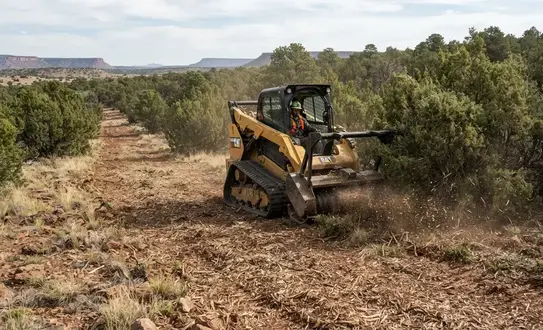
Forestry mulching reduces compatible trees and brush into ground-level mulch, making it useful for vegetation management, access improvement, and wildfire mitigation.
Land Clearing vs Grubbing
Land clearing and grubbing are closely related, but they serve different purposes in preparing rural Apache County properties for construction. Clearing removes above‑ground vegetation, while grubbing eliminates the roots, stumps, and subsurface material that can interfere with foundations, utilities, driveways, and long‑term development.
Because Apache County includes high‑desert juniper flats, rocky volcanic soil, and heavily wooded mountain terrain, choosing the right method depends on your property’s vegetation density, soil conditions, access, and future building plans.
-
Land Clearing
Removes trees, brush, surface vegetation, and visible obstacles. Ideal for opening access routes, improving visibility, reducing overgrowth, and preparing general areas for future planning. Clearing is commonly used for ranch access, recreational acreage, initial homesite layout, and off‑grid property preparation. -
Grubbing
Removes roots, stumps, buried vegetation, and subsurface obstructions that prevent proper grading, excavation, or construction. Grubbing is essential for building pads, driveways, septic systems, utility corridors, and any area that must support long-term structural stability.
A professional evaluation helps determine whether your Apache County property needs basic clearing, full grubbing, or a combination of both. Soil type, vegetation density, terrain, and development goals all influence the best approach for creating a stable, build‑ready foundation.
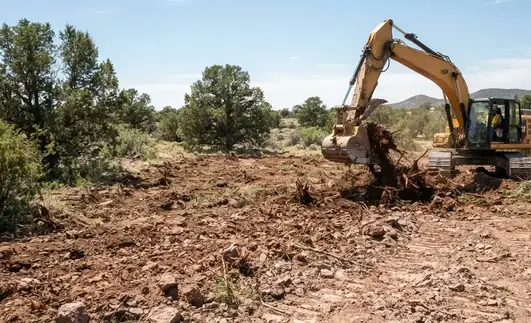
Grubbing goes beyond vegetation removal by extracting roots, stumps, and subsurface obstacles that can interfere with grading, foundations, driveways, utilities, and future construction.
Brush Removal vs Lot Clearing
Brush removal and lot clearing are not always the same service. Brush removal targets unwanted low-growth vegetation and overgrowth, while lot clearing typically involves opening a larger area by removing trees, brush, debris, and other obstacles. Choosing the right scope helps Apache County property owners avoid paying for more clearing than their project actually requires.
-
Brush Removal: Targeted Vegetation Management
Brush removal is appropriate when the primary problem is dense scrub, weeds, small vegetation, or overgrowth. It can improve visibility, access, maintenance, and the overall usability of selected areas without completely opening the property. -
Lot Clearing: Opening Larger Areas
Lot clearing is more extensive and may include trees, brush, fallen timber, stumps, debris, and other obstacles. It is better suited to areas that need to be substantially opened for construction, access, or future property improvements. -
Choose Brush Removal for Limited Improvements
If the goal is to clean up an overgrown portion of acreage, improve visibility, maintain a recreational area, or open a narrow access corridor, targeted brush removal may be enough. -
Choose Lot Clearing for Major Development Areas
Larger development areas may require more complete clearing before excavation, grading, road construction, or building preparation can begin. This approach creates a more open work area for subsequent site development. -
Both Services Can Be Combined
A single Apache County property may need different levels of clearing in different locations. For example, a homesite may require extensive clearing while surrounding acreage only needs selective brush removal and vegetation management. -
The Right Choice Depends on Your End Goal
The amount of clearing should be based on what you intend to do with the land afterward. Matching the clearing scope to the future use helps control costs, preserve desirable vegetation, and prevent unnecessary disturbance.
For rural Apache County properties, brush removal and lot clearing are best viewed as different levels of property preparation rather than competing services. A site evaluation can help determine where targeted vegetation removal is sufficient and where more complete clearing is necessary.
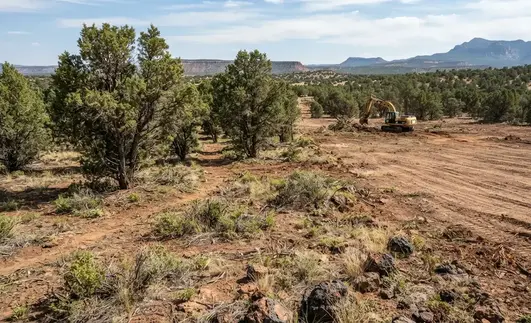
Brush removal can target overgrown vegetation in selected areas, while lot clearing opens larger portions of a property for access, construction, or future development.
Apache County Land Clearing Pricing Overview
Land clearing costs vary by property. Acreage, vegetation density, juniper and piñon growth, rocky terrain, equipment access, slope, cleanup requirements, and the intended use of the land all affect the final price. The ranges below provide Apache County property owners with a realistic starting point for common rural clearing projects.
Light Brush & Vegetation Clearing
Light clearing of weeds, grass, low brush, and smaller vegetation may range from $1,500–$5,000+. Pricing depends on acreage, vegetation density, terrain, rocky ground, equipment access, and cleanup requirements. These projects are often used to open usable areas, improve visibility, or clear space around existing property improvements.
Juniper, Piñon & Heavy Vegetation Clearing
Heavier clearing involving juniper, piñon, dense brush, and larger vegetation may range from $5,000–$20,000+. Tree size, vegetation density, rocky terrain, equipment access, and material handling all affect the cost, particularly on heavily overgrown or difficult rural properties.
Homesite & Building Area Clearing
Clearing for a home, cabin, garage, workshop, barn, or other rural structure may range from $3,000–$15,000+. Costs depend on the size of the building area, existing vegetation, terrain, rock, equipment access, and whether stumps, roots, or other obstacles must be removed before excavation or building pad preparation.
Driveway & Private Access Clearing
Clearing a private driveway or access route may range from $2,000–$10,000+ depending on route length, vegetation, terrain, rock, existing access, and drainage conditions. More difficult routes may require additional clearing, excavation, grading, rock work, or drainage improvements.
Large Acreage & Ranch Clearing
Multi-acre ranch, agricultural, recreational, and rural property clearing may range from $10,000–$50,000+. Final pricing depends on the acreage being cleared, vegetation density, juniper and piñon growth, terrain, access, selective clearing needs, and the overall scope rather than relying on a single flat per-acre rate.
Selective Clearing & Wildfire Mitigation
Selective vegetation reduction around homesites, cabins, outbuildings, and access areas may range from $2,000–$10,000+. Pricing depends on vegetation density, trees being removed, terrain, access, and the desired level of reduction while preserving desirable trees and natural features where appropriate.
Best way to get accurate pricing: An on-site evaluation allows the clearing scope to be based on actual vegetation, terrain, rocky conditions, equipment access, cleanup requirements, and the intended use of the property. Homesite preparation, driveway access, ranch clearing, and larger development projects can each require a different equipment and clearing approach.
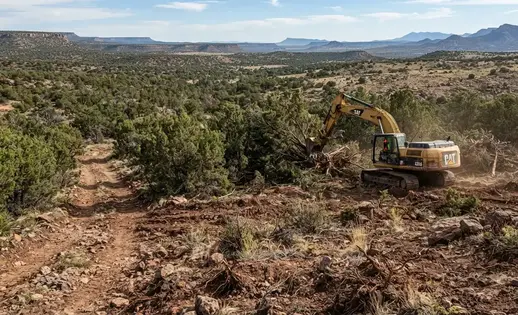
Clearing costs can change substantially with vegetation density, terrain, access, acreage, and the amount of material that must be removed or managed.
Need a Property-Specific Land Clearing Estimate?
Land clearing costs can change substantially based on acreage, vegetation density, juniper and piñon growth, rocky terrain, slope, equipment access, cleanup requirements, and the amount of land actually being cleared. Tell us where your Apache County property is located, what areas need to be cleared, and what you plan to do with the land afterward.
Call (928) 543-6447What Affects Land Clearing Cost in Apache County?
Land clearing costs depend on much more than acreage. Apache County properties can vary widely in vegetation density, juniper and piñon growth, rocky terrain, slope, equipment access, and cleanup requirements. Understanding these conditions helps determine the right clearing approach, equipment, labor, and overall project scope before work begins.
Acreage & Clearing Scope
The total property size matters, but the actual area being cleared is often more important. A homesite, driveway corridor, or selected portion of a large ranch may require far less work than clearing an entire parcel. Pricing is based on the specific clearing footprint and intended use of the property.
Juniper, Piñon & Vegetation Density
Sparse brush and grass require a different approach than dense juniper, piñon, scrub, and larger woody vegetation. Tree size, spacing, root systems, and the amount of material being removed can affect equipment time, labor requirements, and cleanup.
Rocky & Uneven Terrain
Exposed rock, uneven ground, washes, and rough terrain can make vegetation removal more difficult and limit equipment movement. Rocky conditions may also require additional work when clearing is being performed in preparation for future grading, excavation, or access improvements.
Equipment Access
Remote properties, narrow entrances, rough access roads, steep approaches, and limited working space can affect which equipment can reach the clearing area. Good equipment access allows work to be performed more efficiently, while difficult access can increase mobilization, repositioning, and labor requirements.
Slope & Ground Conditions
Sloped or irregular ground requires different equipment positioning and clearing techniques than relatively level terrain. Existing washes, drainage paths, loose soil, and other ground conditions can also influence how vegetation is removed while limiting unnecessary erosion or disturbance.
Debris & Material Handling
The work may continue after vegetation has been cut or removed. Depending on the project, brush and woody material may need to be stacked, chipped, mulched, or hauled away. The desired level of cleanup can significantly affect the labor, equipment, and final project cost.
Selective vs. Complete Clearing
Selective clearing can preserve desirable trees and natural features while opening specific areas for homesites, driveways, recreation, or property improvements. Complete clearing removes a much larger portion of existing vegetation and may require additional equipment, material handling, and cleanup.
Intended Use of the Property
The planned use of the cleared area can change the scope of work. Homesite preparation may require clearing below future excavation areas, while a driveway may need clearing that coordinates with future grading and drainage. Ranch, recreational, and off-grid projects can each have different clearing requirements.
Understanding these factors before clearing begins helps establish a realistic project scope, avoid unnecessary work, and select the appropriate equipment and clearing method for the property. An on-site evaluation provides a better basis for determining actual site conditions and project-specific pricing.
Service Area
We provide professional land clearing services throughout Apache County, Arizona. Our work supports homeowners, ranchers, agricultural users, and rural landowners with brush removal, tree clearing, vegetation management, lot clearing, access creation, debris removal, and complete property preparation for future development.
- St. Johns, AZ
- Springerville, AZ
- Eagar, AZ
- Concho, AZ
- Vernon, AZ
- Sanders, AZ
- Alpine, AZ
- Nutrioso, AZ
- Greer, AZ
- McNary, AZ
- Ganado, AZ
- Window Rock, AZ
- Adamana, AZ
- Chambers, AZ
- Houck, AZ
- Lupton, AZ
- Many Farms, AZ
- Rock Point, AZ
- Round Rock, AZ
- Wide Ruins, AZ
- Surrounding Rural Communities
If you're located anywhere in Apache County or the surrounding rural communities, we can help clear your land and prepare your property for homesites, ranch projects, cabins, agriculture, and off‑grid development. Our land clearing services are built around Arizona’s unique terrain, vegetation, and rural property conditions.
Land Clearing FAQs
Land clearing in Apache County requires more than removing trees and brush. Rural properties throughout northeastern Arizona can have unique challenges including remote access, uneven terrain, juniper and pine vegetation, volcanic soils, drainage washes, steep grades, and future development requirements. Below are answers to common land clearing questions from homeowners, ranch owners, recreational land buyers, and off-grid property owners throughout Apache County, Arizona.
- What types of land clearing projects do you handle in Apache County Arizona?
- Apache County Land Services provides clearing for undeveloped acreage, rural homesites, ranch properties, cabins, recreational parcels, hunting properties, agricultural land, and off-grid developments. Projects may include removing dense brush, clearing building areas, opening access routes, preparing utility paths, improving usable acreage, and creating a better starting point for future construction.
- Why should land be cleared before building in Apache County?
- Many Apache County properties are purchased as raw acreage that has never been developed. Clearing helps property owners understand the actual terrain, locate usable building areas, improve equipment access, identify drainage patterns, and prepare the land for future improvements such as driveways, house pads, wells, septic systems, fencing, and solar installations.
- What vegetation is commonly removed during Apache County land clearing?
- Vegetation varies throughout Apache County depending on elevation and location. Clearing projects may involve removing juniper, pinyon pine, scrub brush, thick undergrowth, fallen timber, overgrown vegetation, and natural debris that prevents access or limits property use.
- Do you provide land clearing for off-grid properties in Apache County?
- Yes. Apache County has many remote properties purchased for off-grid homes, cabins, retreats, and recreational use. Clearing can help create access roads, prepare building areas, open space for solar systems, improve equipment access, and create usable areas for future wells, septic systems, and other rural infrastructure.
- Can you clear land for remote properties with difficult access?
- Yes. Many rural parcels throughout Apache County have narrow entrances, rough roads, overgrown paths, steep terrain, or limited equipment access. A clearing plan must consider how machinery reaches the property, where material can be moved, and how access can be improved without creating unnecessary erosion or drainage problems.
- Do you clear land for ranches and large acreage properties?
- Yes. Large rural properties often require selective clearing instead of removing everything. Ranch owners may need cleared areas for livestock operations, fencing, equipment access, agricultural improvements, future structures, fire mitigation, and maintaining usable portions of larger parcels.
- How does Apache County terrain affect land clearing?
- Apache County contains several different environments including high desert areas around St. Johns and Concho, wooded mountain regions near Springerville, Eagar, Greer, and Alpine, and remote rural areas throughout the county. Elevation, soil conditions, vegetation, slopes, and drainage patterns all influence the equipment and clearing approach needed for each property.
- Can land clearing help prepare a property for a house pad or cabin site?
- Yes. Land clearing is often the first stage of rural construction preparation. Removing vegetation and obstacles creates a workable area where future grading, excavation, building pad preparation, driveway installation, and other site improvements can be completed more efficiently.
- Do you clear areas for driveways and property access roads?
- Yes. Many undeveloped Apache County properties have limited access due to brush, trees, uneven terrain, or natural obstacles. Clearing access corridors helps create routes for homeowners, construction crews, delivery vehicles, emergency access, and future driveway improvements.
- Can land clearing improve drainage and reduce erosion issues?
- Yes. Clearing must be planned around how water naturally moves across the property. Apache County receives seasonal monsoon rainfall that can create runoff problems if land is disturbed incorrectly. Proper planning considers washes, slopes, drainage paths, and future grading needs to help protect the property.
- Do you provide vegetation management for wildfire mitigation?
- Yes. Many Arizona property owners use brush clearing and vegetation management to reduce excessive growth around homes, cabins, access roads, and important structures. Removing dense vegetation can improve maintenance access and help create safer defensible areas around developed portions of a property.
- What is the difference between land clearing and excavation?
- Land clearing focuses on removing vegetation, trees, brush, and obstacles that prevent property use. Excavation involves moving and shaping soil for projects such as building pads, drainage improvements, trenches, and road construction. Many Apache County projects require both clearing and excavation as part of complete site preparation.
- How much does land clearing cost in Apache County Arizona?
- Cost depends on acreage size, vegetation density, tree removal requirements, terrain, access conditions, disposal needs, and whether additional grading or excavation is required. A lightly wooded parcel near an accessible road will typically require a different approach than a remote mountain property with heavy vegetation and difficult terrain.
- Do you provide land clearing near St. Johns, Concho, Springerville, and Eagar?
- Yes. Apache County Land Services works with property owners throughout Apache County including St. Johns, Concho, Vernon, Sanders, Springerville, Eagar, Alpine, Greer, Show Low, Pinetop-Lakeside, and surrounding rural communities. Each area has different vegetation, terrain, and access conditions that require a property-specific clearing plan.
- Can cleared land be prepared for wells, septic systems, and utilities?
- Yes. Rural development often requires multiple phases before a property is ready for use. Clearing creates access and working areas needed for future utility trenching, septic installation, water wells, electrical service, solar systems, and other off-grid improvements.
- What equipment is used for land clearing in Apache County?
- Equipment depends on the property conditions and project goals. Land clearing may require excavators, bulldozers, skid steers, brush-cutting attachments, grapples, mulching equipment, and hauling equipment to safely remove vegetation and prepare the land.
- Why hire a local Apache County land clearing company?
- Local knowledge is important when working on rural Arizona properties. Understanding Apache County's remote access challenges, high desert terrain, mountain areas, seasonal weather, vegetation types, and off-grid development needs allows clearing plans to be designed around the actual property instead of a generic approach.
- How do I schedule a land clearing estimate?
- Estimates begin by reviewing the property's location, acreage, terrain, vegetation, access conditions, and future goals. Apache County Land Services can help determine the right clearing approach whether you are preparing land for a home, cabin, ranch improvements, recreation, agriculture, or off-grid living.
Ready to Clear Your Apache County Property?
Turn overgrown or undeveloped Arizona acreage into usable land with professional land clearing services designed for rural homesites, cabins, ranch properties, recreational land, driveways, and off-grid development throughout Apache County. From light brush and vegetation to juniper, piñon, heavy growth, selective clearing, and larger acreage projects, we can help establish a practical clearing plan based on your property's terrain, access, vegetation, and intended use. Contact Apache County Land Services to discuss your property and receive a detailed land clearing estimate based on actual site conditions and project goals.
Call (928) 543-6447