
⭐ Professional Gravel Delivery, Road Base & Aggregate for Driveways, Private Roads, Homesites & Rural Properties Throughout Apache County, Arizona
Professional Gravel Delivery, Road Base & Aggregate in Apache County, Arizona
The right aggregate material can make a major difference on a rural property. Apache County Land Services provides gravel, road base, aggregate, and fill material delivery for driveways, private roads, homesites, building areas, drainage projects, ranch properties, and off-grid development throughout Apache County. We help property owners get the appropriate material delivered where it is needed for access improvement, surface preparation, site development, and rural construction projects.
Serving St. Johns, Concho, Vernon, Sanders, Springerville, Eagar, Alpine, Greer, Nutrioso, McNary, Ganado, Window Rock, and surrounding Apache County communities.
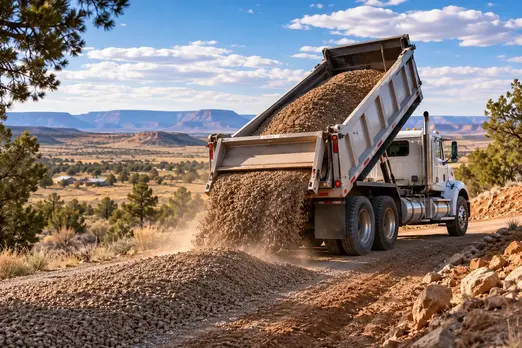
Gravel, Road Base, Aggregate & Fill Materials for Apache County Properties
Rural property projects rarely need “just gravel.” The material that works for a finished driveway may not be the same material needed beneath a private road, around a drainage feature, beneath a parking area, or to raise a low portion of a homesite. Material selection should account for the intended use, existing ground conditions, drainage, traffic, slope, and finished grade rather than simply choosing the cheapest aggregate available.
Apache County Land Services helps property owners source and arrange delivery of bulk gravel, road base, aggregate, drainage rock, and suitable fill materials for rural construction and land-improvement projects. Because Apache County properties can range from established residential parcels to remote high-desert acreage, the appropriate material and quantity can vary substantially from one project to another.
Common materials and applications include:
-
Driveway & Surface Gravel
Gravel can provide a practical finished driving surface for rural homes, cabins, ranch properties, recreational parcels, and undeveloped acreage. The appropriate surface aggregate depends on the underlying road section, native soil, traffic, drainage, slope, and expected maintenance. A surface layer should be considered together with the driveway and road grading beneath it rather than treated as a standalone material. -
Road Base
Road base provides a compactable aggregate layer for driveways, private roads, access routes, parking areas, and other traffic-bearing surfaces. It may be used beneath a finished gravel surface or as part of a structural road section where the native ground does not provide the stability needed for the intended traffic. -
Crushed Aggregate
Crushed aggregate can be useful for road construction, equipment access, parking, construction staging, and other applications where angular material and controlled gradation are beneficial. The useful characteristics of the aggregate depend on its size distribution, fines content, hardness, placement method, and intended application. -
Drainage Rock
Coarser aggregate may be appropriate for selected drainage applications, culvert areas, outlets, erosion-prone locations, and other water-management features. Drainage material should be selected according to the actual flow conditions, surrounding soil, slope, installation requirements, and intended function rather than assuming every rock product performs the same way. -
Fill Material
Suitable fill can be used for elevation correction, low-area filling, site development, grading, and other earthwork. Fill intended to raise ground elevations is not automatically suitable beneath a building, driveway, septic component, or other load-bearing application. Soil composition, rock content, organic material, moisture, placement depth, and compaction requirements should be considered before material is selected. -
Construction Access Material
Undeveloped Apache County properties may need improved access before construction can begin. Aggregate can help establish temporary or permanent routes for dump trucks, excavators, concrete deliveries, well equipment, utility work, septic installation, and other construction traffic when native ground conditions are inadequate. Where the existing terrain or subgrade requires substantial preparation, excavation and site preparation may be necessary before aggregate is placed. -
Ranch & Agricultural Access Material
Rural ranches and agricultural properties may require aggregate for ranch roads, equipment routes, livestock-area access, parking, barns, shops, agricultural buildings, and other working areas. Material selection should reflect the vehicles and equipment using the route, seasonal ground conditions, drainage, and the amount of traffic expected. -
Homesite & Building-Area Aggregate
Aggregate and suitable fill can support rural homesite and building-pad preparation, building access, parking areas, equipment staging, and other development work. The material required depends on whether the project needs structural fill, compactable base, drainage material, temporary construction access, or a finished surface around the building area. -
Off-Grid Property Development Material
Remote off-grid properties may require several types of aggregate as development progresses. Road base and gravel can support access roads, driveways, homesites, cabins, workshops, utility access, parking areas, drainage improvements, and construction staging. Planning these material needs together as part of an off-grid land development plan can reduce unnecessary hauling and rebuilding as the property develops. -
Parking & Equipment Areas
Gravel and compactable aggregate can be used to establish parking areas, trailer pads, equipment staging areas, and working surfaces around rural properties. The required material section depends on vehicle weight, frequency of use, drainage, existing soil, and whether the area is intended to remain permanent or serve a temporary construction purpose.
Material availability can vary by aggregate source, supplier, project location, hauling distance, quantity, and current supply conditions. Apache County's large geographic area also means that delivered material costs can differ considerably between properties even when the projects require similar quantities. Remote access, long dirt roads, narrow gates, steep approaches, soft ground, limited turning space, and difficult unloading locations can further affect delivery planning.
The most useful starting point is therefore not simply asking for “a load of gravel.” Providing the property location, what the material will be used for, approximate dimensions, existing surface conditions, expected vehicle traffic, drainage concerns, and whether the material will be spread and graded can help determine what type of aggregate and delivery arrangement makes sense for the project.
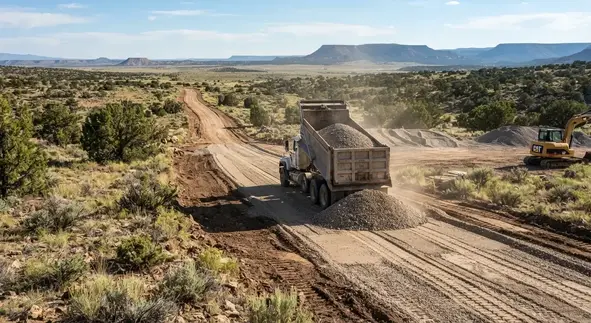
Gravel, road base, crushed aggregate, drainage rock, and suitable fill can serve different purposes on Apache County rural properties. Material selection should account for the intended use, existing ground, drainage, traffic, and how the material will be placed.
Our Gravel & Aggregate Material Selection Process
Choosing aggregate for an Apache County property starts with understanding what the material needs to accomplish after it arrives. A driveway surface, structural road base, drainage area, construction access route, parking area, and homesite improvement can require very different materials. We look at the property's existing ground, intended use, traffic, drainage, access, and finished grade before determining what type of aggregate or fill material makes sense for the project.
1. Property & Project Review
We begin with the actual property and the reason material is needed. A rural driveway near St. Johns may have very different requirements from a long ranch road near Concho, a mountain-access property around Springerville or Eagar, or an undeveloped parcel farther east toward Sanders or Chambers. We consider the project location, approximate dimensions, existing access, intended use, and whether the material will be used for a driveway, private road, homesite, drainage improvement, parking area, ranch improvement, construction access, or another rural development purpose.
2. Existing Subgrade Assessment
Imported aggregate is only as dependable as the ground supporting it. We consider whether the existing surface consists of firm native material, loose soil, soft areas, organic material, existing gravel, compacted ground, exposed rock, caliche, or other difficult subgrade conditions. Deep ruts, saturated areas, unstable soil, and unsuitable material may need to be corrected before aggregate is placed. Adding another load of gravel over a failed foundation can simply bury the problem rather than solve it.
3. Determine the Intended Use
The material needs to match the job it is expected to perform. A finished residential driveway, seasonal cabin road, ranch access route, construction entrance, equipment path, parking area, and permanent private road can all have different requirements. We identify whether the material needs to function primarily as a driving surface, structural base, drainage layer, construction-access surface, elevation fill, or another component of the property's development.
4. Evaluate Traffic & Loading
Traffic determines how much stress the finished surface will experience. A driveway serving passenger vehicles does not necessarily need the same road section as an access route used by dump trucks, concrete trucks, livestock trailers, RVs, tractors, well-drilling equipment, or construction machinery. Expected vehicle weight, frequency of use, turning areas, and whether the route is temporary or permanent all influence material selection and required aggregate depth.
5. Evaluate Drainage & Water Movement
Water is one of the most important considerations when selecting material for an Apache County driveway or private road. We look at whether runoff approaches from higher ground, crosses the route, travels alongside it, concentrates at low points, or leaves the property through an existing drainage feature. Summer monsoon storms can expose weak road sections quickly, so gravel selection needs to be considered together with road grade and drainage shaping, crown, slope, ditches, swales, culverts, crossings, and drainage outlets where applicable.
6. Account for Apache County Ground Conditions
Apache County contains substantially different terrain and subgrade conditions. Properties can encounter sandy or loose soils, compacted native material, caliche, volcanic rock, shallow rock, uneven terrain, and areas affected by seasonal moisture. Conditions also change between the high-elevation communities around Springerville, Eagar, Alpine, Greer, and Nutrioso and the more open high-desert and plateau terrain farther west and north. Material that performs well on one parcel should not automatically be assumed to be the right choice for another.
7. Match the Aggregate to the Road Section
A durable gravel road may involve more than one material. Depending on the existing subgrade and intended use, the project may require a compactable road-base layer beneath a suitable surface aggregate. Other projects may need coarse material for a drainage application or suitable fill for elevation correction before the driving surface is installed. Treating every aggregate product as interchangeable can lead to unnecessary material use or premature surface problems.
8. Calculate Material Quantity
Once the material type and application are understood, quantity can be estimated from the project's length, width, and intended placement depth. Irregular driveways, long easements, changing road widths, soft areas, drainage corrections, and deeper base sections can all affect the final quantity. Estimating from actual dimensions helps avoid ordering too little material and reduces the expense of unnecessary excess aggregate.
9. Plan Delivery & Unloading
Rural delivery is not simply a matter of sending a dump truck to an address. Narrow gates, steep approaches, rough roads, soft shoulders, overhead obstructions, limited turning space, long private easements, and remote locations can affect where a truck can safely travel and unload. Delivery planning considers the receiving area, truck access, unloading location, number of loads, and whether material can be placed close enough to the work area for efficient spreading.
10. Prepare the Receiving Surface
Material performs differently when it is placed on a properly prepared surface. Depending on the property, preparation may include clearing vegetation, removing unsuitable material, correcting ruts, improving drainage, excavating soft areas, shaping the subgrade, or establishing the required road grade. This is particularly important for new driveways and private roads where imported aggregate is expected to become part of a long-term road system rather than simply covering an existing dirt track.
11. Coordinate Delivery With Placement
For larger projects, delivery should be coordinated with spreading, grading, and compaction rather than treating material delivery as the final step. Multiple loads can be staged along a long driveway or private road, while equipment can spread and shape the aggregate as the work progresses. Coordinating these phases can reduce unnecessary rehandling and help place road base or surface gravel at the intended depth and location.
12. Plan for the Property's Next Development Phase
Gravel delivery should fit into the larger development plan whenever possible. An access road built today may later serve a house, cabin, shop, barn, septic installation, water well, solar system, or construction project. Planning material quantities, road alignment, drainage, and truck access around future improvements can reduce the likelihood that a newly built driveway or road will need to be excavated, relocated, or rebuilt later.
The right gravel or aggregate is determined by what the material must accomplish on the property, not simply by what material is cheapest or most commonly used. For Apache County rural projects, subgrade conditions, traffic, drainage, terrain, material depth, delivery access, and future development can all affect the correct approach. Taking those factors into account before material is delivered can produce a more useful road surface, reduce wasted aggregate, and help prevent problems that become expensive to correct after the material is already on the ground.
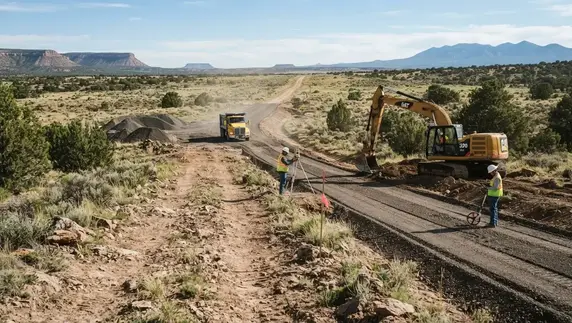
Aggregate selection starts with the property itself. Existing subgrade, terrain, drainage, traffic, road alignment, and future development can all affect which material and road section make sense for a rural Apache County project.
Not Sure What Material Your Property Needs?
Gravel, road base, crushed rock, and fill material can serve very different purposes. Existing soil, slope, drainage, traffic, road conditions, and the intended use of the property all affect what should be delivered. A project-specific discussion can help determine what needs to be considered before ordering material.
Call (928) 543-6447Gravel vs. Road Base vs. Crushed Rock vs. Fill Material
These materials are not interchangeable simply because they are all delivered by the truckload. Each performs a different job within a rural property project. Understanding where gravel, road base, crushed rock, and fill material belong can help prevent ordering the wrong product, particularly when material must be hauled a long distance to a remote Apache County property.
The important question is not simply which material is “best.” The better question is which material belongs in the particular layer or application being constructed. A driveway may use prepared native subgrade, imported fill in selected low areas, compactable road base beneath the driving surface, and a different aggregate as the finished surface. A drainage project may require a coarse rock product instead, while a homesite may require suitable fill for elevation correction rather than driveway gravel.
Gravel
Gravel is commonly used as a finished driving surface or general-purpose aggregate for rural property improvements. The appropriate product depends on its gradation, particle size, traffic, drainage, and the surface beneath it. The finished material should be considered together with the underlying driveway and road grading rather than treated as a standalone material.
- Rural driveways and private-road surfaces
- Ranch and property access routes
- Parking and equipment areas
- Construction access and staging areas
Gravel is not automatically a substitute for a structural road base. If the underlying subgrade is weak or drainage is poor, simply adding surface gravel may not correct the reason the road is failing.
Road Base
Road base is generally selected to create a compactable structural layer within a driveway or roadway. Its gradation allows smaller particles and fines to fill voids between larger aggregate when properly placed and compacted.
- New driveway construction
- Private-road structural layers
- Heavy construction access
- Strengthening existing access routes
Road base still depends on a suitable receiving surface. A compactable aggregate layer cannot reliably compensate for saturated soil, severe drainage problems, organic material, or an unstable subgrade underneath it.
Crushed Rock
Crushed rock generally refers to angular aggregate produced by mechanically crushing larger rock. Its characteristics vary by product, but angular material can provide useful interlock and durability for selected rural construction, drainage, and access applications.
- Selected drainage applications
- Road and access improvements
- Selected erosion-control applications
- Construction and equipment areas
“Crushed rock” describes a broad category rather than one universal product. Particle size, gradation, fines content, hardness, and intended installation all matter when determining whether a particular crushed-rock product is appropriate.
Fill Material
Fill material is generally used to build up or reshape ground elevations, correct low areas, support broader earthwork, or establish grades before another surface or improvement is constructed.
- Elevation correction and grading
- Filling selected low areas
- General homesite earthwork
- Cut-and-fill site development
Fill material intended for general earthwork is not automatically appropriate beneath a building, driveway, septic component, or other load-bearing improvement. The required material characteristics depend on what will eventually be built over it and how the placed material will be compacted.
For Apache County properties, material selection should follow the project's actual conditions rather than a generic “best gravel” recommendation. Native subgrade, drainage, traffic, slope, intended use, material depth, and future development all influence which aggregate belongs in each part of the project. Choosing the right material before delivery can reduce wasted loads, unnecessary rehandling, and the cost of correcting a road or site that was built with the wrong material.
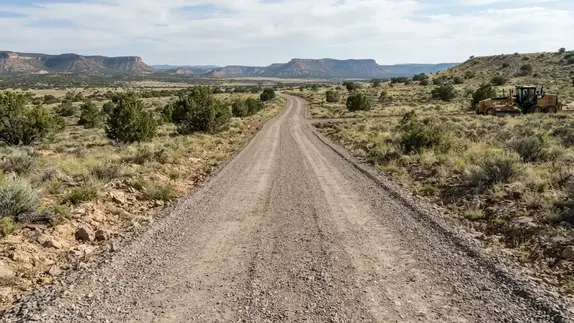
Different aggregate materials can serve different roles within a rural road or property improvement. The appropriate material depends on the road section, existing ground, drainage, traffic, and intended use.
Apache County Ground Conditions Can Change How Aggregate Performs
Apache County is too geographically varied for one gravel specification to make sense everywhere. Properties can differ substantially in elevation, terrain, native soil, rock content, drainage, vegetation, road access, and seasonal moisture. A material approach that works well on one rural parcel may require modification on another.
-
Caliche & Cemented Ground
Caliche can range from relatively workable material to hard cemented layers that behave very differently from ordinary soil. When a driveway or access road encounters hard caliche, the issue may be excavation and shaping rather than simply adding gravel. Existing caliche should be evaluated before deciding how much imported aggregate is actually needed. -
Rocky & Volcanic Terrain
Parts of Apache County contain rocky and volcanic terrain where large surface rock, uneven ground, or shallow hard material can complicate grading and aggregate placement. In these locations, road preparation may require more earthwork before a consistent gravel section can be established. -
Sandy or Loose Ground
Loose sandy ground can behave differently from dense native material under vehicle traffic. Aggregate may need to be incorporated into a properly prepared road section rather than simply dumped onto the existing surface. -
Low Areas & Poor Drainage
A low driveway can collect runoff from surrounding ground, while a road crossing a natural drainage path can experience concentrated water flow. These situations may require grade correction and drainage shaping, ditching, culverts, or other drainage improvements before additional aggregate is installed. -
Elevation & Slope
Steep or uneven rural properties can require cut-and-fill work to establish a usable road alignment. On these sites, aggregate is one component of the finished road rather than the solution to the underlying elevation problem.
The right aggregate strategy depends on what is already beneath the road and how the property handles water. Evaluating native ground, slope, drainage, and access conditions before delivery can help prevent unnecessary material, poor performance, and costly rework on remote Apache County properties.
Gravel for Rural Driveways in Apache County
A rural driveway is more than a strip of gravel connecting the county road to a house. On undeveloped or lightly developed property, the driveway may also serve as the primary construction route for excavators, concrete trucks, utility crews, well equipment, septic contractors, delivery vehicles, and emergency access. That makes the initial road section important.
A driveway that looks acceptable immediately after gravel is placed can develop ruts, potholes, soft shoulders, or washouts if the underlying grade and drainage were never addressed. The appropriate approach depends on the existing ground, driveway length, expected traffic, slope, drainage, and intended use.
New Driveway Construction
New driveways may require clearing, route preparation, excavation, grading, drainage work, subgrade preparation, road base, and surface aggregate. The amount of imported material depends on the existing ground and the finished design. Preparing the road section before placing gravel can help establish a more stable and durable access route.
Existing Dirt Driveway Improvements
Existing dirt roads often have a history that shows what needs to be corrected. Deep wheel ruts, recurring potholes, washed-out sections, ponding, exposed rock, and soft areas can indicate problems beneath the surface. Regrading the route before adding aggregate can produce a better result than repeatedly topping off the same damaged areas.
Long Rural Driveways
On a driveway hundreds or thousands of feet long, material quantity and drainage become especially important. A small difference in finished depth multiplied across a long route can represent a substantial amount of aggregate. Long roads also create more opportunities for runoff to cross or travel alongside the driving surface.
Rural driveway performance depends on more than the gravel placed on top. The existing grade, subgrade, drainage, route length, expected traffic, and intended use all influence how the driveway should be prepared and what aggregate section is appropriate.
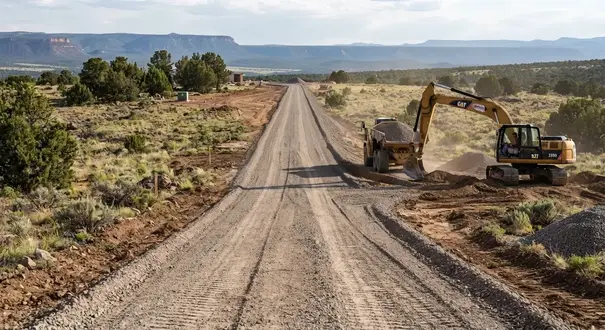
A durable rural driveway depends on more than the surface gravel. Route alignment, subgrade preparation, drainage, road width, traffic, and finished grade all influence how an Apache County driveway should be constructed.
Need to Improve Access to Your Apache County Property?
Whether you are building a new rural driveway, improving an existing dirt road, or preparing access for a future homesite, the route needs to account for terrain, drainage, subgrade conditions, traffic, and the material required. Get connected with professionals who can evaluate the access route and determine what work may be needed.
Call (928) 543-6447Gravel for Private Roads, Easements & Long Rural Access Routes
Long private roads have different material and maintenance considerations from a residential driveway. The route may cross multiple soil types, drainage patterns, elevation changes, gates, property boundaries, and areas of naturally soft or rocky ground.
For a long rural access road, the objective is not simply to spread gravel from one end to the other. The road should be evaluated as a system consisting of the alignment, subgrade, road base, surface aggregate, shoulders, drainage, crossings, and points where water enters or leaves the roadway.
Road Base for Long Access Routes
Road base can provide the structural layer required for a more durable traffic surface, particularly where native ground is not sufficient by itself. The required depth and quantity depend on site conditions, expected traffic, drainage, existing subgrade, and the intended use of the private road.
Road Crossings & Culverts
Where natural drainage crosses a private road, the road must accommodate that water rather than simply blocking it. Culverts, crossings, outlets, and surrounding aggregate may need to be coordinated with the road grade and drainage pattern to reduce erosion, washouts, and damage to the finished road surface.
Rural Easement Access
An easement route may need to accommodate multiple users or future development. Before importing large quantities of material, property owners should understand the intended route, access rights, turning requirements, drainage conditions, and future utility or construction needs.
Long private roads require more than surface gravel. Alignment, subgrade conditions, road base, drainage, crossings, traffic, and future access needs should all be considered when determining how an Apache County rural access route should be constructed or improved.
Gravel & Fill Material for Apache County Homesites and Building Areas
Aggregate delivery often becomes necessary before a rural home or cabin is ever built. A property may need construction access, a stabilized parking area, a building-area approach, material around a future shop, or additional fill as part of broader grading. Homesite material should be selected according to how the property will be developed rather than treated as a one-size-fits-all gravel application.
Homesite material should also be planned together with the site's finished elevations. Bringing in aggregate before the grading plan is established can result in material being placed at the wrong elevation or later moved during construction. The intended building area, access, drainage, utilities, septic system, and future improvements should all be considered before significant material is delivered.
Construction Access
The first material placed on a developing property may be needed simply to get heavy equipment onto the site without destroying the native route. Stabilized access can provide a more reliable path for excavators, concrete trucks, utility crews, well equipment, material deliveries, and other construction traffic. Where the access route itself requires improvement, driveway and road grading may need to be completed before substantial construction traffic begins.
Building Area Preparation
Aggregate may support access and site preparation around a future building, but structural fill beneath a foundation is a separate consideration from ordinary driveway gravel. Building-pad requirements should be determined by the applicable construction and site conditions rather than assuming any imported rock is suitable.
Parking & Equipment Areas
Rural homesites may need stabilized areas for vehicles, trailers, RVs, equipment, deliveries, or temporary construction staging. Properly selected aggregate can provide a more usable surface where native ground is soft, uneven, muddy, or susceptible to rutting under repeated vehicle traffic.
Future Development Planning
A rural homesite should be planned with the future driveway, septic area, utilities, water system, parking, outbuildings, and drainage in mind. Material placed today can affect where those improvements can be installed later, making the overall site layout important before significant aggregate or fill is delivered. For remote properties, coordinating these improvements as part of an off-grid land development plan can help reduce unnecessary rework as the property develops.
Homesite aggregate should support the property's broader development plan rather than being placed simply because an area needs to be raised or covered. Finished elevations, access, drainage, building requirements, and future improvements should all be considered before material is delivered and installed.
Gravel Delivery for Apache County Ranches & Agricultural Properties
Ranch and agricultural properties often need aggregate in locations that ordinary residential driveway projects do not. Equipment routes, livestock areas, barns, workshops, gates, loading areas, water-system access, storage yards, and long internal roads can all require different approaches to aggregate placement.
Traffic type matters particularly on working properties. A route used by pickups may perform adequately with one road section while a route carrying tractors, livestock trailers, feed trucks, or heavy equipment requires stronger preparation and more attention to drainage, turning areas, and surface stability.
Equipment Access
Agricultural machinery places concentrated loads on turning and staging areas. Equipment routes may require more substantial preparation than a typical residential driveway, particularly where tractors, implements, trailers, or other heavy machinery repeatedly enter, turn, or stage.
Barn & Shop Access
Aggregate can improve access around barns, shops, equipment buildings, and storage areas where repeated vehicle traffic creates mud, rutting, or surface deterioration. Proper grading and drainage should be considered along with the selected surface material.
Livestock & Loading Areas
Gates, livestock handling areas, loading points, and frequently traveled sections can experience concentrated traffic and surface wear. Suitable aggregate can help establish more durable working surfaces where native ground becomes muddy, rutted, or difficult to maintain.
Internal Ranch Roads
Long ranch routes should be evaluated for drainage, traffic, terrain, and maintenance rather than treating every section identically. Some portions may need imported aggregate or road base while naturally stable sections may require less intervention. Where the route needs reshaping or elevation correction, driveway and private-road grading may be part of the improvement.
Ranch and agricultural aggregate needs are often determined by where equipment and vehicles travel most frequently. Evaluating traffic loads, drainage, ground conditions, turning areas, and long-term use can help determine where material is actually needed instead of applying the same road section across the entire property.
Gravel Roads in Apache County Need a Drainage Strategy
Gravel is the driving surface, not the drainage system. On Apache County rural roads, long-term performance depends on controlling where stormwater enters the road, how it crosses or travels alongside the route, and where it ultimately leaves the roadway. Summer monsoon runoff can quickly turn an otherwise usable gravel driveway or private road into a rutted, eroded, or washed-out route when the grade and drainage features do not work together.
Before aggregate is placed, the road alignment should be evaluated in relation to the surrounding terrain. Runoff may arrive from an upslope, travel across the property as sheet flow, concentrate in a natural swale or wash, or collect in a low portion of the proposed road. Each condition can require a different approach. Simply increasing the gravel depth does not solve a drainage path that is sending water directly across the driving surface.
Road Crown & Surface Drainage
The finished road surface should be shaped so rainfall can leave the traveled way rather than remain in wheel tracks or low spots. A properly established crown, cross-slope, and smooth transition help move water toward the road edge. The appropriate shape depends on road width, aggregate type, traffic, longitudinal grade, and the surrounding terrain.
Ditches, Swales & Upslope Runoff
Roads located below slopes or across natural drainage areas may receive water from outside the roadway itself. Ditches and swales can intercept runoff before it reaches the driving surface and direct it toward an appropriate discharge point. Their location, slope, capacity, and outlet matter because concentrating water without providing a stable place for it to discharge can simply move the erosion problem downstream. Proper grading and drainage shaping can help establish these relationships.
Culverts & Cross-Drainage
Natural washes, swales, and concentrated flow paths may need to cross beneath a private road rather than over the driving surface. Culvert crossings should be coordinated with the road elevation, contributing drainage area, inlet conditions, pipe capacity, outlet location, and surrounding aggregate. Poorly protected inlets or outlets can become erosion points even when the culvert itself is large enough to carry the expected flow.
Washouts, Erosion & Aggregate Loss
Repeated washouts usually indicate a water-management problem rather than simply a shortage of gravel. Concentrated runoff can strip surface aggregate, cut through the road section, expose the subgrade, undermine road edges, and create deep channels at low crossings or steep approaches. Correcting the water path before replacing damaged material can prevent the same section from failing again.
Drainage Should Be Planned With the Entire Road Alignment
A drainage feature is only effective if it works with the elevation and alignment of the road. A driveway may need to shed water toward one side for part of its length, intercept runoff from an uphill slope in another section, and use a culvert where a natural drainage path crosses the route. Long private roads can require several different drainage treatments rather than one continuous ditch or identical road section from the property entrance to the homesite.
Existing washes, swales, depressions, culvert crossings, steep grades, low crossings, and areas where aggregate has repeatedly migrated should be identified before material quantities are calculated. This helps determine whether the project primarily needs grading, drainage improvements, aggregate replacement, or a combination of earthwork and road construction.
A durable Apache County gravel road should give stormwater a controlled path away from the driving surface while protecting the aggregate and underlying subgrade from concentrated flow. Road crown, side drainage, culverts, crossings, outlets, grading, and aggregate placement should be treated as connected parts of the road system rather than separate improvements.
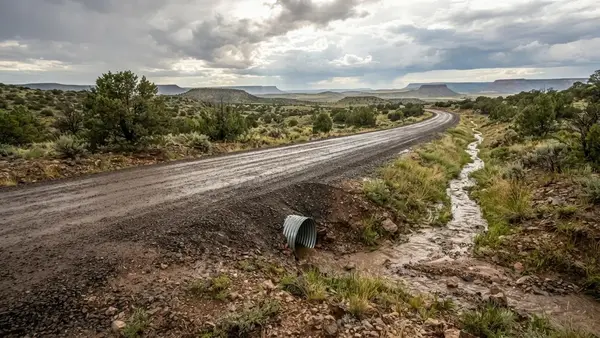
Gravel roads need a drainage strategy as well as a durable surface. Road crown, roadside drainage, culverts, crossings, and controlled runoff help protect aggregate and the underlying road section during Apache County's seasonal monsoon storms.
Gravel for Muddy, Soft, Rutted & Failing Rural Driveways
A muddy gravel driveway does not always need another load of aggregate. When a rural driveway turns to mud after rain, develops deep ruts, sinks into soft ground, or repeatedly washes out, the underlying cause needs to be identified before additional material is placed. Poor drainage, saturated soil, an unstable subgrade, inadequate road base, concentrated runoff, incorrect grading, and repeated heavy traffic can all contribute to driveway failure.
This is particularly important on undeveloped Apache County properties where native ground conditions can vary significantly along the same access route. A driveway may cross firm ground in one section and encounter loose soil, clay, caliche, rock, or a naturally low drainage area farther along the route. Simply adding gravel to the entire driveway can waste material if only certain sections actually require reconstruction.
When Additional Gravel Helps
Adding driveway gravel can work when the existing road section is reasonably stable but has lost surface material, developed minor depressions, or needs additional aggregate thickness for normal vehicle traffic. In these situations, properly graded and placed material can restore the driving surface without rebuilding the entire driveway.
When Grading Is Needed First
Deep tire ruts, potholes, irregular grades, poor cross slope, and standing water can indicate that the driveway needs to be reshaped before new gravel is installed. Regrading can restore the intended road profile and remove damaged or displaced material so the new aggregate has a more suitable surface beneath it.
When the Road Needs a Better Base
A driveway built over weak or unstable native ground may continue sinking even after repeated gravel applications. Where the existing subgrade cannot adequately support traffic, portions of the road may require excavation and stabilization, suitable fill, compactable road base, or reconstruction before the finished gravel surface is placed.
When Drainage Is the Real Problem
If water repeatedly flows down the driveway, crosses the road, collects in low areas, or enters from higher surrounding ground, additional gravel may provide only temporary improvement. Crowning, ditches, swales, culverts, drainage crossings, or grade corrections may be necessary to keep runoff from repeatedly damaging the road section.
When Heavy Traffic Is Breaking Down the Road
Construction trucks, dump trucks, livestock trailers, tractors, RVs, well-drilling equipment, and other heavy vehicles can damage a road section that performs adequately under ordinary passenger-vehicle traffic. Expected traffic should be considered when determining aggregate depth, road-base requirements, drainage, and the level of subgrade preparation needed.
When the Same Area Keeps Washing Out
Repeated washouts, exposed subgrade, displaced gravel, and deep erosion channels are signs that the road may be receiving concentrated runoff. Replacing the lost gravel without correcting the water path can create a recurring repair cycle. The damaged section should be evaluated together with the surrounding grade and drainage route.
The right repair depends on why the driveway is failing. A stable gravel surface may only need additional aggregate, while a muddy or sinking driveway may require grading, drainage correction, subgrade preparation, road base, or localized reconstruction. Evaluating the actual failure points helps avoid repeatedly paying to replace gravel that underlying ground conditions or runoff will simply damage again.
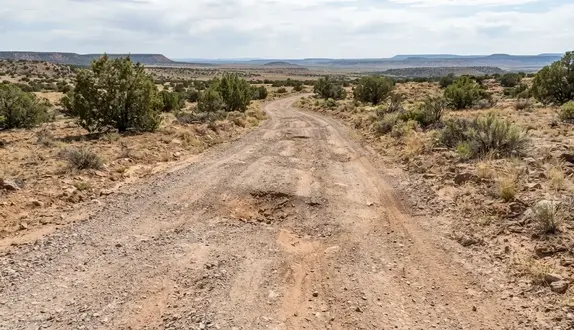
A rural driveway can require more than additional gravel when soft subgrade, rutting, poor drainage, or repeated runoff is causing the road surface to fail.
Is Your Apache County Driveway Muddy, Rutted or Washing Out?
Adding more gravel is not always the right repair. Soft subgrade, poor drainage, incorrect grading, inadequate road base, concentrated runoff, and heavy traffic can all contribute to recurring driveway problems. Tell us what is happening with your road and we can help determine what type of site work or material may need to be considered.
Call (928) 543-6447How Much Gravel Does an Apache County Driveway or Road Need?
Gravel quantity depends on more than the length of a driveway. The required material is determined by the route's length, width, planned aggregate depth, existing subgrade, drainage conditions, traffic, and the portions of the road that require additional preparation. Long rural driveways and private roads can also include turnarounds, widened approaches, drainage crossings, and localized areas that need deeper road construction.
A basic aggregate estimate starts with length × width × depth to determine approximate volume. That volume must then be converted into the appropriate purchasing quantity for the selected aggregate. Because different gravel, crushed rock, road-base, and fill products have different densities, cubic volume should not automatically be converted to tons using a universal factor.
1. Measure the Road Length
Start with the actual route that will receive aggregate rather than estimating from the straight-line distance between the county road and the property. Gates, bends, elevation changes, approaches, and irregular alignments can make the constructed route considerably longer than it appears on a map.
2. Determine the Average Width
Rural roads are not always a consistent width from end to end. A driveway may be narrower through a gate, wider near a homesite, or expanded at a turnaround or equipment area. Using the average constructed width produces a more useful aggregate estimate than measuring only the narrowest or widest section.
3. Determine the Aggregate Depth
Material depth should be based on the intended use and existing road conditions. A light-use residential driveway may have different requirements from a private road carrying dump trucks, tractors, livestock trailers, RVs, or construction equipment. Weak subgrade conditions may also require a different road section rather than simply increasing the surface gravel depth.
4. Identify Weak & Problem Areas
Soft ground, deep ruts, saturated sections, drainage crossings, potholes, exposed subgrade, and areas repeatedly damaged by runoff may require more than uniform surface coverage. These locations should be identified separately because they may require excavation, grading, stabilization, road base, or additional aggregate.
5. Include Turnarounds & Widened Areas
A gravel driveway may include more than the main driving lane. Trailer turnarounds, delivery areas, equipment staging areas, parking expansions, gate approaches, and widened sections can add significant surface area. These areas should be included when calculating the total aggregate requirement.
6. Account for Drainage & Crossings
Drainage features can change both the road layout and the amount of material needed. Culvert approaches, drainage crossings, ditch edges, low areas, and sections subject to concentrated runoff may require additional excavation, base preparation, rock, or localized road reconstruction rather than a uniform gravel depth.
7. Convert Volume to Tons or Loads
Once the approximate volume is established, the quantity can be converted into tons or truckloads using the selected material's expected density and the supplier's delivery specifications. Gravel, crushed aggregate, road base, and other products should not be assumed to weigh the same amount per cubic yard.
8. Separate Uniform Sections From Reconstruction Areas
Long Apache County roads are often more accurately estimated by dividing the route into sections rather than applying one depth everywhere. Stable portions may need ordinary surface aggregate while soft, steep, rutted, or drainage-sensitive sections may require a different road section and additional material.
An accurate gravel estimate should account for the actual road dimensions, planned depth, aggregate type, weak subgrade areas, drainage features, turnarounds, and expected traffic. On long Apache County driveways and private roads, breaking the route into sections can provide a much more useful material estimate than multiplying the total road length by a single assumed width and depth.
Gravel Delivery Logistics for Remote Apache County Properties
Delivering gravel, road base, crushed aggregate, or fill to a rural Apache County property requires more than a material order and a street address. Long dirt roads, private easements, narrow gates, steep approaches, soft ground, overhead obstructions, and limited turning areas can all affect whether a loaded dump truck can safely reach the intended unloading location.
Delivery planning should follow the entire route from the public roadway to the actual placement area. A property entrance that accommodates a pickup or SUV may not provide the width, turning radius, clearance, or ground stability required by a fully loaded aggregate truck. Evaluating access before scheduling delivery can help prevent delays, inaccessible unloading locations, or material being dumped somewhere other than where it is needed.
1. Evaluate the Property Entrance
The entrance should be checked for gate width, approach grade, sharp turns, drainage structures, roadside shoulders, fences, and other restrictions. A narrow or sharply angled entrance can prevent a delivery truck from entering even when the road beyond the gate is otherwise suitable.
2. Check the Private Access Road
The route from the public road to the unloading area needs adequate width, surface stability, grade, and clearance for the delivery vehicle. A dirt driveway that works for passenger vehicles may not support the concentrated weight of a fully loaded dump truck, particularly where the road has soft shoulders, deep ruts, or steep grades. Where the access route itself needs improvement, driveway and private-road grading may be required before material can be delivered safely.
3. Plan Turning & Backing Areas
Dump trucks need enough room to position themselves for unloading. Long rural driveways may have limited turnarounds, dead ends, narrow shoulders, or terrain that makes backing difficult. A practical unloading location should be identified before material is delivered, especially when access is restricted.
4. Check Overhead & Side Clearance
Trees, utility lines, fences, structures, signs, gates, rock outcrops, and other obstacles can restrict truck movement. Clearance should be considered along the entire delivery route rather than only at the property entrance, particularly on wooded, mountainous, or heavily fenced rural parcels.
5. Consider Weather & Ground Conditions
Rural access can change significantly after heavy rain or during periods of saturated ground. Soft shoulders, muddy sections, steep dirt grades, and drainage crossings that are manageable when dry may become difficult for heavy delivery vehicles. Delivery timing should account for current road conditions as well as seasonal weather.
6. Identify the Unloading Location
Aggregate should be delivered as close as practical to the area where it will be placed, while maintaining safe truck access and unloading conditions. The planned location may be a driveway section, road-base area, homesite, turnaround, drainage project, ranch road, construction staging area, or other prepared portion of the property.
Remote aggregate delivery works best when the material, truck access, unloading location, road conditions, and expected number of loads are considered together. For Apache County properties, planning the delivery route before ordering material can be especially important when the property is reached by a long private road, rural easement, steep access route, narrow gate, or weather-sensitive dirt road.
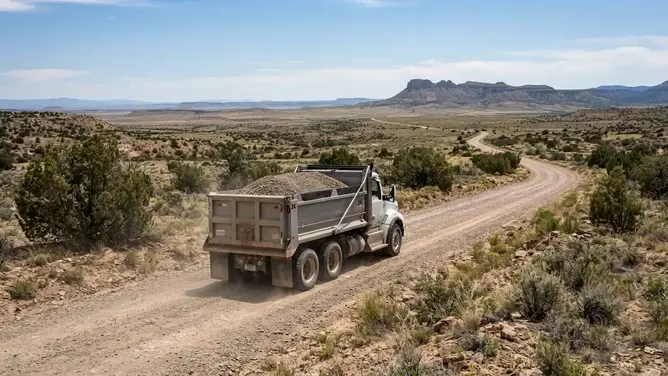
Remote gravel delivery requires more than reaching the property entrance. Road width, ground stability, turning space, grades, and the actual unloading location all affect how aggregate can be delivered to rural Apache County properties.
Where Can a Gravel Truck Unload on a Rural Property?
The most convenient place to use gravel is not always the safest or most practical place for a dump truck to unload. A loaded aggregate truck needs sufficient ground support, approach clearance, positioning space, overhead clearance, and a safe route back out of the property. On remote Apache County parcels, the unloading location should be planned before the delivery arrives rather than chosen after the truck is already on site.
The intended unloading area should also be evaluated in relation to where the material will actually be used. If gravel, road base, crushed rock, or fill must eventually be moved hundreds of feet with a loader, skid steer, tractor, or other equipment, that additional handling becomes part of the project's logistics. In some situations, a slightly less convenient unloading location may provide a safer and more efficient overall operation.
A practical aggregate unloading area should generally provide:
-
Stable Ground
The unloading area should be capable of supporting the weight of the loaded delivery vehicle without excessive sinking, rutting, shoulder failure, or loss of traction. Soft or saturated ground may not be suitable for heavy trucks even when it appears passable to passenger vehicles. -
Adequate Approach Width
The access route should provide enough width for the truck to reach and position itself at the unloading point. Narrow gates, sharp turns, steep approaches, drainage crossings, and restricted shoulders can limit where a truck can safely travel. -
Truck Positioning Space
The truck needs sufficient room to align itself for unloading and maneuver without contacting fences, structures, vehicles, landscaping, drainage features, or unstable shoulders. Limited turning space can determine where material needs to be dumped. -
Overhead Clearance
Tree limbs, utility lines, structures, gates, and other overhead obstructions should be checked along the unloading area and truck approach. Dumping operations can require additional vertical clearance that ordinary vehicle access does not. -
A Safe Exit Route
The truck should have a practical way to leave the unloading area after the material is placed. A location that allows the truck to enter but requires difficult backing or maneuvering to exit may not be a suitable unloading point. -
Room to Stockpile Material
Gravel and road base may need to be temporarily stockpiled before being spread or incorporated into the road section. The stockpile should not block the property's main access route, drainage path, gate, future construction area, or other planned improvement. -
Equipment Access for Final Placement
If the truck cannot unload directly where the aggregate will be used, a loader, skid steer, tractor, or other equipment may be needed to move the material. The secondary handling route should be considered before choosing the dump location. -
Location Relative to the Work Area
The closer the unloading point is to the actual driveway, road section, homesite, turnaround, drainage project, or construction area, the less material may need to be moved again. Delivery planning should balance proximity to the work area with safe truck access and ground conditions.
If the aggregate cannot be safely delivered directly to its final placement area, delivery and spreading should be treated as separate operations. Choosing the first accessible location without considering secondary handling can increase labor, equipment time, and material-placement costs. On a remote property, planning the unloading point in advance can make the difference between a straightforward delivery and a difficult material-handling operation.
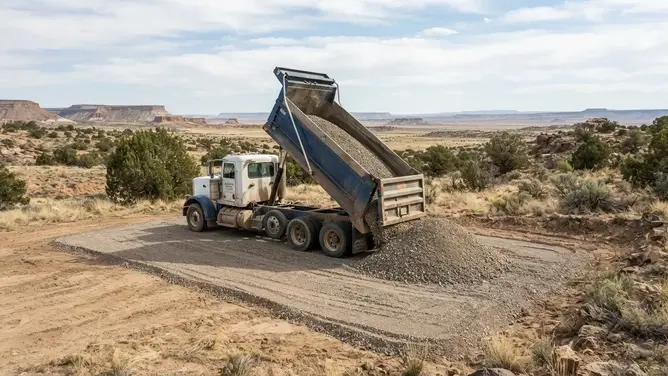
A gravel delivery area should provide stable ground, adequate truck access, safe positioning, and enough room for the material to be placed efficiently.
How to Prepare Your Apache County Property Before Gravel Delivery
The most efficient gravel delivery is one that arrives after the receiving area and access route have been prepared. If a rural driveway or private road still needs substantial grading, drainage correction, clearing, excavation, or subgrade preparation, completing that work before aggregate arrives can prevent imported material from being buried, displaced, contaminated, or moved a second time.
Preparation is especially important on undeveloped Apache County acreage where the first gravel delivery may establish the access route for construction equipment, utility work, well drilling, septic installation, solar installation, and future building improvements. The material should be delivered after the property has been evaluated as a complete access and development system rather than treating the delivery as an isolated event.
1. Confirm the Delivery Route
Identify the route from the public road to the planned unloading area. Check gates, private roads, easements, narrow sections, steep approaches, drainage crossings, and other conditions that could prevent a loaded aggregate truck from reaching the property or safely reaching the intended delivery point.
2. Clear Access Obstructions
Remove or address branches, vegetation, debris, abandoned materials, fencing conflicts, gate restrictions, and other obstacles that interfere with truck access. Where vegetation or physical obstructions require more extensive work, land clearing may be needed before aggregate delivery. Overhead clearance matters as well, particularly where dump trucks must raise their beds during unloading.
3. Identify Soft & Unstable Areas
Locate muddy sections, saturated soil, deep ruts, weak shoulders, loose native material, exposed rock, and other areas that may not support heavy delivery vehicles. A route that works for a pickup can become unsuitable when carrying the concentrated weight of a loaded dump truck.
4. Address Drainage Before Delivery
Identify washes, swales, culvert locations, low areas, roadside runoff, and places where water crosses or travels alongside the planned road. If concentrated runoff is already damaging the route, correcting the drainage path before placing aggregate can prevent the new material from being washed away.
5. Establish the Finished Grade
Determine the intended road elevations, slopes, drainage direction, and transitions before placing large quantities of gravel or road base. If the route requires cut-and-fill work or excavation, or significant grading, imported aggregate should generally follow that earthwork rather than being placed where it will later be relocated.
6. Plan the Stockpile & Unloading Areas
Decide where each truckload will be dumped and where aggregate can be temporarily stockpiled without blocking the driveway, drainage, gates, construction areas, or future improvements. If material must be moved after delivery, plan the equipment and travel route required for that additional handling.
7. Coordinate Future Improvements
Consider future homesites, cabins, shops, septic areas, wells, utilities, solar installations, parking, turnarounds, and other planned improvements before finalizing the road and material placement. An access route built without considering future development may later need to be relocated or reconstructed. For remote properties, coordinating these elements as part of an off-grid land development plan can help reduce unnecessary rework.
8. Coordinate Grading & Aggregate Placement
When grading and aggregate delivery are part of the same project, establish the sequence before material is ordered. Subgrade preparation, drainage work, rough grading, road-base placement, and finished aggregate should be coordinated so each layer supports the next rather than requiring unnecessary rehandling.
Preparing the property before gravel delivery helps protect the material investment and makes better use of trucking and equipment time. For Apache County rural properties, access, ground conditions, drainage, finished grade, unloading locations, and future development should all be considered before large quantities of aggregate are delivered.
Gravel Placement, Spreading, Grading & Compaction in Apache County
Gravel delivery is only the first step in building or improving a rural driveway, private road, construction access route, parking area, or other aggregate surface. Once material reaches the property, it may need to be strategically placed, spread to the required depth, shaped to the intended grade, and compacted so the finished road section performs properly. The correct installation sequence depends on the aggregate, native subgrade, drainage, traffic requirements, and finished use of the property.
1. Material Placement
Delivered aggregate should be dumped or stockpiled where it can be used efficiently. On a long Apache County driveway or remote access road, placing material near its final location can reduce unnecessary rehandling with loaders, skid steers, tractors, or graders. The unloading plan should also account for truck access, turning space, existing grades, gates, and areas that need to remain open for construction traffic.
2. Gravel & Road Base Spreading
Aggregate is distributed across the prepared road section according to the planned depth and intended use. A residential driveway, long private road, ranch access route, construction entrance, and equipment staging area may require different material depths and placement methods. Spreading should account for weak sections, transitions, turnarounds, drainage crossings, and areas where additional material is required.
3. Grading & Surface Shaping
After material is distributed, grading establishes the intended driving surface, cross slope, crown, transitions, and connection to surrounding elevations. Proper shaping helps keep water from remaining in wheel paths and allows the aggregate surface to work with the property's drainage pattern. Long rural roads may also require careful transitions through slopes, low areas, gates, culvert crossings, and changing terrain.
4. Compaction
Compaction helps aggregate and road-base materials develop a more stable finished section when the material and site conditions call for it. Results depend on the aggregate gradation, lift thickness, moisture conditions, equipment, and underlying subgrade. Simply driving over a newly dumped pile of gravel is not equivalent to properly preparing and compacting a designed road section.
5. Drainage & Edge Integration
The finished aggregate surface should tie into the surrounding terrain without creating unintended water traps. Road crowns, shoulders, ditches, swales, culvert approaches, and drainage outlets may need to be coordinated with the new surface. This is particularly important on Apache County properties where monsoon runoff can move rapidly across sloped or undeveloped ground.
6. Final Surface Inspection
Once the aggregate has been placed, shaped, and compacted as appropriate, the completed route should be checked for uneven areas, soft spots, drainage problems, inadequate transitions, exposed subgrade, and locations where additional material may be necessary. Final adjustments can help prepare the driveway, private road, ranch route, or construction access surface for its intended traffic.
Proper gravel installation is more than dumping aggregate onto an existing dirt road. Material selection, placement, spreading depth, grading, drainage, and compaction all influence how an Apache County driveway or private road performs. Addressing the road section as a complete system can reduce premature rutting, aggregate displacement, ponding, and repeated surface repairs.
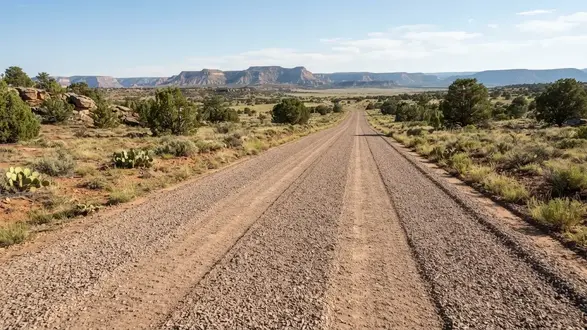
Delivered aggregate must be properly placed, spread, shaped, and integrated with the road grade and drainage system to create a useful long-term rural driving surface.
Need Gravel Spread, Graded or Compacted on Your Apache County Property?
Gravel delivery is only part of the job. If your driveway, private road, construction access, parking area, or ranch route needs material spread and shaped after delivery, the work should be coordinated with the existing subgrade, drainage, finished grade, traffic requirements, and intended use of the property.
Call (928) 543-6447Common Gravel Driveway & Rural Road Mistakes in Apache County
Gravel itself is rarely the only factor determining whether a rural driveway or private road performs well. Many recurring problems begin with the road alignment, subgrade, drainage, material selection, or installation method. Correcting those conditions before importing aggregate can often produce a more durable result than repeatedly adding gravel after the surface has already failed.
Adding Gravel Without Fixing Drainage
If runoff repeatedly crosses the driveway, travels down the wheel paths, or collects in a low section, additional gravel may only provide temporary improvement. Apache County monsoon runoff can quickly remove surface aggregate and expose the underlying road section. Crowns, ditches, swales, culverts, or properly directed outlets may need to be addressed through grade and drainage corrections before rebuilding the surface.
Placing Surface Gravel Over a Failed Subgrade
Soft soil, saturated ground, loose material, deep ruts, organic material, or unstable subgrade can allow aggregate to sink, shift, or become mixed into the native soil. Simply increasing gravel depth does not necessarily create a stable road base. Weak areas may require excavation and site preparation, correction, stabilization, suitable fill, or a properly constructed aggregate section before the finished surface is installed.
Using the Same Aggregate for Every Application
Driveway surface gravel, compactable road base, drainage rock, crushed aggregate, and general fill serve different purposes. A material that works well as a finished driving surface is not automatically the right material beneath the road, around a culvert, or for raising a low homesite area. Material selection should follow the intended layer and application rather than treating every aggregate product as interchangeable.
Ignoring the Driveway Entrance
The connection between a private driveway and the public road is often exposed to concentrated runoff, changing elevations, traffic turning movements, and roadside drainage. A driveway can perform well farther into the property while developing erosion, rutting, or ponding at the entrance. Grade transitions, drainage flow, culvert conditions, and turning requirements should be considered as part of the complete driveway.
Underestimating Long-Road Gravel Quantities
On a private road hundreds or thousands of feet long, small changes in average width or aggregate depth can produce a substantial difference in total material required. Turnarounds, widened gates, intersections, weak sections, drainage crossings, and elevation corrections can add additional surface area or material depth. Long rural roads should therefore be measured as more than a simple length multiplied by one uniform width.
Ordering Gravel Before Establishing Finished Grades
Material delivered before the driveway alignment, drainage strategy, and finished elevations are established may end up being placed too high, too low, or in an area that later requires excavation. Establishing the road grade first helps determine where aggregate belongs, how much material is actually required, and whether additional grading or fill is needed before delivery.
Assuming a Gravel Truck Can Reach Any Location
A dump truck may reach the entrance of a rural property but still be unable to reach the intended unloading location. Narrow gates, steep approaches, soft roads, low branches, utility lines, limited turning space, and saturated ground can restrict delivery access. Remote Apache County properties should be evaluated from the public road all the way to the actual unloading or stockpile location.
Skipping Proper Spreading, Grading & Compaction
Dumping aggregate onto a driveway does not automatically create a finished road. Material may need to be distributed to the intended depth, shaped to the proper cross slope and drainage profile, and compacted when appropriate for the selected material and application. Inadequate installation can leave loose piles, uneven thickness, poor drainage, and a surface that moves prematurely under vehicle traffic.
Avoiding these mistakes can make aggregate work substantially more effective. A durable Apache County gravel driveway or private road depends on more than the amount of rock delivered: the subgrade, road alignment, drainage, aggregate type, finished grade, installation method, traffic, and delivery logistics all need to work together.
Preparing Gravel Roads for Apache County's Summer Monsoon Runoff
Apache County gravel roads must perform through long dry periods as well as short, high-intensity monsoon storms. When heavy rainfall moves across undeveloped acreage, runoff can concentrate along road grades, enter from higher ground, cross natural drainage paths, or collect in low sections. A road that appears stable in dry weather may therefore reveal significant drainage and subgrade problems after a major storm.
Existing erosion provides useful evidence before a driveway or private road is rebuilt. Sediment deposits, displaced aggregate, eroded shoulders, exposed subgrade, recurring ruts, and channels crossing the roadway can show where water is entering, concentrating, or leaving the road. Understanding those patterns can help determine whether the road needs additional aggregate, regrading, drainage improvements, or a combination of earthwork and road construction.
Runoff Flowing Down the Road
Water traveling longitudinally along a gravel driveway or private road can gain velocity as the grade increases. Concentrated flow may cut channels through the surface, expose the road base, and carry aggregate toward lower elevations. Cross slope, road alignment, drainage outlets, and grade transitions should be evaluated where runoff repeatedly follows the roadway.
Runoff Crossing the Road
Natural washes, swales, drainage depressions, and seasonal flow paths may cross a rural access route. When stormwater is forced across the driving surface without an appropriate crossing, concentrated flow can quickly erode the aggregate and underlying subgrade. Culverts, crossings, grade shaping, and protected outlets may be needed depending on the site.
Runoff Entering From Higher Ground
A driveway located below an uphill portion of the property may receive runoff that would otherwise travel across the surrounding terrain. Ditches, swales, berms, grade adjustments, or other drainage measures may be appropriate to intercept and redirect water before it reaches the driving surface. Simply adding more gravel does not remove the upstream source of the runoff.
Washed-Out Road Shoulders
Stormwater leaving the road surface can erode unprotected shoulders, particularly where the surrounding terrain is sloped or runoff becomes concentrated. Shoulder erosion can gradually reduce usable road width and expose the edge of the aggregate section. Rebuilding the surface without addressing the water leaving the road may allow the same failure to return during the next major storm.
Aggregate Displacement & Subgrade Exposure
Fast-moving water can remove finer aggregate, displace larger particles, and expose the material beneath the finished driving surface. If the underlying subgrade becomes exposed and saturated, repeated traffic can accelerate rutting and deformation. Rebuilding may therefore require more than replacing the visible gravel layer.
Repeated Washouts in the Same Location
When the same section of a rural road washes out after multiple storms, the recurring damage is often evidence of an unresolved drainage or grade condition. Repeatedly replacing aggregate can become an expensive maintenance cycle. Identifying the source, direction, concentration, and discharge point of the runoff is more useful than treating each washout as an isolated surface repair.
Preparing a gravel road for Apache County's monsoon season means addressing how stormwater reaches, crosses, travels along, and leaves the roadway. Aggregate selection, road grading, drainage structures, shoulders, crossings, and subgrade preparation should work together so intense seasonal runoff does not repeatedly undo the road improvement.
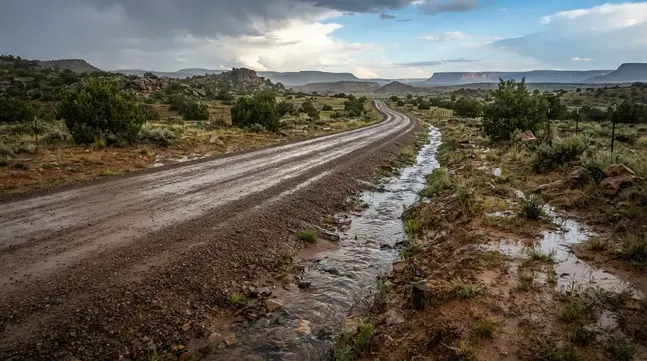
Apache County's summer monsoon storms can quickly expose weak drainage, eroded shoulders, and poorly protected sections of a rural gravel road.
Maintaining Gravel Driveways and Private Roads in Apache County
Gravel driveways and private roads require periodic attention even when they were properly graded and constructed. Vehicle traffic can create wheel paths, aggregate can migrate toward road edges, vegetation can encroach on shoulders, and seasonal rainfall can expose drainage weaknesses. Regular inspection and targeted maintenance can help address small defects before they become major road failures.
1. Inspect After Major Storms
Significant rainfall is one of the best opportunities to identify developing problems on an Apache County gravel road. Look for new erosion channels, displaced aggregate, washed shoulders, standing water, exposed subgrade, sediment deposits, and locations where runoff is crossing or traveling along the roadway. Areas that repeatedly show damage deserve closer evaluation rather than routine resurfacing.
2. Identify the Cause of Surface Damage
Ruts, potholes, soft spots, and aggregate loss do not all have the same cause. Traffic loading, poor drainage, inadequate road base, saturated subgrade, improper grading, or insufficient surface material can each contribute to deterioration. Determining why a section is failing helps prevent spending money on a surface repair that does not address the underlying problem.
3. Maintain the Driving Surface
Repeated traffic can flatten the road's intended crown, create wheel paths, loosen aggregate, and gradually deform heavily traveled areas. Periodic grading or reshaping may be appropriate when the surface has lost its intended profile. Maintenance should restore the road shape rather than simply move loose material from one part of the roadway to another.
4. Keep Drainage Paths Functional
Ditches, swales, culvert inlets, outlets, and roadside drainage areas can become obstructed by sediment, vegetation, aggregate, or accumulated debris. Maintaining these features helps keep stormwater moving where the road was designed to direct it. A blocked drainage path can turn an otherwise manageable rainfall event into concentrated flow across the driving surface.
5. Control Vegetation & Shoulder Encroachment
Vegetation can gradually narrow usable road width and interfere with drainage along the shoulders. Grass, weeds, brush, fallen branches, and accumulated organic material can also make it harder to see developing erosion or standing water. Maintaining the road edges helps preserve access, drainage visibility, and the usable width of the rural route. Where vegetation has become a larger obstruction, selective land clearing may be appropriate.
6. Add Aggregate When the Road Actually Needs It
Additional gravel or road base can restore thickness where normal traffic and weather have reduced the usable surface. However, repeatedly top-dressing the same failing area can become expensive if drainage, grade, or subgrade conditions remain unresolved. Material should be added after determining where additional aggregate is needed and whether the underlying road section can support it.
Effective gravel-road maintenance is usually targeted rather than automatic. Regular inspections, drainage maintenance, surface reshaping, vegetation control, and timely aggregate placement can help preserve rural driveways and private roads while identifying larger grading or drainage problems before they require extensive reconstruction.
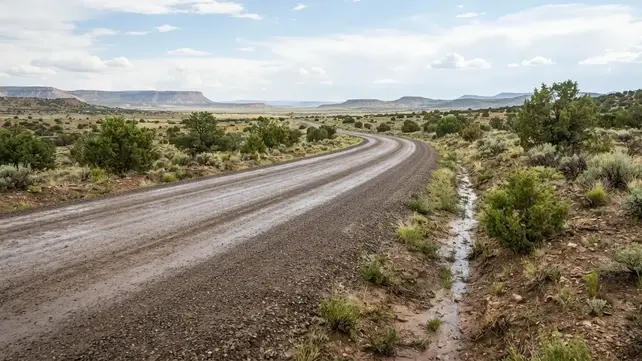
Regular inspection and targeted maintenance can help preserve a gravel road's driving surface, shoulders, and drainage features before minor problems develop into larger repairs.
When Gravel Alone Is Not the Right Solution for an Apache County Property
Gravel can improve a driveway, private road, parking area, or construction access route, but aggregate cannot correct every underlying ground or drainage problem. Apache County properties can require grading, excavation, drainage improvements, subgrade preparation, or road reconstruction before imported material can perform as intended.
The important question is not simply whether a road needs more gravel. It is whether the existing grade, drainage, subgrade, and road section are capable of supporting the material being placed. When those conditions are inadequate, correcting the underlying problem first can prevent repeated gravel deliveries and short-lived repairs.
Gravel alone may not be the appropriate first step when a property has:
-
Severe Drainage Problems
If runoff repeatedly crosses the driveway, travels along the road, or collects in low sections, additional gravel may simply be displaced or washed away. Ditches, swales, culverts, outlets, or grade correction may need to be addressed before rebuilding the aggregate surface. -
Deeply Unstable Subgrade
Soft native soil, saturated ground, organic material, loose sections, or previously disturbed subgrade can prevent a gravel road from developing adequate support. The affected area may require unsuitable-material removal, subgrade correction, stabilization, additional road base, or reconstruction. -
Major Elevation Changes
Gravel is not a substitute for correcting a fundamentally poor road alignment or major elevation problem. Steep approaches, deep depressions, excessive grade changes, and uneven terrain may require excavation, cut-and-fill earthwork, and grading before the finished aggregate section is installed. -
Repeated Washouts
A driveway that washes out after every major monsoon storm should not automatically be rebuilt with another load of gravel. Recurring erosion can indicate concentrated runoff, an inadequate crossing, excessive slope, unstable shoulders, or an incorrectly shaped road. The water path and damaged road section may need to be corrected together. -
Rock, Caliche & Hard Ground
Shallow rock, cemented caliche, or other hard ground can prevent the road from being shaped to the required elevation. Excavation, ripping, rock removal, or route adjustment may be necessary before aggregate can be placed at the intended depth and profile. -
Building Pads & Structural Areas
Ordinary driveway gravel should not automatically be treated as structural fill beneath a home, cabin, shop, or other building. Building areas can have different subgrade, compaction, elevation, drainage, and foundation requirements and should be prepared according to the actual site and construction requirements. -
Failed Road Sections
Deep wheel ruts, severe potholes, exposed subgrade, displaced aggregate, and recurring soft spots can indicate that surface top-dressing is no longer enough. The affected section may need to be reshaped or reconstructed with appropriate subgrade preparation, road base, and finished surface aggregate. -
Drainage Crossings & Culverts
Where a private road crosses a wash, swale, drainage channel, or concentrated runoff path, aggregate alone cannot provide the required water passage. A properly planned culvert or other crossing may need to be coordinated with the road grade, drainage area, inlet, outlet, and surrounding material.
Gravel performs best when it is installed as part of a properly prepared road or site. For Apache County driveways, private roads, ranch routes, and off-grid access, evaluating the underlying grade, drainage, subgrade, terrain, and intended traffic before ordering aggregate can reduce premature material loss, repeated repairs, and unnecessary deliveries.
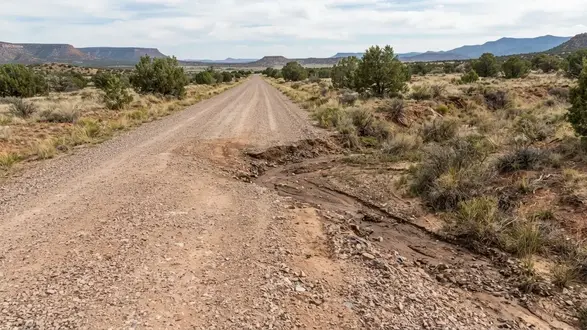
Recurring washouts, drainage crossings, unstable ground, and major grade problems may require correction beneath or alongside the aggregate surface rather than simply adding more gravel.
Not Sure If Your Apache County Road Needs Gravel, Grading or Drainage Work?
If your driveway or private road keeps developing ruts, soft spots, washouts, standing water, or exposed subgrade, adding more aggregate may not address the underlying problem. A property-specific evaluation can help determine whether the project needs additional gravel, road base, grading, drainage improvements, subgrade preparation, or more extensive road reconstruction.
Call (928) 543-6447Gravel Delivery Often Works Best With Other Apache County Site Services
Gravel delivery is often one part of a larger rural-property improvement rather than a standalone service. Coordinating aggregate with excavation, land grading, drainage, driveway construction, and building-site preparation can reduce unnecessary material handling and help ensure the property is ready before aggregate is placed.
This is particularly important on undeveloped Apache County acreage, where the first driveway or access road may eventually serve a homesite, cabin, shop, well, septic system, solar installation, utility corridor, ranch improvement, or other future development.
Excavation & Site Preparation
Excavation may be needed to establish a road alignment, remove unsuitable material, cut down high areas, expose stable subgrade, or prepare locations that will receive imported road base or aggregate. Completing necessary earthwork before delivery can prevent material from being placed on ground that later needs to be excavated again.
Land Grading & Leveling
Grading establishes the elevations, slopes, cross-slope, drainage direction, and transitions that support the finished gravel surface. On uneven Apache County properties, establishing the road grade before importing large quantities of material can reduce unnecessary aggregate use and rehandling.
Driveway & Private Road Construction
Gravel and road base can form part of a complete rural driveway or private-road construction project. Route preparation, subgrade work, drainage, aggregate placement, grading, and compaction can be coordinated instead of treating material delivery as the entire road-building process.
Drainage Improvements
Ditches, swales, culverts, drainage crossings, outlets, and grade corrections may need to be completed before or alongside aggregate installation. Addressing the property's existing runoff patterns helps protect the road surface and prevents newly delivered gravel from becoming part of the next washout.
Building Pad & Homesite Preparation
Access routes and aggregate placement should be coordinated with future homesites, cabin pads, shops, and other building areas. Establishing finished elevations and construction access early can help prevent driveway material, parking areas, or stockpiles from conflicting with later building-site preparation.
Off-Grid Property Development
Remote properties may require coordinated access for water wells, septic systems, utility trenching, solar installation, cabins, workshops, storage areas, and other improvements. Planning gravel routes around these future phases as part of an off-grid land development plan can reduce repeated disturbance and help establish a practical construction-access network across the property.
Coordinating aggregate delivery with the rest of the site work can be especially valuable on remote Apache County properties. Establishing the access route, finished grades, drainage, subgrade, and future development areas before material is placed helps ensure the gravel or road base becomes part of a functional long-term improvement rather than material that must be moved again.
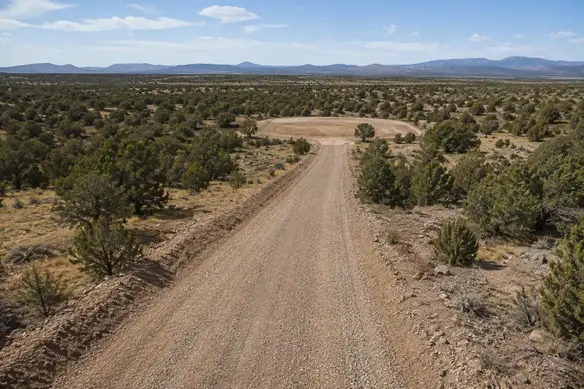
Gravel access can be planned as part of the property's larger development layout, coordinating future roads, homesites, utilities, drainage, wells, septic systems, agricultural improvements, and other rural property uses.
What Affects Gravel Delivery Cost in Apache County?
Gravel delivery pricing in Apache County depends on more than the price of the aggregate itself. Material type, quantity, hauling distance, property access, unloading conditions, placement requirements, and site preparation can all affect the final delivered cost. Because rural properties can be widely separated and access conditions vary substantially, two projects requiring a similar amount of gravel may have very different total prices.
A useful estimate should therefore consider the entire delivery operation rather than treating gravel as a simple per-ton purchase. The material has to be sourced, loaded, transported to the property, safely unloaded, and in some cases spread, graded, or incorporated into an existing road section.
Material Type
Driveway gravel, road base, crushed aggregate, drainage rock, and general fill can have different source, processing, availability, and hauling characteristics. The appropriate material should be selected according to the intended application rather than choosing solely by the lowest material price.
Quantity & Number of Loads
Total quantity affects both the aggregate cost and the number of truckloads required. Long driveways, private roads, turnarounds, widened entrances, and deeper road sections can require substantially more material than a simple length measurement suggests. Small differences in depth become significant across hundreds or thousands of feet.
Hauling Distance
The distance between the aggregate source and the Apache County property can have a major effect on delivered pricing. A similar gravel order may cost differently depending on trucking distance, route conditions, travel time, and how efficiently the required loads can be delivered.
Property Access
A dump truck needs more than a passable driveway. Narrow gates, steep approaches, soft road sections, sharp turns, low branches, overhead utilities, limited clearance, and inadequate turning space can affect how material reaches the intended unloading location. Remote-property access conditions should be evaluated before delivery is scheduled.
Unloading & Placement
Delivery costs can differ depending on where the truck can safely unload. Material dumped at an accessible staging area may require additional equipment to move it to the final location. Direct placement along a prepared driveway or road can involve different equipment, access, and handling requirements.
Grading & Spreading
Aggregate delivery is different from aggregate installation. If the material needs to be spread, shaped, graded, or incorporated into a driveway or private-road section, equipment and earthwork requirements can add to the project cost beyond the delivered price of the material itself.
Site Preparation
The receiving area may require clearing, excavation, drainage correction, or subgrade preparation before aggregate can be placed. If soft ground, deep ruts, poor drainage, unsuitable material, or major elevation changes are present, those conditions may need to be corrected before importing the finished road material.
Weather & Ground Conditions
Seasonal moisture can change the accessibility of unpaved rural roads and unloading areas. A route that easily supports loaded trucks during dry conditions may become difficult or unsuitable after significant rainfall. Ground conditions therefore can affect delivery timing, access, and the practical logistics of placing aggregate.
For an Apache County gravel delivery estimate, the most useful information includes the property location, approximate driveway or road dimensions, intended material, estimated quantity, access conditions, unloading location, and whether spreading, grading, or site preparation is also required. Looking at the complete delivery and installation scope provides a much more useful estimate than relying on a generic price per ton.
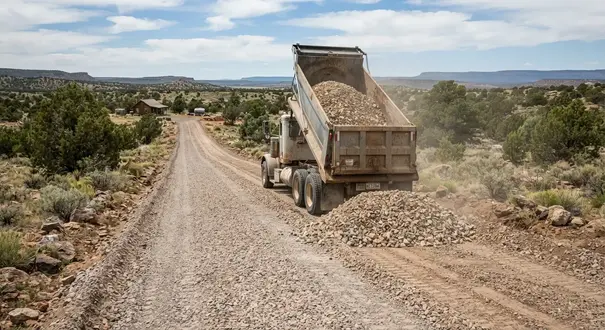
Gravel delivery involves more than the cost of the aggregate itself. Material must be sourced, loaded, hauled to the property, safely unloaded, and sometimes spread or graded depending on the driveway, private road, or rural access project.
Gravel Delivery Pricing in Apache County: What Rural Property Owners Should Expect
Gravel delivery pricing in Apache County depends on more than the price of the aggregate. Material type, quantity, hauling distance, property access, unloading conditions, and placement requirements can all affect the final project cost. A short driveway and a multi-thousand-foot rural access road may require very different quantities and trucking logistics.
We evaluate gravel projects according to the property's existing conditions and intended use. The goal is to determine the appropriate material, estimated quantity, delivery requirements, and whether grading, drainage, or placement should be included.
Typical Apache County Gravel Project Cost Factors
Small Rural Driveway Gravel Projects
$3,000 – $8,000+
Short driveways, cabin access routes, and small parking approaches may fall within this range. Driveway dimensions, material depth, ground conditions, hauling distance, and required grading can change the final cost.
Long Driveways & Private Access Roads
$8,000 – $25,000+
Long rural routes can require numerous truckloads across hundreds or thousands of feet. Road width, depth, drainage, turnarounds, and hauling distance quickly increase material and delivery requirements.
Large Gravel Delivery & Road Material Projects
$25,000 – $50,000+
Large properties may require substantial road base, crushed rock, aggregate, or fill material. Multiple access routes, staging areas, and large quantities can significantly increase trucking and placement requirements.
Ranch & Agricultural Access Improvements
$10,000 – $40,000+
Ranch roads, equipment routes, barn approaches, and loading areas may require stronger road sections for tractors, trailers, and heavy equipment. Turning areas and drainage crossings can add to preparation requirements.
Homesite & Off-Grid Property Access
$5,000 – $20,000+
Rural homesites may need gravel for construction access, future driveways, parking, well access, septic work, solar installation, or outbuildings. The amount of area improved and hauling distance can substantially affect cost.
Construction Access & Temporary Road Stabilization
$4,000 – $15,000+
Undeveloped parcels may need stabilized access before construction equipment, well drilling, or septic crews arrive. Gravel or road base can target weak sections, approaches, and staging areas rather than treating the entire property.
Gravel Projects Requiring Drainage & Road Preparation
Varies by Site Conditions
Soft ground, washouts, concentrated monsoon runoff, low areas, and drainage crossings may require work before aggregate is placed. Grading, excavation, drainage improvements, or subgrade preparation can add to the project scope.
Remote Gravel Delivery & Difficult Access
Custom Quote
Long dirt roads, private easements, narrow gates, steep approaches, and difficult turns can affect loaded-truck access. Hauling distance, road conditions, and unloading location can all influence delivered pricing.
Gravel Placement, Spreading & Grading
Custom Quote
Delivery is not necessarily the same as installation. Spreading, shaping, grading, compacting, or incorporating aggregate into an existing road section requires additional equipment and earthwork beyond the delivered material.
These figures are planning ranges rather than fixed Apache County gravel prices. Actual pricing depends on the property location, material type, quantity, hauling distance, access conditions, existing ground, unloading requirements, and whether grading, drainage, spreading, or other site preparation is needed.
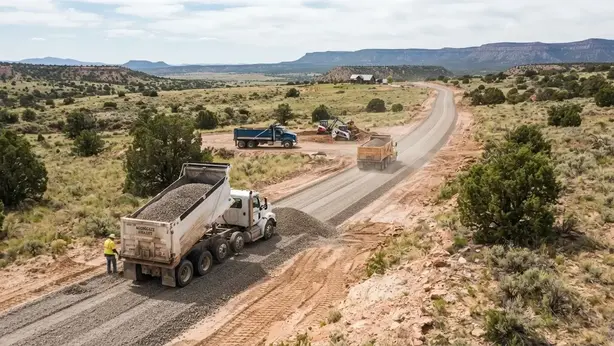
Long rural driveways and private access roads can require numerous truckloads of aggregate. Road length, width, material depth, drainage requirements, staging areas, and hauling distance can make these projects substantially different from a small driveway delivery.
Need Gravel for a Long Rural Driveway or Private Road?
Long Apache County access roads can require substantial quantities of aggregate, multiple truckloads, road-base preparation, drainage work, and careful planning for truck access and unloading. If you know the approximate length and width of your road, we can help determine what information is needed to plan the delivery and related site work.
Call (928) 543-6447What We Need to Estimate Gravel Delivery for Your Apache County Property
You do not need to know the exact aggregate specification before requesting a gravel delivery estimate. The most useful information is what you are trying to build or improve, where the property is located, how much material may be needed, and what conditions exist along the access and receiving areas.
Providing a few basic details helps determine the likely material requirements, trucking needs, unloading conditions, and whether grading, drainage, or other site preparation should be considered as part of the project.
-
Property Location
Identify where the project is located within Apache County. The property location helps establish hauling considerations, access conditions, and the practical logistics of getting aggregate to the site. -
Project Type
Let us know whether the material is for a residential driveway, private road, ranch route, homesite, parking area, construction access, drainage feature, or another property improvement. -
Approximate Dimensions
Provide the approximate length and width of the area along with any turnarounds, widened sections, parking areas, or locations that may require additional material depth. -
Existing Surface & Ground
Describe whether the existing route consists of native dirt, existing gravel, caliche, exposed rock, sand, compacted material, or an established roadway. These conditions can affect preparation and aggregate requirements. -
Current Road Problems
Mention mud, deep ruts, potholes, washouts, standing water, soft sections, erosion, or other recurring problems. Existing failures can indicate that grading, drainage, or subgrade correction is needed before additional gravel is placed. -
Delivery Access
Note gate width, road width, steep approaches, turning areas, overhead obstructions, and the approximate distance from the public road to the intended unloading location. A pickup-accessible route is not necessarily suitable for a loaded dump truck. -
Desired Finished Use
Explain whether the improvement is intended as temporary construction access, a permanent residential driveway, private ranch road, long-term rural access route, parking area, or another use. Intended traffic affects the appropriate road section and material. -
Existing Site Preparation
Let us know whether clearing, excavation, grading, drainage work, subgrade preparation, or other earthwork has already been completed. This helps distinguish a material-delivery project from a larger driveway or site-preparation project.
Photos, approximate measurements, property maps, and a description of the existing access route can also help evaluate likely material quantities, truck access, unloading logistics, and whether the receiving area is ready for aggregate delivery.
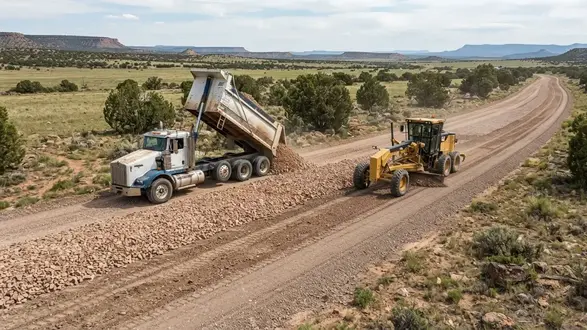
Gravel delivery and gravel installation are not always the same service. After aggregate arrives, the material may need to be spread, shaped, graded, and compacted to create the intended driveway or private-road surface.
Gravel & Aggregate Delivery Service Area in Apache County, Arizona
We provide gravel, road base, aggregate, and suitable fill-material delivery for rural properties throughout Apache County, including residential acreage, ranches, agricultural properties, recreational parcels, cabins, undeveloped land, and off-grid development sites. Material delivery can support new driveways, private roads, road-base improvements, homesite preparation, construction access, drainage projects, parking areas, ranch roads, equipment areas, and other rural property improvements.
- St. Johns, AZ
- Springerville, AZ
- Eagar, AZ
- Concho, AZ
- Vernon, AZ
- Sanders, AZ
- Alpine, AZ
- Nutrioso, AZ
- Greer, AZ
- McNary, AZ
- Ganado, AZ
- Window Rock, AZ
- Adamana, AZ
- Chambers, AZ
- Houck, AZ
- Lupton, AZ
- Many Farms, AZ
- Rock Point, AZ
- Round Rock, AZ
- Wide Ruins, AZ
- Surrounding Rural Communities
Apache County's rural properties can have very different delivery conditions. A parcel close to a paved highway may have straightforward truck access, while an undeveloped property reached by a long dirt easement may require additional planning for gates, road width, turning space, overhead clearance, soft ground, steep approaches, and the location where material can safely be unloaded.
Delivery distance also matters. Because Apache County covers a large geographic area, the same quantity of aggregate can have substantially different delivered costs depending on where the material is sourced and how far it must be hauled. The practical delivery plan therefore starts with the actual property location and access route rather than a generic countywide delivery assumption.
Whether you need one load for a residential driveway, multiple loads for a long private road, road base for a new access route, aggregate for a homesite, or material for a larger ranch or off-grid development project, the material quantity, delivery method, and site preparation should be matched to the conditions at the property.
Gravel, Road Base & Fill Material Delivery FAQs
Choosing and delivering aggregate for an Apache County property involves more than simply ordering a truckload of gravel. Material type, project use, road conditions, soil, drainage, access, delivery distance, load size, and placement requirements can all affect what material is appropriate and how much is needed. The answers below address common questions about gravel delivery, road base, aggregate, fill material, driveway surfacing, private roads, homesites, drainage projects, ranch properties, and rural development throughout Apache County.
- What types of gravel and aggregate can be delivered in Apache County?
- Material availability varies by supplier, location, project requirements, and delivery distance, but rural projects may use different types of gravel, aggregate, road base, crushed rock, fill material, and other bulk materials. The appropriate material depends on whether it is being used for a driveway, private road, building area, drainage project, access route, parking area, ranch improvement, or general site preparation.
- What is road base?
- Road base is a compactable aggregate material commonly used to create or strengthen the underlying surface of driveways, private roads, parking areas, access routes, and other traffic-bearing surfaces. It generally contains a combination of crushed aggregate and smaller particles that can lock together when properly placed and compacted. The specific material selected should match the ground conditions, intended traffic, drainage, and construction requirements of the project.
- What is the difference between gravel and road base?
- Gravel generally refers to coarse aggregate used for surfaces, drainage, landscaping, access, or other applications, while road base is typically selected and graded to provide a compactable structural layer beneath or within a roadway or driveway. The two materials can serve different purposes. A rural driveway may require properly prepared road base beneath a finished gravel surface, depending on the existing subgrade, traffic, drainage, and desired performance.
- Do I need road base or driveway gravel?
- That depends on the existing ground and how the driveway or road will be used. A lightly traveled access route on suitable native material may require less imported aggregate, while a residential driveway, long private road, ranch route, or heavily traveled access may benefit from a properly prepared base layer and surface aggregate. Soil conditions, moisture, drainage, traffic, slope, and the condition of the existing road should all be considered before selecting the material.
- Can you deliver gravel for a new driveway?
- Yes. Gravel and aggregate can be delivered for new driveway and private-road construction when the route has been properly prepared for the material. Depending on the property, preparation may include clearing, excavation, grading, establishing drainage, correcting elevations, shaping the subgrade, and preparing a suitable base before aggregate is placed. Material selection and quantity depend on the driveway dimensions and site conditions.
- Can you deliver gravel for an existing dirt driveway?
- Gravel can be used to improve an existing dirt driveway when the underlying road is suitable for additional material. Depending on the condition of the driveway, existing ruts, soft areas, drainage problems, or poor subgrade may need to be corrected through regrading and surface preparation before new aggregate is placed. Simply adding gravel over a failed or poorly drained surface may not provide a durable solution.
- Can gravel be delivered for private roads?
- Yes. Bulk aggregate and road base can be used for private roads serving rural homes, cabins, ranches, agricultural properties, recreational land, and off-grid development. Longer roads may require substantial quantities of material, and the appropriate aggregate depends on traffic, existing subgrade conditions, drainage, slope, road width, and the level of reliability required.
- Can you deliver gravel to remote Apache County properties?
- Delivery to remote rural properties may be possible when trucks can safely reach the intended unloading location. Long dirt roads, narrow entrances, steep approaches, gates, soft ground, limited turning space, bridges, overhead obstructions, and road conditions can all affect delivery logistics. Remote deliveries should be evaluated based on the actual property access and material requirements.
- How much gravel do I need for a driveway?
- The amount of gravel required depends primarily on the driveway's length, width, placement depth, existing surface conditions, and the type of material being installed. Additional material may be necessary if the existing road requires substantial correction, stabilization, or base preparation. Measuring the project area and determining the intended finished depth provides a more useful quantity estimate than simply ordering by driveway length.
- How do you calculate the amount of gravel needed?
- Gravel quantities are generally estimated from the project's length, width, and desired depth, with adjustments for the material's characteristics and expected placement conditions. Irregular driveways, long private roads, variable grades, soft areas, drainage corrections, and areas requiring deeper base preparation may require additional calculations. A property-specific estimate can help prevent both material shortages and unnecessary over-ordering.
- How deep should gravel be on a rural driveway?
- There is no single depth that works for every Apache County driveway. Appropriate depth depends on the existing subgrade, soil, drainage, traffic, vehicle types, climate, material selected, and whether the project includes a separate road-base layer. A lightly used access route may require a different section than a residential driveway, ranch road, or private road carrying heavier vehicles and equipment.
- Should gravel be placed over dirt?
- Gravel can sometimes be placed over suitable native ground, but the existing surface should be evaluated first. Organic material, loose unsuitable soil, standing water, deep ruts, soft subgrade, poor drainage, or unstable areas may need correction before aggregate is installed. Proper preparation can be just as important as the gravel itself when the goal is a stable and durable driving surface.
- Can you deliver road base for a new private road?
- Yes. Road base can be delivered for new private-road construction when the route has been prepared to receive the material. Depending on the property, this may involve clearing, excavation, cut-and-fill grading, drainage preparation, subgrade correction, and shaping before the road base is spread and compacted. The required material quantity depends on the road's dimensions and construction requirements.
- Can you deliver aggregate for building pads and homesites?
- Aggregate and suitable fill materials can be useful for rural homesite development, building areas, equipment access, parking areas, and other site improvements. The correct material depends on whether the project requires structural fill, drainage material, base preparation, access surfacing, or another application. Building-pad material should be selected according to the site's grading and construction requirements rather than simply using whichever aggregate is easiest to obtain.
- Can you deliver fill dirt in Apache County?
- Fill material may be appropriate for raising low areas, correcting elevations, creating usable site areas, supporting grading work, or other rural property improvements. Not all excavated or imported soil is suitable for every application. Material quality, moisture, rock content, organic content, compaction requirements, and the intended use should be considered before fill is delivered.
- What is the difference between fill dirt and road base?
- Fill material is generally used to raise or reshape ground elevations, fill suitable low areas, or support broader earthwork, while road base is selected specifically for use as a compactable aggregate layer within a traffic-bearing surface. They are not automatically interchangeable. Using the appropriate material for the intended application can improve stability and reduce the risk of premature settlement or surface failure.
- Can gravel help with muddy or soft driveways?
- Aggregate can improve a soft or muddy driveway when the underlying problem is addressed appropriately. Simply placing gravel over saturated or unstable ground may cause the material to become embedded or displaced. Depending on the site, drainage correction, removal of unsuitable material, subgrade preparation, geotextile considerations, or additional base material may be needed before the finished aggregate surface is installed.
- Can gravel help prevent driveway washouts?
- Properly selected and placed aggregate can improve the durability of a driveway, but gravel alone does not solve every drainage problem. Road shape, crown, slope, ditches, swales, culverts, runoff concentration, and the underlying subgrade all affect how water interacts with the road. In Apache County, intense summer monsoon runoff can quickly expose drainage weaknesses, making water management an important part of road preparation.
- Can you deliver gravel for drainage projects?
- Certain aggregate materials can be used for drainage applications, depending on the drainage design and intended function. Drainage rock may be used around suitable drainage features, outlets, crossings, or other areas where coarse material is appropriate. Material selection should be based on the required drainage characteristics, installation conditions, and applicable project requirements rather than treating all gravel as the same product.
- Can gravel be used around culverts?
- Aggregate may be used around or near culvert installations when the material is appropriate for the specific application. The correct material and placement method depend on the culvert design, surrounding soil, drainage conditions, road construction, and expected loads. Culvert installation and drainage work may also involve separate design or permitting requirements depending on the property and project.
- What type of gravel is best for a driveway?
- There is no universal best gravel for every driveway. The appropriate material depends on the native soil, drainage, traffic, slope, road design, available aggregate, and desired surface characteristics. Some driveways benefit from a compactable base material beneath a coarser surface aggregate, while others may have different material requirements. The best choice should be based on the actual road conditions and intended use.
- What type of material is best for a private road?
- Private roads often require a combination of properly prepared subgrade, suitable road base, and surface aggregate rather than a single material. The appropriate road section depends on traffic, road length, soil, drainage, slope, climate, and maintenance expectations. A road serving a rural home may have different requirements from a ranch road carrying trucks, tractors, trailers, or heavy equipment.
- Can gravel be used on caliche in Apache County?
- Gravel and aggregate can sometimes be used over or alongside caliche-based ground, but the existing material should be evaluated before construction. Caliche can vary significantly in hardness, depth, drainage behavior, and suitability as a road subgrade. Some properties may require grading, ripping, excavation, blending, or additional base preparation before aggregate is placed.
- Can you deliver gravel over rocky ground?
- Gravel can be delivered to properties with rocky ground when truck access and unloading conditions are suitable. The larger issue is often preparing the receiving surface. Large rock, uneven terrain, exposed bedrock, or hard subsurface conditions may require excavation, grading, ripping, or other preparation before aggregate can be installed effectively.
- How much does gravel delivery cost in Apache County?
- Gravel delivery costs depend on the material selected, quantity, hauling distance, delivery location, truck requirements, access conditions, and whether additional grading or placement is needed. Remote Apache County properties can have significantly different delivery costs depending on distance and truck access. A project-specific estimate is more useful than applying a single countywide price per ton or per load.
- Is gravel priced by the ton or by the truckload?
- Bulk aggregate is commonly estimated using weight or truckload quantities, but the actual pricing structure depends on the material supplier, truck capacity, delivery distance, and project requirements. Different materials have different weights and volume characteristics, so comparing only the number of loads can be misleading. The material, approximate quantity, and delivery location should all be considered when evaluating the total cost.
- Does delivery distance affect the price of gravel?
- Yes. Hauling distance is an important part of delivered-material pricing. Properties farther from the material source may require more trucking time and fuel, while remote roads can also increase travel and unloading considerations. Apache County's large geographic area means two properties needing the same amount of aggregate can have substantially different delivered costs depending on their location and accessibility.
- How many tons of gravel can a dump truck deliver?
- Truck capacity varies by vehicle configuration, legal weight limits, material density, road conditions, and hauling requirements. Because different aggregates have different weights and bulk densities, a truck's usable load should be confirmed for the specific material being ordered. The delivery quantity should also account for the project's calculated material requirements rather than simply ordering a fixed number of loads.
- Can you deliver one load of gravel?
- Smaller material deliveries may be possible depending on the supplier, truck availability, location, and project requirements. Minimum delivery quantities and hauling charges can vary, particularly for remote rural properties. Larger projects may require multiple loads scheduled together to maintain efficient placement and reduce unnecessary delivery trips.
- Can you deliver multiple loads of gravel for a long driveway?
- Yes. Long driveways, private roads, ranch routes, and large rural properties may require multiple truckloads of aggregate or road base. Coordinating deliveries with grading and placement can help keep material organized and reduce unnecessary stockpiling or repeated equipment movement. The number of loads depends on the calculated material quantity, truck capacity, road dimensions, and project conditions.
- Where can a gravel delivery truck unload on my property?
- The unloading location depends on truck access, road width, turning space, terrain, overhead clearance, gates, slope, ground stability, and where the material is needed. On narrow or remote properties, the truck may not be able to reach every part of the project. Delivery planning should identify safe and practical unloading locations before material is hauled to the site.
- Do I need to prepare my driveway before gravel is delivered?
- Preparation may be necessary depending on the existing driveway. Deep ruts, standing water, unsuitable soil, poor drainage, excessive vegetation, severe grade problems, or unstable subgrade can reduce the effectiveness of new aggregate. Preparing the route first can allow the material to be placed at the intended depth and shaped into a more stable finished surface.
- Can you spread and grade the gravel after delivery?
- Material delivery and material placement are separate parts of many gravel projects. Depending on the project scope, aggregate may need to be spread, graded, shaped, and compacted after delivery. The equipment and process required depend on the quantity, road dimensions, existing surface, material type, drainage, and desired finished condition.
- Does gravel need to be compacted?
- Compactability depends on the material and how it is being used. Road-base materials are commonly selected in part because they can be shaped and compacted into a stable layer. Surface gravel may be handled differently depending on its gradation and intended use. Proper moisture, equipment, lift thickness, subgrade conditions, and material selection all influence compaction performance.
- Can you deliver gravel for ranch and agricultural properties?
- Yes. Rural ranch and agricultural properties may use aggregate for driveways, ranch roads, equipment routes, livestock areas, parking areas, building sites, drainage improvements, barns, shops, and other property improvements. Material selection should reflect the equipment, vehicles, seasonal conditions, drainage, and traffic expected on each route.
- Can you deliver gravel for off-grid properties?
- Aggregate and road-base materials can support many stages of off-grid property development, including access roads, driveways, homesites, parking areas, utility access, drainage improvements, workshops, cabins, and other rural improvements. Remote delivery logistics can be especially important on undeveloped parcels where existing roads may be narrow, rough, or incomplete.
- Can gravel be delivered before a house or cabin is built?
- Yes. Aggregate delivery is often part of early rural property development. Road base or gravel may be needed to establish construction access before a home, cabin, shop, barn, or other building area. Planning the material and access route around future development can reduce the need to rebuild or relocate the road later.
- Can you deliver gravel for construction equipment access?
- Aggregate can be useful for improving temporary or permanent construction access where native ground is soft, unstable, uneven, or difficult to travel. The appropriate material and thickness depend on the equipment, expected traffic, ground conditions, weather, drainage, and whether the access route will remain as a permanent driveway or road.
- Can gravel help with erosion control?
- Certain aggregate materials can be used as part of erosion-control or drainage solutions, but gravel is not automatically appropriate for every erosion problem. The correct approach depends on the source of the runoff, slope, flow velocity, soil, drainage outlet, and project design. In some cases, reshaping the ground or improving drainage is more important than simply adding rock to an eroded area.
- Does Apache County soil affect which gravel I should use?
- Yes. Apache County includes a wide range of terrain and ground conditions, including sandy soils, rocky ground, caliche, volcanic material, compacted areas, and other variable subgrades. These conditions affect drainage, stability, compaction, material depth, and how aggregate performs over time. Where the existing ground requires substantial correction, excavation and site preparation may be necessary before the appropriate aggregate is installed. A material that works well on one property may not be the best choice for another.
- Does monsoon weather affect gravel roads and driveways?
- Yes. Intense summer rainfall can create concentrated runoff, erosion, rutting, standing water, and washouts on improperly shaped or poorly drained gravel surfaces. Aggregate selection is only one part of the solution. Proper road crown, drainage, shoulders, slopes, subgrade preparation, and water-management features can all influence how a gravel road performs during heavy rainfall.
- Can gravel be delivered during wet weather?
- Delivery during wet conditions depends on road conditions, ground stability, truck access, safety, and the ability to reach the unloading location without damaging the property. Saturated native roads can become difficult for heavy trucks to navigate. Scheduling may need to account for rainfall, soil moisture, drainage, and changing access conditions.
- How long does a gravel delivery project take?
- Delivery time depends on material availability, quantity, hauling distance, truck availability, property access, number of loads, and whether grading or placement is included. A single accessible load may be straightforward, while a large remote project requiring multiple loads and coordinated grading can take considerably longer.
- Can gravel delivery be coordinated with driveway grading?
- Yes. Coordinating grading and aggregate delivery can be an efficient way to build or improve a rural driveway or private road. The route can be prepared first, followed by delivery and placement of the appropriate material. This approach can help ensure that gravel or road base is placed where it is actually needed rather than being dumped onto an unprepared surface.
- Can gravel delivery be coordinated with land grading?
- Yes. Gravel and aggregate delivery can be coordinated with broader land-grading projects involving homesites, building areas, access routes, drainage improvements, parking areas, or other rural development. Coordinating the earthwork and material delivery can help establish the correct elevations and surfaces while reducing unnecessary rehandling of imported material.
- Do I need to know exactly what material I want before requesting a quote?
- No. It is helpful to know what the material will be used for, but the appropriate product may depend on the existing ground, project dimensions, drainage, traffic, and desired finished surface. Providing the property location, project type, approximate dimensions, existing conditions, and intended use can help determine what type and quantity of material should be considered.
- How do I get started with a gravel delivery project in Apache County?
- Start with the property location, the type of project, approximate dimensions, intended material use, existing access conditions, and the amount of preparation already completed. From there, the project can be evaluated for gravel, road base, aggregate, fill material, delivery logistics, grading, spreading, or other site-preparation requirements. The property's actual conditions determine the most practical material and delivery approach.
- Which Apache County communities do you serve for gravel delivery?
- Gravel and bulk-material delivery services are available throughout Apache County, including rural areas around St. Johns, Springerville, Eagar, Concho, Vernon, Sanders, Alpine, Greer, Nutrioso, McNary, Ganado, Window Rock, Chambers, Many Farms, Rock Point, Round Rock, Wide Ruins, Lupton, Houck, Adamana, and surrounding rural communities. Delivery availability, material sourcing, and hauling costs depend on the specific property location and project requirements.
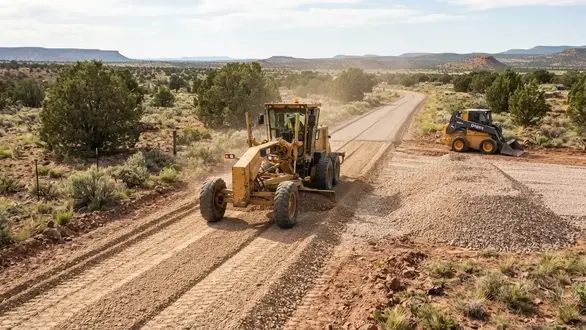
Gravel delivery is only one part of many rural road and driveway projects. Once aggregate reaches the property, the material may need to be strategically placed, spread, graded, shaped, and compacted according to the road dimensions, existing subgrade, drainage, traffic requirements, and intended finished surface.
Ready to Schedule Gravel Delivery for Your Apache County Property?
Get the gravel, road base, aggregate, or suitable fill material your rural Arizona property needs with delivery planned around your actual project conditions. Whether you need material for a new driveway, private road, ranch access route, homesite, construction entrance, parking area, drainage project, or off-grid property improvement, delivery requirements can vary based on material type, quantity, hauling distance, truck access, unloading conditions, and the condition of the receiving area. Contact Apache County Land Services to discuss your gravel delivery project and receive an estimate based on the property's location, material requirements, delivery access, and whether spreading, grading, drainage work, or site preparation is also needed.
Call (928) 543-6447