 Apache County Land Services
Off-Grid Land Prep • Rural Site Development • Access • Utilities • Property Preparation
Connect With Rural Land Development Professionals
(928) 543-6447
Apache County Land Services
Off-Grid Land Prep • Rural Site Development • Access • Utilities • Property Preparation
Connect With Rural Land Development Professionals
(928) 543-6447⭐ Off-Grid Land Development • Rural Property Preparation • Land Clearing • Grading • Access Roads • Building Pads • Utilities • Well & Septic Planning • Solar Development Across Apache County Arizona
Developing rural land for off-grid living requires more than clearing a homesite. Apache County Land Services connects property owners with experienced land development and site-preparation professionals for land clearing, excavation, grading, access roads, building pads, drainage, utility corridors, water wells, septic systems, solar power, and other infrastructure needed to develop rural properties throughout Apache County. Get connected with qualified professionals who can evaluate your property's location, terrain, access, existing conditions, planned improvements, and long-term development goals before major site work begins.
Connecting property owners with land development professionals serving St. Johns, Concho, Vernon, Sanders, Springerville, Eagar, Alpine, Greer, Nutrioso, McNary, Ganado, Window Rock, and surrounding Apache County communities.
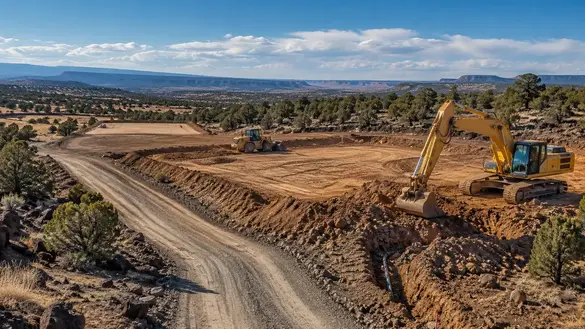
Off-grid land development in Apache County involves much more than preparing a single building site. A successful rural property development plan may need to account for access roads, land clearing, grading, drainage, building areas, water wells, septic systems, utility corridors, solar power, RV or cabin areas, outbuildings, and future improvements. These elements need to work together with the property's terrain, access conditions, existing features, and intended long-term use.
Rural properties throughout Apache County can have dramatically different development requirements. A relatively open parcel with an existing access road may require only limited clearing and grading, while a remote property with rough access, steep terrain, rocky ground, drainage concerns, or extensive vegetation may require considerably more preparation before construction can begin. The development approach should therefore be based on the actual property rather than a standard one-size-fits-all plan.
Off-grid development also means that individual improvements cannot always be planned independently. The location of the future home or cabin can affect the driveway, well, septic area, solar array, utility routes, drainage patterns, and areas reserved for future buildings. Establishing those relationships early can help reduce unnecessary excavation, repeated disturbance, and costly changes later in the development process.
A practical off-grid development plan therefore begins with the property itself. Before major site work begins, landowners should consider how people will access the property, where the primary building area should be located, how water and wastewater systems will fit into the site, where utilities will run, where solar equipment may be installed, how drainage will move across the property, and what additional improvements may eventually be added.
Important considerations when planning an off-grid development project in Apache County include:
For remote Apache County properties, the most effective development approach is to consider the entire parcel rather than treating land clearing, grading, access, water, septic, utilities, and power as unrelated projects. The location of one improvement can directly affect the feasibility and cost of another, making early property planning especially valuable.
Apache County Land Services connects rural property owners with qualified professionals who can help evaluate and develop individual components of an off-grid property. Depending on the project, that may include excavation and land clearing professionals, grading contractors, driveway and road contractors, well drilling professionals, septic professionals, utility contractors, solar installers, and other specialists. Each professional should evaluate the portion of the project that falls within their qualifications, licensing, and scope of work.
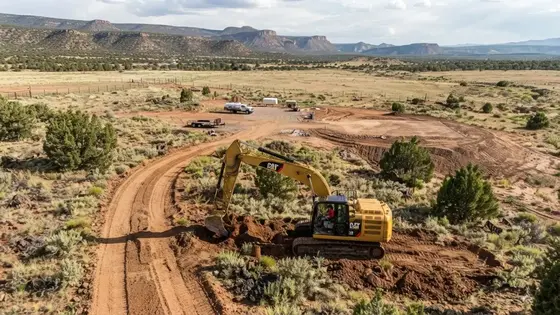
Off-grid property development requires coordinated planning for access, building areas, grading, drainage, water, wastewater, utilities, and future improvements.
One of the most expensive mistakes on rural property is beginning physical site work before confirming that the parcel can support the improvements you actually want to build. Off-grid development should begin with property due diligence and a preliminary site layout before major clearing, grading, or excavation begins.
A rural parcel may have plenty of acreage but still have a surprisingly limited area that works for a home, driveway, well, septic system, utilities, solar equipment, drainage, and future structures. Understanding those constraints early can help prevent unnecessary earthwork and costly changes later.
A property can look simple from a parcel map or listing photograph while presenting very different challenges on the ground. Access, slopes, drainage, vegetation, rock, utility corridors, well access, septic requirements, and the intended building location should all be considered before major site work begins.
Owning rural acreage does not automatically mean every portion of the property can be developed in whatever way you choose. Before spending money on clearing, grading, roads, wells, septic systems, solar equipment, or a building pad, confirm that the parcel and intended use can support the improvements you are planning.
This is especially important with remote Apache County land. A parcel can appear large and open on a map while having a much smaller practical development area once access, easements, terrain, drainage, water, wastewater, building requirements, and future infrastructure are considered.
Confirm the property's Assessor's Parcel Number (APN), physical location, acreage, legal description, and available mapping information before major site work begins. Accurate parcel identification helps professionals evaluate the correct property and proposed development area.
Determine how the property is reached and whether the route can support construction equipment, material deliveries, well drilling, septic work, emergency access, and long-term use. A road suitable for passenger vehicles may not be suitable for rural construction.
Recorded easements, rights-of-way, utility corridors, and other restrictions can affect where roads, structures, utilities, fences, wells, and septic systems can be located. Do not assume every open portion of the parcel is available for development.
An off-grid home, cabin, RV property, ranch, homestead, workshop, manufactured home site, or recreational property can have different infrastructure needs. Define the intended use early so the development layout supports what you actually plan to build or use.
If onsite wastewater treatment will be required, identify the potential septic area and applicable requirements before other improvements occupy valuable portions of the property. Septic planning can influence the home, well, driveway, and overall site layout.
Determine whether the property will rely on a private well, hauled water, storage, or another appropriate water source. Water planning can affect the building location, drilling access, pump equipment, electrical requirements, water lines, and long-term development costs.
Identify significant slopes, elevation changes, rocky ground, washes, drainage paths, low areas, runoff routes, vegetation, and other physical conditions. These factors can determine whether proposed building, driveway, utility, and septic areas are practical.
Determine which building, zoning, permitting, inspection, manufactured-home, electrical, solar, septic, or other requirements apply to the proposed use. Confirm applicable requirements before committing to a specific building site or development strategy.
Bring the major constraints together to identify where development realistically makes sense. Consider the building area, access, well, septic, drainage, utilities, solar equipment, construction staging, and future structures rather than focusing only on total acreage.
Ten, twenty, forty, or more acres can still have a surprisingly limited practical development area. Once access, easements, drainage, terrain, the building site, well, septic system, utility corridors, and future structures are considered, the usable development area may be much smaller than the total acreage.
That is why parcel due diligence should happen before major clearing, grading, excavation, road construction, or building-pad preparation. Identifying the practical development area first can help prevent expensive site work in locations that later prove unsuitable for the property's intended use.
For remote Apache County property, the important question is not simply how many acres you own, but where the improvements you actually need can work together on the parcel.
Before developing raw land in Apache County: verify the parcel and APN, access, easements, intended use, water, wastewater, terrain, drainage, applicable requirements, and practical development area before committing to major site preparation.
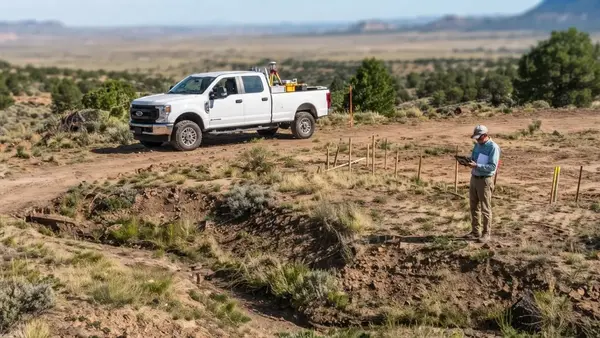
Before major site work begins, rural property should be evaluated for access, terrain, drainage, building areas, water, wastewater, utilities, and other development constraints.
Before spending money on clearing, grading, roads, a building pad, a well, septic system, solar, or other improvements, it is important to understand how the major components of your development plan will fit on the actual parcel. Access, terrain, drainage, water, wastewater, utilities, and future development can all affect the practical buildable area.
Call (928) 543-6447A parcel can look like a great opportunity on a map or listing and still present significant challenges once you begin planning roads, water, septic, utilities, grading, and construction. Before purchasing rural land in Apache County, investigate the property's development potential rather than evaluating the acreage alone.
Pre-purchase due diligence can help identify potential development constraints before you commit your budget to a property. The exact requirements depend on the parcel and intended use, but several practical questions should be answered before closing on undeveloped rural acreage.
Confirm the Assessor's Parcel Number, acreage, physical location, legal description, and available mapping information. Make sure the property being evaluated matches the parcel information in the listing and purchase documents.
Determine what you actually want to do with the property before assuming it will work for you. An off-grid home, cabin, RV property, ranch, workshop, manufactured home site, or recreational property can have different requirements.
Determine how the property is accessed and whether the route is practical for construction equipment, material deliveries, well drilling, septic installation, and long-term use. Also investigate recorded access rights and easements.
Utility corridors, rights-of-way, access easements, and other recorded restrictions can affect where improvements can be placed. A large parcel may have less practical development flexibility than its acreage suggests.
Look for practical areas for your intended building or primary use. Slopes, rock, washes, drainage patterns, vegetation, and difficult ground can all affect future grading, excavation, access, and building-pad preparation.
Rural properties may rely on private wells, hauled water, storage, or another supply strategy. Investigate realistic water options and potential drilling or infrastructure costs before assuming water will be simple or inexpensive.
When public sewer is unavailable, determine whether an approved onsite wastewater solution is practical for the intended use. Septic feasibility can influence the building location, well location, site layout, and budget.
Identify washes, drainage paths, low areas, runoff routes, and other water-related constraints before choosing a building area. Listing photos and satellite views may not reveal every drainage limitation.
Determine whether conventional utility service is available or whether the property will require an off-grid power strategy. Consider solar, batteries, generators, utility corridors, trenching, and expected electrical loads.
Identify the building, septic, addressing, floodplain, zoning, or other requirements that may apply to the parcel and intended use. Do not rely solely on a real estate listing to determine whether land is buildable.
Purchase price is only part of the cost of rural land ownership. Consider access, clearing, grading, excavation, roads, wells, septic, utilities, solar, and building-pad preparation before deciding what the property is actually worth to you.
Think beyond the first structure or improvement. Shops, barns, RV areas, additional structures, fencing, livestock facilities, or expanded solar may require space that should be considered before development begins.
Two parcels with the same number of acres can have very different development potential. Access, terrain, drainage, easements, water, septic feasibility, utility requirements, and practical building areas can make one property substantially easier and less expensive to develop than another.
If you are considering purchasing undeveloped Apache County property, investigate the major development constraints before assuming the parcel will support your plans. Evaluate the property based on the improvements you actually intend to make rather than simply the amount of land included in the purchase.
Before buying rural Apache County land: verify the parcel, intended use, access, easements, terrain, water, septic, drainage, utilities, applicable requirements, estimated development costs, and room for future improvements.
Developing raw rural property for off-grid living involves much more than clearing a homesite. The property's access, terrain, drainage, building location, water supply, wastewater system, electrical power, utility routes, and future improvements should be considered together before major site work begins.
Start by understanding the parcel itself. Review the property's location, acreage, existing access, terrain, vegetation, drainage, ground conditions, existing improvements, available utilities, water options, wastewater requirements, and intended future use.
Identify practical locations for the future home, cabin, manufactured home, driveway, well, septic system, solar equipment, utility corridors, parking, construction staging, and future buildings. Establishing the overall layout early helps prevent one improvement from creating problems for another.
Evaluate the existing road and property access and determine what is needed for construction equipment, material deliveries, drilling equipment, septic equipment, emergency access, and long-term property use. Remote access, narrow routes, steep grades, gates, drainage crossings, and seasonal conditions can all affect development planning.
Determine how the property will obtain and distribute water. If a private well is planned, consider the proposed well location, drilling access, water lines, pump equipment, electrical requirements, storage, and how the water system will connect to the future home and other improvements.
Establish the septic strategy before finalizing the property layout. The septic tank, dispersal area, wastewater piping, installation access, reserve areas, and applicable site requirements can influence where the home, driveway, well, and other improvements can be located.
Remove vegetation, brush, trees, debris, and other obstacles through targeted land clearing from the areas that actually need to be developed. This may include the building area, driveway, utility corridors, well access, septic area, staging areas, and future improvement zones without necessarily clearing the entire parcel.
Develop practical site elevations for the building area, access routes, parking, and other improvements while considering natural drainage. Slopes, washes, runoff, low areas, snowmelt, and seasonal weather should be evaluated before major grading changes are made.
Plan routes for electrical service, solar power, water lines, communications, and other underground utilities. Coordinating these routes with the driveway, building pad, well, septic system, and future structures can reduce unnecessary trenching and site disturbance later.
Once the major site constraints are understood, prepare the planned building area. Depending on the property, this may involve excavation, cut-and-fill work, grading, fill placement, compaction, drainage improvements, and other site preparation required for the future home, cabin, manufactured home, or structure.
Finish the primary driveway and other access routes with appropriate grading, road base, gravel, drainage improvements, and finish work. The finished access system should support both normal property use and the vehicles and equipment required for future construction and maintenance.
Coordinate the specialized infrastructure required for the property, including well and pump systems, septic installation, solar power, batteries, electrical equipment, water distribution, and other utilities. The appropriate qualified professionals should handle design, permitting, installation, and inspections within their respective areas of expertise.
Complete remaining drainage improvements, parking areas, fencing, equipment areas, storage, landscaping, and other site improvements while protecting space for future expansion. A well-planned property should remain useful as additional buildings, infrastructure, or other improvements are added over time.
There is no single construction sequence that applies to every rural property in Apache County. Access conditions, terrain, drainage, permitting requirements, water, septic, weather, existing improvements, building plans, and the property's intended use can change which improvements should happen first.
The important principle is to plan the property as a connected system. Before major clearing, grading, or excavation begins, consider how the building area, driveway, well, septic system, drainage, utilities, solar power, and future structures will work together.
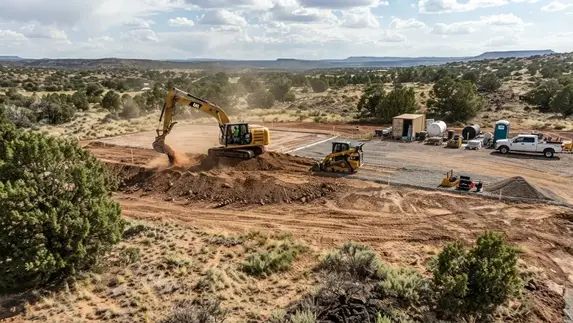
Off-grid development typically progresses through coordinated stages, from property access and site preparation to grading, infrastructure, building areas, and future improvements.
Choosing the building location is one of the most important decisions in an off-grid land development project. The future home, cabin, or manufactured home becomes the anchor point for the driveway, well, septic system, utility corridors, drainage, solar power, parking, construction access, and future buildings.
The highest, flattest, or most scenic part of a rural parcel is not automatically the best building site. A practical homesite should be evaluated according to the entire property and the improvements that will eventually surround it. Moving the building location later can affect the driveway length, grading requirements, utility trenching, water lines, septic layout, drainage, and construction costs.
The best homesite is usually the location that allows the major components of the property to work together. Before clearing or grading, consider the future relationship between the building area, driveway, well, septic system, drainage, utility corridors, solar equipment, parking, construction staging, and future structures.
Apache County properties can vary substantially in terrain, access, vegetation, drainage, and ground conditions. A site that looks ideal from the road may require significantly more preparation once access, utilities, water, wastewater, and future development are taken into account.
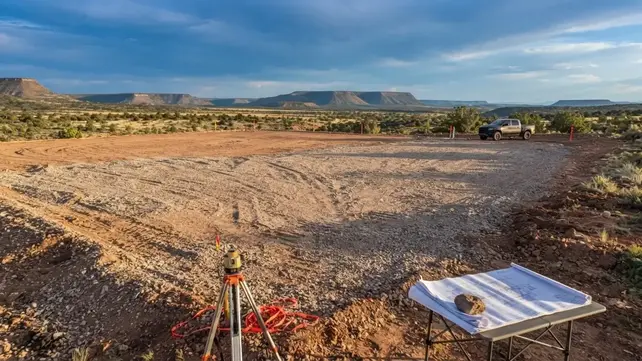
A rural building site should be selected as part of the overall property layout, considering access, terrain, drainage, water, septic, utilities, and future expansion.
The location of your future home, cabin, or manufactured home can affect grading, driveway construction, drainage, well and septic placement, utility trenching, solar equipment, construction access, and future expansion. Before major site work begins, consider how the building area will work with the rest of the property.
Call (928) 543-6447Rural development conditions can vary substantially across Apache County. The right approach depends on the property's location, terrain, access, existing improvements, intended use, and the infrastructure required for the project. Understanding these conditions before major site work begins can help determine where improvements should be located and how they should be developed.
Remote properties may require careful planning for construction equipment, material deliveries, well drilling equipment, septic equipment, and long-term property access. Evaluate the existing road, easements, gates, grades, drainage crossings, and available staging areas before major development begins. Depending on the property, driveway grading, road base, gravel, drainage improvements, or access-road construction, road base, gravel, drainage improvements, or access-road construction may be required.
Sloped Apache County properties may require excavation, cut-and-fill work, grading, drainage improvements, or other earthwork before usable building and access areas can be established. The goal is not necessarily to flatten the entire parcel, but to identify practical locations where the home, driveway, utilities, and other improvements can work with the natural terrain.
Natural drainage can affect roads, building pads, utility corridors, septic areas, and other portions of a rural property. Existing washes, low areas, storm runoff, snowmelt, and seasonal water movement should be understood before establishing final grades or placing permanent improvements. Drainage planning should be coordinated with the rest of the property layout.
Raw acreage may contain trees, brush, vegetation, debris, or other obstacles across areas needed for future development. Instead of automatically clearing the entire parcel, identify the actual building footprint, driveway, utility corridors, well access, septic area, construction staging zones, and future improvement areas that need to be prepared through targeted land clearing.
Rock and difficult subsurface conditions can affect excavation for building pads, driveways, drainage improvements, utility trenches, septic systems, and other infrastructure. Ground conditions should be considered when establishing the project scope rather than assuming that every portion of a rural parcel will require the same type of excavation or grading.
Remote properties may not have conventional electric, water, sewer, or communications infrastructure available at the building site. Off-grid development may therefore require a combination of private wells, septic systems, solar power, batteries, generators, water storage, utility trenching, and other infrastructure. These systems should be planned around the overall property layout rather than added independently.
Snow, wet ground, runoff, freezing conditions, and seasonal weather can affect access, excavation, material deliveries, grading, and construction schedules. Rural properties should be evaluated with seasonal conditions in mind, including how the driveway, drainage system, equipment staging areas, and unfinished earthwork may perform during periods of difficult weather.
A property that begins with a single homesite may eventually include a garage, shop, barn, additional cabin, RV area, livestock facilities, equipment storage, additional parking, or other improvements. Planning future roads, utility corridors, building areas, drainage routes, and expansion space during the initial layout can help prevent today's improvements from limiting tomorrow's options.
Off-grid land development works best when the property is evaluated as a complete system rather than as a collection of unrelated construction projects. Access, terrain, drainage, clearing, grading, the building area, well, septic, utilities, solar power, and future improvements can all influence one another.
Before major excavation or clearing begins, identify the property's major constraints and determine which improvements need to happen first. This can help reduce unnecessary site disturbance, avoid conflicts between infrastructure, and establish a more practical development sequence for the property.
For rural property development in Apache County, the best preparation strategy depends on the actual property. Evaluating access, terrain, drainage, vegetation, ground conditions, utilities, water, wastewater, and future development plans early can help establish a more practical path from raw land to a usable off-grid property.
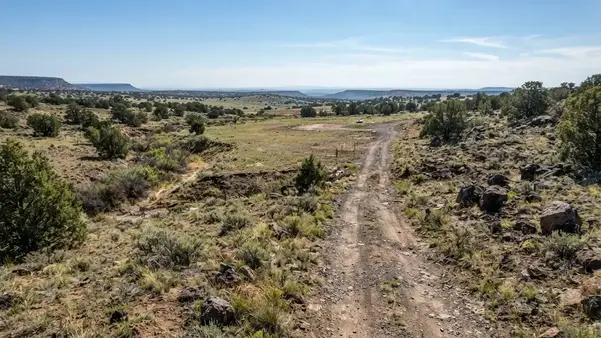
Apache County rural properties can vary widely in access, terrain, vegetation, ground conditions, drainage, and available infrastructure, making property-specific planning important.
Drainage should be considered before roads, building pads, utility trenches, parking areas, and other permanent improvements are established. Water can follow natural paths across rural property that are not always obvious during dry conditions, and changing the existing grade can alter how runoff moves across the site.
The objective of rural grading is to establish usable areas while maintaining a practical relationship between finished elevations, roads, structures, drainage, and the rest of the property. Flattening land without understanding how water moves can simply transfer a drainage problem from one part of the property to another.
Before major grading begins, consider existing drainage patterns, washes, slopes, runoff, seasonal weather, and the locations of future roads, structures, septic areas, utilities, and other improvements. When drainage affects the design or permitting of a project, the appropriate qualified professional should evaluate the property and applicable requirements.
For off-grid development in Apache County, drainage planning should happen before major grading, road construction, building-pad preparation, and other permanent site improvements. Understanding how water moves across the property can help create a more practical and durable development layout.
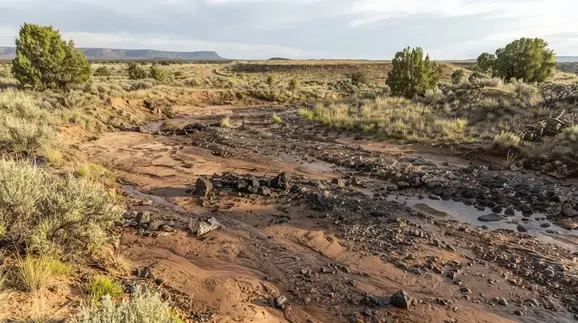
Natural washes, drainage paths, slopes, runoff, and snowmelt should be considered before placing roads, building pads, utilities, septic systems, or other permanent improvements.
Off-grid development requires more than preparing a place for a home, cabin, or manufactured home. The property also needs practical systems for obtaining water, managing wastewater, and supplying electricity. These infrastructure systems should be considered while the overall site layout is being developed.
Planning question: How will the property obtain, store, pump, and distribute water?
Site-planning consideration: If a private well is planned, the proposed well location, drilling access, pump equipment, water lines, storage, electrical requirements, and building location should be considered together with the rest of the property layout.
See our Apache County water well drilling information for more detail.
Planning question: What electrical loads will the property actually need to support?
Site-planning consideration: Well pumps, heating and cooling, refrigeration, appliances, lighting, tools, communications, water systems, workshops, and future buildings can all affect the required electrical capacity. Solar panels, batteries, inverters, generators, and electrical equipment should be located where they can be accessed and maintained.
See our off-grid solar installation information for more detail.
If the property uses a private well, the well pump becomes part of the property's electrical demand. Water storage, pressure systems, treatment equipment, and other water infrastructure may also require power. This means the water system and electrical system should be considered together when planning an off-grid property.
The same principle applies to the rest of the property. The building location, well, septic system, utility routes, solar equipment, driveway, and future improvements should be arranged so that one system does not unnecessarily interfere with another.
Successful off-grid development starts with infrastructure that can support the property's intended use. Planning water and electrical requirements early can help determine where the building, well, utility corridors, solar equipment, and other major improvements should be located.
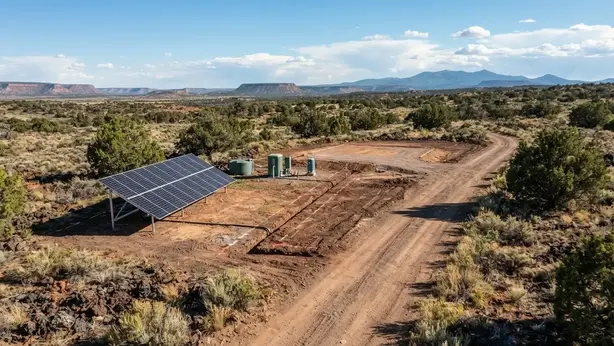
Off-grid water and electrical systems should be planned together with the building site, access, utility corridors, and future property improvements.
A private well, water storage, pump equipment, solar power, batteries, utility trenches, and the future building all need to work together. Planning these systems early can help avoid placing infrastructure where it later conflicts with access, septic, the building site, or future improvements.
Call (928) 543-6447Rural properties frequently need both a private water source and an onsite wastewater system. That makes well and septic planning a site-layout issue as much as a plumbing issue. Both systems need appropriate locations, and the usable portion of the property can become surprisingly constrained once the house, driveway, slopes, drainage, utilities, and applicable separation requirements are considered.
A well should not simply be drilled wherever the drilling equipment can reach, and a septic system should not automatically be placed in whatever open area remains afterward. The two systems should be considered together with the future building location, driveway, drainage, utility corridors, and long-term property plans.
On raw rural property, water and wastewater infrastructure can influence where the home, driveway, utilities, and other improvements can be placed. Choosing the house location first and attempting to fit the well and septic system around it can create unnecessary layout constraints.
A better approach is to consider the building area, private well, septic system, access, drainage, and utility corridors together during the preliminary property layout. Site-specific requirements and permitting should be confirmed with the appropriate qualified professionals and Apache County authorities before installation.
For off-grid property development in Apache County, the private well and septic system should be considered early because both can influence the location of the home, driveway, utilities, and other permanent improvements.
An off-grid property has to remain buildable while it is being developed. Excavators, loaders, grading equipment, dump trucks, drilling rigs, septic equipment, concrete deliveries, and utility crews all need practical access to the areas where they will work. Planning equipment access and staging before major site work begins can help prevent completed improvements from interfering with later construction.
Determine how equipment and material deliveries will travel from the existing road to the planned work areas. Consider driveway width, grades, gates, turns, drainage crossings, surface conditions, and whether the route can support the equipment required for the project.
Identify enough working room for excavators, loaders, grading equipment, dump trucks, drilling equipment, septic equipment, and other machinery. Equipment width, turning radius, backing areas, overhead clearance, slopes, and surrounding site constraints can all affect where work can be performed.
Determine where gravel, road base, fill material, concrete, building materials, water tanks, and other supplies will be delivered. Delivery routes and unloading areas should be established before permanent improvements restrict access or maneuvering space.
If a private well is planned, make sure the proposed drilling location can be reached by the appropriate equipment. The drilling setup, access route, future water lines, pump equipment, and surrounding improvements should be considered before the area is permanently developed.
Keep the planned septic installation area accessible to the equipment required for excavation and installation. The septic area, driveway, house site, reserve areas, and other improvements should be considered together before access routes are finalized.
Reserve practical areas for construction equipment, materials, excavated soil, spoil, aggregate, temporary storage, and other project needs. Planned staging areas can reduce repeated disturbance to completed portions of the property.
Consider how additional buildings, utility extensions, solar equipment, wells, septic work, roads, or other improvements may be constructed later. Avoid permanently occupying every practical access or staging area during the initial phase of development.
A rural property can become harder to develop when finished improvements are installed before future construction access has been considered. Fences, landscaping, parking areas, completed driveways, storage structures, and other improvements can restrict the equipment routes needed for later phases.
For phased off-grid development, construction access should be treated as part of the long-term site plan. Keeping practical equipment routes and staging areas available can make future construction easier and reduce unnecessary disturbance to completed portions of the property.
Construction access and staging should be planned before major off-grid development work begins. Establishing equipment routes, maneuvering areas, delivery access, well and septic access, staging areas, and future construction routes can help keep the property buildable throughout its development.
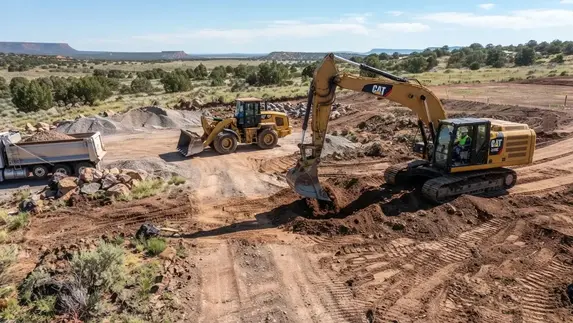
Rural construction requires space for equipment access, maneuvering, material deliveries, temporary staging, well drilling, septic work, and future phases of property development.
The right land-development strategy depends on how you intend to use the property. A full-time residence, cabin, RV site, ranch, workshop, or recreational parcel can require different combinations of access, grading, water, wastewater, power, drainage, and future infrastructure.
Planning around the property's intended use helps determine which improvements should come first and which areas should be reserved for future construction.
A full-time off-grid residence typically requires coordinated planning for the building site, driveway, building pad, private water, septic, electrical power, drainage, parking, utilities, and future expansion.
Seasonal or recreational cabins may require access, building-site preparation, water, wastewater, solar power, parking, drainage, and construction access. The site can also be planned for future improvements.
RV-oriented development may prioritize access, turning and parking areas, water, wastewater planning, electrical power, drainage, and a stable RV surface while preserving space for future development.
Larger rural properties may require extended access, equipment areas, fencing, water infrastructure, agricultural areas, livestock facilities, barns, shops, storage, and future structures.
Shop-focused properties may emphasize building-pad preparation, equipment access, parking, electrical capacity, drainage, material deliveries, and maneuvering space while coordinating with future improvements.
Recreational land may need less infrastructure initially while still benefiting from planned access, parking, drainage, vegetation management, utilities, and designated areas for future development.
A manufactured-home site requires coordination between the home location, access route, foundation or support system, water, wastewater, drainage, utilities, parking, and installation access.
Some owners develop rural land gradually, beginning with access, clearing, grading, water, or temporary living areas before adding a home, shop, solar system, septic improvements, or additional structures.
Large parcels may require planning across multiple areas for access routes, utility corridors, water infrastructure, drainage, building areas, equipment areas, and future expansion.
There is no single land-development plan that works for every rural property in Apache County. A home, cabin, RV property, ranch, workshop, manufactured home, or recreational parcel can have very different infrastructure requirements.
Identifying the intended use early helps determine how access, grading, building areas, water, septic, power, drainage, utilities, and future improvements should fit together.
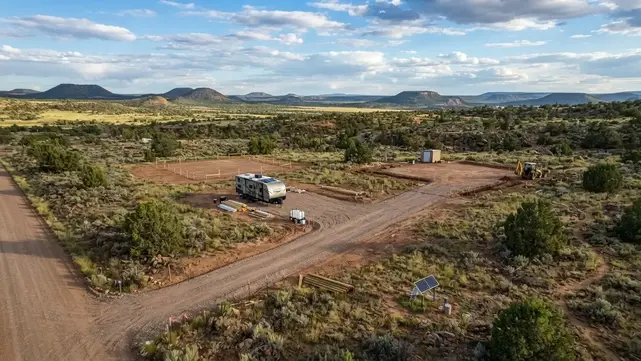
Off-grid development planning changes with the intended use of the property, from homes and cabins to RV sites, ranches, workshops, and future phased improvements.
Developing raw or undeveloped land in Apache County does not always mean completing every improvement at the same time. When development must happen gradually, prioritizing property access, site feasibility, water, wastewater, drainage, utilities, and the primary building area can help establish a practical foundation for future off-grid construction.
The best starting point depends on the individual parcel. A remote property near St. Johns, Concho, Vernon, Springerville, Eagar, Sanders, or another rural Apache County community may have different access, terrain, drainage, utility, water, septic, and construction considerations than another parcel elsewhere in the county. Existing roads, private easements, slopes, washes, rocky ground, vegetation, weather conditions, and the intended use of the property can all affect the development strategy.
Start by understanding the parcel itself. Review property access, recorded easements, boundaries, terrain, drainage, existing improvements, available utilities, water options, wastewater requirements, and the intended use of the land before investing heavily in clearing, grading, or excavation. See our Apache County rural land due-diligence guidance before committing to major site work.
Determine how construction equipment, gravel trucks, material deliveries, well drilling rigs, septic equipment, emergency vehicles, and future residents will reach the property. Rural Apache County roads may involve private roads, easements, narrow routes, steep grades, seasonal conditions, or drainage crossings that need to be considered early. Review driveway and rural access requirements when establishing the primary route.
If public water is unavailable, determine how the property will obtain and distribute water. A private well may require planning for the well location, drilling access, pump equipment, electrical power, water lines, storage, and connection to the future home or other improvements.
Water availability and well conditions can vary significantly by location, so site-specific well planning should be completed with appropriate qualified professionals.
Rural properties without public sewer generally need an approved onsite wastewater solution. Septic planning should be considered before finalizing the home, cabin, driveway, well, and utility layout because the wastewater system requires an appropriate location and site conditions.
Apache County requires permitting for onsite wastewater treatment facilities, so applicable site evaluation, design, authorization, installation, and inspection requirements should be addressed before construction.
Before changing the natural grade of rural acreage, identify washes, drainage paths, low areas, slopes, runoff routes, and areas affected by snowmelt or seasonal storms. Filling or blocking a natural drainage path can redirect water toward roads, driveways, building pads, or neighboring areas. Proper grading and drainage planning should account for these conditions before earthwork begins.
Identify practical locations for the future home, cabin, manufactured home, RV area, driveway, well, septic system, solar equipment, utility corridors, parking, construction staging, and future structures before major earthwork begins.
Once the layout is established, address the site work required to make the planned development areas usable. Depending on the property, this can include vegetation clearing, brush removal, excavation, rough grading, cut-and-fill work, drainage improvements, driveway grading, road base, or building-pad preparation.
Coordinate water distribution, septic infrastructure, utility trenches, electrical service, solar power, battery equipment, and other utilities required for the planned use. Utility corridors should be positioned so they work with the driveway, building pad, well, septic area, and future structures.
With the supporting site infrastructure established, proceed with the planned home, cabin, manufactured home, RV area, workshop, or other primary use. Construction access should remain available for equipment, deliveries, inspections, maintenance, and future improvements.
Later improvements may include shops, barns, garages, additional parking, fencing, storage areas, expanded solar capacity, additional structures, landscaping, livestock areas, or other improvements. Reserve practical space for these uses before the property becomes difficult to expand.
The appropriate order can change from one Apache County property to another. Remote access, private-road or easement conditions, steep terrain, rocky or difficult ground, washes, snow, seasonal runoff, wildfire considerations, water availability, septic requirements, existing utilities, and the planned use of the property can all affect which improvements should happen first.
County requirements can also affect the development process. Building permits, onsite wastewater requirements, electrical or solar permits, site evaluations, inspections, access considerations, and other approvals should be confirmed with the appropriate Apache County departments and qualified professionals before work begins.
The goal is not simply to find the cheapest improvement to complete first. The goal is to establish a development strategy where today's clearing, grading, roads, utilities, wells, septic work, and building improvements support the property's long-term use.
Planning an off-grid homesite in Apache County? Start with the property's actual conditions, access, water, septic, drainage, intended building area, and long-term development goals. Then prioritize the improvements that establish feasibility and support the next stage of construction.
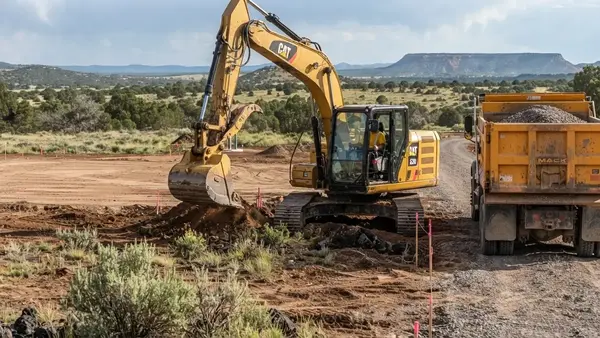
Off-grid properties are often developed in stages, with access, water, wastewater, drainage, utilities, and the primary building area planned together before future improvements.
Many rural property development problems begin before construction actually starts. On undeveloped land in Apache County, mistakes involving access, drainage, grading, water, septic, utilities, and building-site selection can result in unnecessary earthwork, additional hauling, infrastructure relocation, or delays.
Planning the property as a complete development site can help reduce these problems. This is especially important on remote acreage where road conditions, private access, difficult terrain, seasonal weather, limited utilities, and long equipment or material delivery routes can affect the cost and practicality of construction.
A driveway affects equipment access. The building location affects the driveway, well, septic area, drainage, and utility routes. The well and septic system affect the usable building area. Solar equipment affects power distribution and future electrical capacity. Grading affects drainage and road performance.
For rural properties in Apache County, these relationships are especially important when acreage is remote, access is difficult, public utilities are unavailable, terrain is uneven, or development will occur over several stages.
A whole-property development plan can help identify these relationships before major clearing, excavation, grading, road construction, utility trenching, well drilling, septic installation, or building-pad work begins.
Preparing raw land for off-grid living in Apache County? Avoid costly rework by considering access, terrain, drainage, water, septic, utilities, building areas, construction equipment, and future improvements as connected parts of the same rural property development plan.
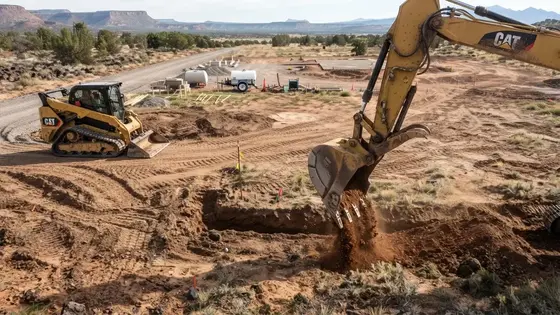
Coordinating excavation, access, grading, drainage, utilities, and equipment staging can help reduce unnecessary rework during rural property development.
Developing rural off-grid property in Apache County can range from several thousand dollars for basic site improvements to $50,000–$150,000+ for a more extensive homesite with access, water, septic, grading, utilities, and off-grid power. Larger ranch, homestead, or multi-phase developments can cost substantially more.
These are general planning ranges, not guaranteed quotes. Actual costs depend on the property, terrain, rock, access, distances, materials, equipment, approved systems, and how much of the property you intend to develop. The biggest advantage of planning the improvements together is knowing where your budget is likely to go before major site work begins.
Approximately $3,000–$12,000+
Rural driveway work may include clearing, grading, drainage, gravel, and road base. Long driveways, steep terrain, rock, poor existing roads, and difficult equipment access can push costs higher.
Approximately $2,000–$15,000+
Clearing costs depend on vegetation density, acreage, trees, brush, rock, disposal, and equipment access. Selective clearing around the development area can cost substantially less than clearing an entire parcel.
Approximately $2,500–$50,000+
Smaller homesite grading may fall near the lower end, while major cut-and-fill projects can reach the upper end or beyond. Rock, slopes, elevation changes, drainage, and material quantities are major cost factors.
Approximately $3,000–$15,000+
A building pad may require clearing, excavation, grading, compaction, rock removal, drainage work, and imported material. Larger or more difficult pads can require substantially more earthwork.
Approximately $10,000–$30,000+
Total water costs can include drilling, casing, pump equipment, pressure systems, storage, electrical components, and water lines. Actual well costs vary significantly with depth, geology, location, and required equipment.
Approximately $8,000–$20,000+
Costs may include site evaluation, design, permitting, excavation, tank, wastewater piping, dispersal, inspections, and restoration. Difficult ground, limited space, access problems, or alternative systems can increase the cost.
Approximately $15,000–$40,000+
A complete system may include solar panels, batteries, inverter equipment, mounting, wiring, disconnects, and backup generation. System size should be based on actual electrical loads and how the property will be used. See our off-grid solar installation information for additional planning considerations.
Approximately $2,000–$10,000+
Trenching for water, electrical, communications, and other utilities depends heavily on distance and ground conditions. Rock, trench depth, crossings, elevation changes, and multiple utility runs can increase the total.
Approximately $2,000–$10,000+
Costs can include aggregate, transportation, placement, spreading, and grading. Larger driveways, thicker road sections, remote locations, and long material haul distances can increase the investment.
Approximately $2,000–$15,000+
Drainage work may include swales, culverts, crossings, grade corrections, and erosion-control improvements. Washes, slopes, runoff patterns, and monsoon conditions can significantly affect the required work.
Approximately $1,000–$5,000+ per mobilization
Heavy equipment, haul trucks, drilling rigs, and specialized machinery may need to travel significant distances to remote properties. Multiple trips can add substantially to the overall project cost.
Often $10,000–$30,000+ per initial phase
Many owners start with access, water, septic, drainage, and a primary building area before adding solar expansion, shops, fencing, RV areas, or other future improvements. Phasing can spread the investment over time.
A relatively straightforward rural homesite might involve roughly $40,000–$75,000+ in major site-development improvements before the actual home or cabin is constructed. A more extensive property with difficult access, significant grading, a private well, septic system, solar power, utility trenching, and substantial road improvements can reach approximately $75,000–$150,000+.
These figures are broad planning ranges because every Apache County property is different. A property with good access, favorable terrain, a nearby development area, and limited earthwork may cost considerably less, while rocky ground, remote access, long utility runs, deep wells, major grading, or specialized wastewater requirements can push costs substantially higher.
The cost of the land itself, the home or cabin, major structures, appliances, furnishings, and other personal improvements are separate from these general site-development figures.
A 10-acre parcel is not automatically cheaper to develop than a 40-acre parcel. The actual development footprint, access distance, terrain, rock, drainage, water requirements, septic feasibility, utility distances, and amount of infrastructure can matter more than acreage alone.
Before committing to major site work, it is worth looking at the entire development plan. Coordinating the driveway, building area, well, septic, drainage, utility corridors, solar equipment, and future improvements can help reduce unnecessary excavation, trenching, mobilization, and rework.
Planning an off-grid development budget: a realistic starting range can be roughly $40,000–$75,000+ for a straightforward rural homesite and $75,000–$150,000+ for more extensive development, with difficult or large properties potentially exceeding those ranges.
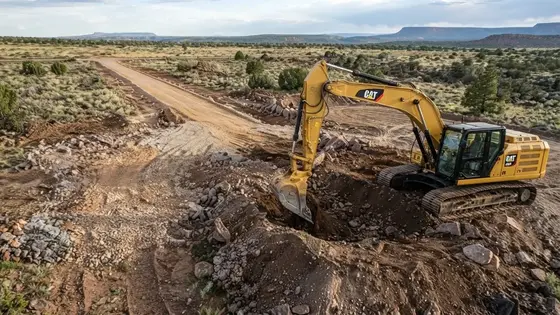
Off-grid development costs can be influenced by access distance, grading, rock, drainage, gravel, equipment mobilization, utilities, and the size of the development footprint.
Off-grid development costs can vary significantly depending on access, terrain, rock, drainage, grading requirements, water and septic needs, utility distances, equipment mobilization, and the amount of property you actually intend to develop. A property- specific discussion can help identify the major improvements that may need to be considered before you commit to a development budget.
Call (928) 543-6447You do not need to have every detail figured out before contacting a professional. However, providing basic information about the property, existing conditions, and your development goals can make the initial conversation much more useful.
Rural properties in Apache County can vary significantly in access, terrain, vegetation, drainage, utilities, water availability, and development requirements. The more information you can provide about the specific parcel, the easier it is to understand what you are trying to accomplish and determine which professionals and site improvements may be needed.
That is common when developing raw or undeveloped land. You can start with the information you have, including the APN, approximate property location, acreage, photos, existing access, and what you ultimately want to use the property for.
From there, the appropriate professionals can help determine what needs to be evaluated and which improvements should be planned before major clearing, grading, excavation, utility installation, or construction begins.
Planning an off-grid property in Apache County? Have your APN and basic property information available if possible, then describe what you want to accomplish. You do not need a complete development plan before taking the first step.
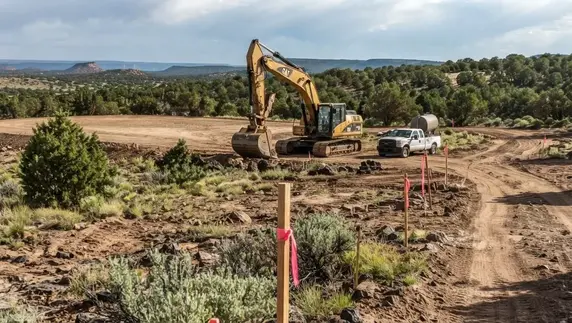
A useful off-grid development quote starts with understanding the property, existing access, terrain, intended use, and improvements planned for the site.
We connect rural property owners with qualified off-grid land development and site-preparation professionals throughout Apache County, Arizona. Our service area supports homeowners, cabin owners, ranchers, landowners, recreational property owners, manufactured home owners, homesteaders, and off-grid property owners who need help preparing and developing rural acreage for future use. Depending on the property and development plan, projects may include land clearing, excavation, grading, drainage, driveway and access road construction, building pad preparation, gravel and road base, utility trenching, private well development, septic systems, off-grid solar, RV or cabin sites, and related rural property improvements.
If your property is located anywhere in Apache County or the surrounding rural communities, we can help connect you with qualified professionals who can evaluate the property's location, existing access, terrain, vegetation, drainage, ground conditions, intended use, and long-term development plans. Depending on the project, different specialists may be needed for excavation and land clearing, grading and drainage, roads and driveways, building-site preparation, utility trenching, water wells, septic systems, solar power, and other infrastructure.
Off-grid development conditions can vary significantly across Apache County, particularly on large-acreage parcels, remote homesites, rocky or sloped properties, ranch land, heavily vegetated areas, and undeveloped rural parcels. The right development approach depends on the actual property and what you ultimately plan to build or use there. Rather than treating each improvement as an isolated project, access, clearing, grading, building areas, water, septic, utilities, solar, drainage, and future structures should be considered together whenever possible.
Whether you are preparing land for an off-grid home, cabin, RV site, ranch, workshop, homestead, or future rural development, early planning can help determine which improvements should happen first and how they should work together. Apache County Land Services can help you connect with qualified professionals for the individual components of your off-grid land development project.
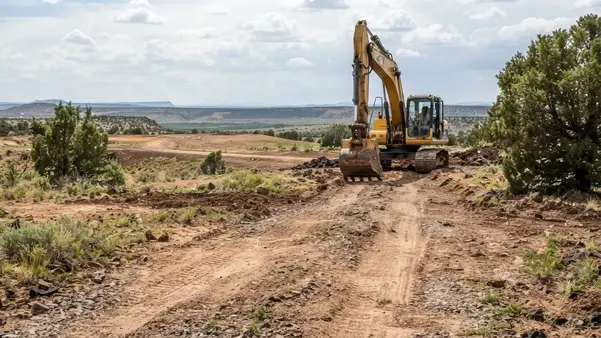
Rural properties throughout Apache County can differ significantly in terrain, access, vegetation, drainage, and infrastructure requirements.
Developing rural property in Apache County can involve many separate improvements that need to function together. Off-grid land development may include access roads, land clearing, excavation, grading, building pads, drainage, private wells, septic systems, utility corridors, solar power, RV or cabin areas, and future structures. The questions below address common concerns property owners have when preparing and developing rural land throughout Apache County, Arizona.
Get your rural property development project started with a plan that considers the entire site. Whether you are developing an off-grid home, cabin, RV property, ranch, homestead, workshop, manufactured home site, or recreational acreage, successful development involves more than clearing a building area. Property access, terrain, grading, drainage, building pads, driveways, utility corridors, private wells, septic systems, off-grid solar, construction access, future structures, and applicable permitting requirements can all affect how the property should be developed. Contact Apache County Land Services to discuss your property and development goals. We can help connect you with qualified land development and site-preparation professionals who can evaluate the property's conditions and help determine the next steps.
Call (928) 543-6447