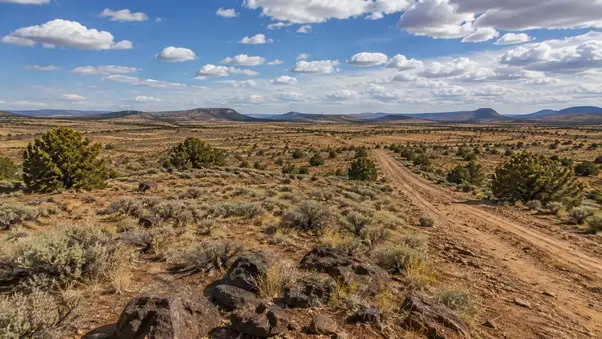
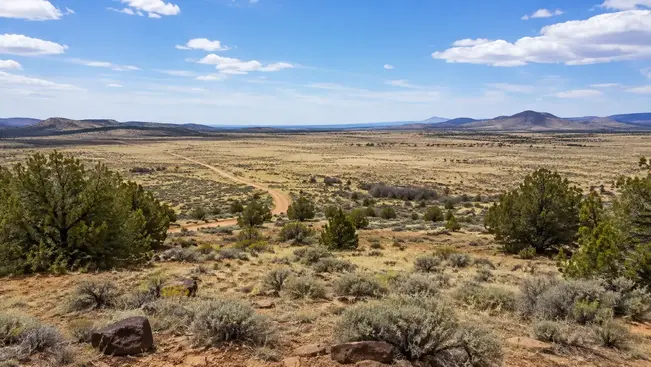
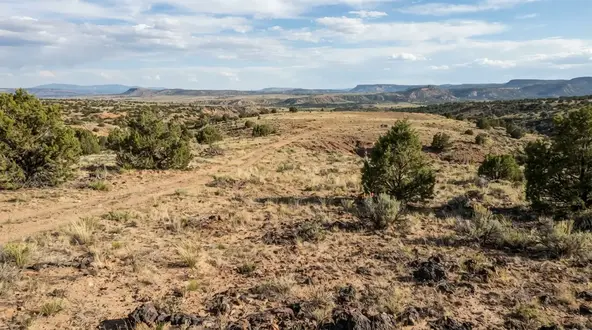
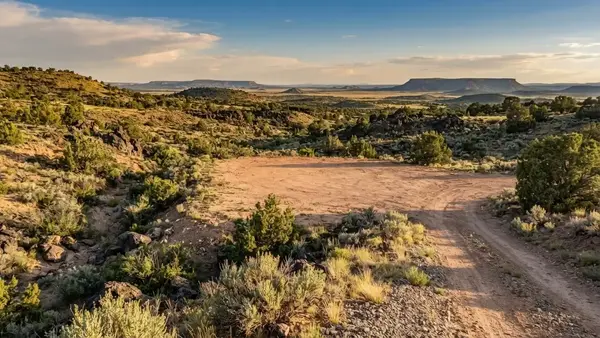
Apache County Land for Sale • Rural & Off-Grid Property • Land Buying • Property Development

Looking for Land in Apache County?

(928) 543-6447

⭐ Apache County Land for Sale • Rural Acreage • Off-Grid Property • Vacant Land • Recreational Land • Rural Homesites • Owner Financing Opportunities • Land Buying Guidance Across Apache County Arizona

Buy Land in Apache County, Arizona

Looking for rural land, acreage, or an off-grid property in Apache County? Apache County Land Services helps prospective buyers explore available land opportunities and understand the practical considerations involved in purchasing rural property. Whether you are looking for a future homesite, recreational acreage, an off-grid property, a rural retreat, or land you plan to develop over time, we can help you identify available opportunities and connect with participating land sellers.

Explore land opportunities throughout St. Johns, Concho, Vernon, Sanders, Springerville, Eagar, Alpine, Greer, Nutrioso, McNary, Ganado, Window Rock, and surrounding Apache County communities.

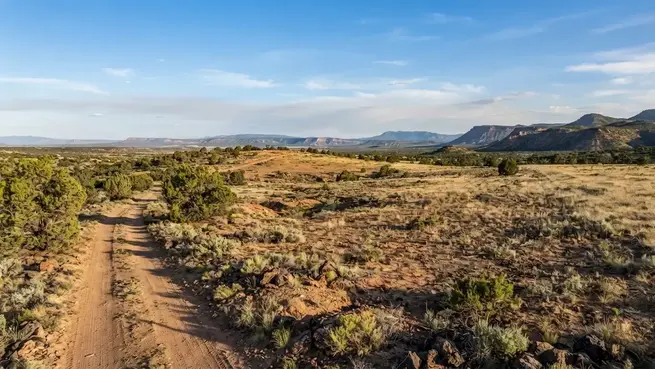
Rural land and undeveloped acreage in Apache County Arizona
Apache County Land Knowledge Practical insight into rural acreage, high desert terrain, forested areas, ranch land, and remote off-grid properties.
Evaluate Rural Property Access Understanding roads, driveways, easements, terrain, and site access before buying remote land can help identify development challenges.
Plan for Water, Septic & Utilities Consider wells, septic suitability, utility access, drainage, and other infrastructure when evaluating undeveloped land.
Think Beyond the Purchase Evaluate how the property could support a homesite, cabin, driveway, well, septic, solar power, livestock, or future off-grid development.

Available Land in Apache County, Arizona

Explore currently available rural and off-grid land opportunities in Apache County, Arizona. Compare properties based on acreage, location, access, intended use, and purchase terms before deciding which parcels are worth investigating further.

Land availability can change as properties are reserved or sold. Property pricing, financing terms, acreage, access, zoning, permitted uses, flood conditions, and other parcel-specific information should always be confirmed with the participating land seller before purchasing.

1.16 acre rural property in Concho Apache County Arizona

1.16 Acres — Concho, Arizona

Rural 1.16-acre property in Apache County near Concho. This parcel may appeal to buyers looking for recreational acreage, an RV property, or a future rural or off-grid development site. The property offers access to regional routes and surrounding communities in eastern Arizona.

APN: 107-03-092
Property Address: 12 County Road 8118
County: Apache County
Size: 1.16 acres

Cash Price: $9,610
Owner Financing: $195/month for 48 months
Down Payment: $250
Interest: 0%

The seller indicates that RVs are permitted for short-term stays, longer stays may require a septic hookup, mobile homes are not allowed, and manufactured homes are permitted. Buyers should independently verify current zoning, permitted uses, access, water, septic requirements, and other parcel-specific conditions.

View Property
1.057 acre rural property in Concho Apache County Arizona

1.057 Acres — Concho, Arizona

Rural 1.057-acre property in the Concho Lakeland area of Apache County. This parcel may appeal to buyers looking for rural residential acreage, recreational property, or a future rural or off-grid development site. The property is identified by the seller as having access from N3521 near US Highway 60 and Route 61.

APN: 107-32-088
Subdivision: Concho Lakeland
Access Road: N3521
County: Apache County

Cash Price: $9,610
Owner Financing: $195/month for 48 months
Down Payment: $250
Interest: 0%

The seller identifies the parcel as Residential–Agriculture General zoning. Buyers should independently verify current zoning, permitted uses, access, easements, building requirements, water availability, septic feasibility, and other parcel-specific conditions before purchasing.

View Property
Rural land and undeveloped acreage in Apache County Arizona

Can't Find the Right Apache County Property?

Not every available parcel will be the right fit for your location, acreage, budget, or intended use. If the properties currently shown do not match what you are looking for, tell us what you have in mind and we can help you explore additional participating land-seller opportunities.

Tell us what you want:
Preferred area • Acreage • Budget • Intended use

Whether you are looking for affordable acreage, an off-grid homesite, recreational land, a future homestead, or rural property for another use, providing specific criteria can make your land search more productive.

Start a Land Inquiry

Research the Actual Parcel Before You Buy

Finding an affordable parcel is only the first step. Rural Apache County land can differ significantly from one property to another based on road access, easements, terrain, drainage, zoning, water availability, septic feasibility, utilities, and the practical location of future improvements.

Before committing to a property, review the exact parcel information with the participating land seller and perform your own due diligence. A property that looks attractive from a listing may have development conditions that are not obvious until the parcel is examined more closely.

Whether you are looking for inexpensive acreage, recreational land, an off-grid homesite, a future homestead, RV property, or rural land for long-term development, compare the actual property conditions, not just the acreage and purchase price, before deciding which Apache County parcel is right for you.

How to Research an Apache County Parcel Before You Buy

Finding a parcel that fits your budget is only the beginning. Rural property in Apache County can look very different from a listing map, satellite image, or road-side view. Before purchasing land, research the actual parcel and determine how access, permitted use, terrain, drainage, water, wastewater, utilities, and future development could affect what the property is worth to you.

1. Identify the Exact Parcel

Start with the property's APN, legal description, acreage, location, and other identifying information. Make sure the information you research corresponds to the exact parcel you are considering rather than a nearby property with similar acreage or a similar listing description.

2. Locate the Property on the Ground

Compare the advertised location with parcel mapping, GPS coordinates, surrounding properties, roads, terrain, and visible improvements. In remote areas of Apache County, the location shown in a listing may not make the actual access route, boundaries, or surrounding land conditions obvious.

3. Investigate Legal & Physical Access

Determine how the property is reached and whether access is established through a public road, private road, recorded easement, or another arrangement. Then consider the physical condition of the route, including rough ground, steep sections, seasonal mud, snow, drainage crossings, and whether future construction equipment can realistically reach the property.

4. Research Land Use & Property Restrictions

Investigate applicable zoning, permitted uses, restrictions, covenants, easements, and development requirements for the specific parcel. A property advertised as recreational, residential, or off-grid land should not automatically be assumed to permit every use you have in mind.

5. Evaluate Terrain, Ground & Drainage

Look beyond the acreage number and examine slopes, rocky areas, washes, low spots, erosion, natural drainage paths, vegetation, and the likely location of a usable building area. Apache County properties can range from relatively open ground to parcels where terrain and surface conditions significantly affect development.

6. Investigate Water Availability

Determine whether the property has an existing water source or whether you may need a private water well, hauled water, storage, or another permitted solution. If your goal is to build an off-grid home or establish a long-term rural property, water planning should be part of the purchase decision rather than something considered afterward.

7. Investigate Wastewater & Septic Feasibility

If public sewer is unavailable, determine whether the parcel may be capable of supporting an appropriate onsite wastewater system. The future septic area has to coexist with the home, well, driveway, drainage features, property boundaries, and other improvements, so an apparently large parcel may have a much smaller practical development area.

8. Determine Your Power & Utility Strategy

Find out whether electrical service is already available and how far existing infrastructure may be from the property. For remote Apache County land, compare the practical implications of extending utilities with alternatives such as solar, battery storage, propane, or other off-grid systems appropriate to the intended use.

9. Calculate the Real Development Cost

Do not evaluate the purchase price by itself. Consider potential costs for driveway construction and road improvements, land clearing, grading, drainage, gravel, a building pad, well and water infrastructure, septic, solar, utility trenching, equipment mobilization, and other improvements needed to make the property usable for your intended purpose.

10. Plan the Property Before You Commit

Finally, picture how the major pieces of your future property would fit together. Consider the driveway, building area, well, septic system, utility corridors, drainage, solar equipment, construction staging, outbuildings, livestock areas, recreational areas, and future expansion. For buyers planning a remote homesite, off-grid land development should be considered as a coordinated site-planning process rather than a series of unrelated improvements. A parcel can be inexpensive to purchase but expensive to develop if these elements cannot be coordinated efficiently.

Research the Actual Parcel, Not Just the Listing

Two Apache County parcels with similar acreage and similar asking prices can have dramatically different development potential. One may have practical road access, relatively favorable terrain, and a logical building area, while another may have difficult access, steep or rocky ground, drainage limitations, limited usable space, or expensive infrastructure requirements.

The most important question is not simply, "How many acres am I buying?" It is, "How much of this property can realistically support the way I intend to use it?" That distinction becomes especially important when purchasing remote land for an off-grid home, cabin, homestead, RV property, recreational retreat, or future development.

Apache County Land Buyer Checklist

Before committing to a rural property, work through the major factors that can affect access, permitted use, water, wastewater, construction, and the eventual cost of developing the land. You do not need every detail of your future property finalized before buying, but you should understand the major constraints and development considerations associated with the specific parcel.

Rural land in Apache County can vary substantially from one parcel to another. Two properties with similar acreage and purchase prices may have very different access, terrain, drainage, water, septic, utility, and development requirements. Reviewing the actual parcel before purchasing can help you understand what you are buying and whether it fits your intended use.

The Purchase Price Is Only One Number

A low-cost rural parcel can become significantly more expensive to develop if it requires a long access road, extensive grading, difficult excavation, well drilling, septic improvements, drainage work, solar equipment, or substantial utility installation. The cost of the land itself does not necessarily reflect the cost of making the property usable for your intended purpose.

Before buying Apache County land, consider the entire property-development picture. A parcel that works well for one buyer may not be the right fit for another depending on whether the goal is a future homesite, cabin, RV property, recreational acreage, homestead, workshop, or larger off-grid development. Understanding the property before you commit can help you make a more informed land-buying decision.

Rural Apache County Arizona property being evaluated for access terrain drainage and future development

A rural land purchase should be evaluated as a complete property-development decision, including access, terrain, drainage, water, septic, utilities, and future construction needs.

Want to Understand the Real Cost of Developing Rural Land?

The purchase price is only the beginning. Apache County Land Services can help you connect with qualified contractors and site-development professionals who can evaluate potential costs for access roads, clearing, grading, drainage, building pads, water wells, septic systems, solar, utility trenching, gravel, and other improvements needed for your intended property use.

Call (928) 543-6447

What Does "Buildable Land" Actually Mean in Apache County?

A property can contain plenty of acreage and still have a much smaller practical development area. When evaluating rural Apache County land, it is important to look beyond the number of acres and consider how legal and physical access, terrain, drainage, water, septic, utilities, construction access, and future improvements will fit together on the actual parcel.

Apache County's rural properties can have very different development conditions from one parcel to another. A property may have a usable road but still require difficult construction access, while another parcel may have plenty of acreage but limited practical building areas because of slopes, washes, drainage patterns, rock, or the location of required infrastructure. The county itself recommends that prospective rural land buyers investigate access, utilities, water, septic, floodplain concerns, snow, slopes, and topography before purchasing property.

Legal & Physical Access

A visible road does not automatically mean the property has permanent or unrestricted legal access. Buyers should understand whether access is provided by a county-maintained road, public easement, private road, or recorded right-of-way, and whether the route can physically accommodate future construction vehicles, deliveries, and emergency access.

Terrain & Slope

Apache County land can range from relatively open and gently sloping acreage to properties with significant elevation changes, rocky ground, steep sections, and uneven terrain. Slope can affect the cost of a driveway, building pad, grading, excavation, drainage improvements, and equipment access.

Washes & Natural Drainage

Dry ground does not mean water will never cross the property. Seasonal runoff, washes, low areas, snowmelt, and stormwater can influence where a home, cabin, driveway, septic system, or other permanent improvement should be located. Changing natural drainage without understanding the site can create problems elsewhere on the property.

Practical Building Area

The entire parcel does not necessarily function as one large building site. The practical homesite may need to avoid steep slopes, drainage features, difficult ground, access limitations, and areas needed for other infrastructure. The question is where a home, cabin, manufactured home, or other structure can realistically fit and whether the site can support a properly prepared building pad with the rest of the property layout.

Private Well Location

If the property will rely on a private well, the well location should be considered as part of the overall development plan. Drilling access, the future building area, septic location, water lines, pump equipment, electrical requirements, and applicable well requirements can all affect the layout of a rural homesite.

Septic Feasibility

Rural Apache County properties may require onsite wastewater treatment where public sewer is unavailable. Septic planning can affect the location of the home, well, driveway, wastewater system, reserve area, and other improvements. A parcel that looks large enough for a homesite may have less practical development space after wastewater requirements are considered.

Power & Utility Availability

Conventional electric service is not available in every rural area of Apache County, and extending utility service can become expensive when a property is located far from existing infrastructure. Buyers should determine what utility options are realistically available and whether solar, battery storage, generators, or other off-grid systems may be appropriate for the intended property use.

Construction & Equipment Access

A property may be accessible to a passenger vehicle but still present challenges for excavators, dump trucks, concrete trucks, well drilling rigs, septic equipment, gravel deliveries, and other construction machinery. Future construction access should be considered before selecting the building area or beginning major site work.

Seasonal Conditions

Rural property conditions can change throughout the year. Snow accumulation, winter access, spring runoff, summer thunderstorms, mud, and seasonal drainage can all affect roads and construction access. North-facing slopes and canyons can also retain snow longer, making winter access an important consideration for some Apache County properties.

Future Expansion

A property that works for a small cabin today may eventually need a garage, workshop, barn, additional cabin, parking area, fencing, livestock facilities, storage, solar equipment, or other improvements. Preserving room for future development can be especially important when purchasing rural acreage for long-term or phased development.

When buyers search for "buildable land in Apache County," the most important question is not simply how many acres the parcel contains. It is whether the property has a practical development envelope that can accommodate the intended use, access, building area, water supply, septic system, drainage, utilities, construction equipment, and future improvements. Apache County specifically encourages rural land buyers to research these types of conditions before purchasing.

Potential rural homesite within undeveloped Apache County Arizona acreage surrounded by natural terrain and drainage features

A parcel may contain many acres, but the practical development area depends on access, terrain, drainage, water, septic, utilities, and the location of future improvements.

Apache County Zoning, Land Uses & Development Requirements

Rural land should not be purchased based solely on descriptions such as "buildable," "residential," "recreational," or "off-grid." Apache County warns that not every property for sale is zoned for building and recommends verifying parcel suitability with Planning and Zoning before purchasing.

This matters when buying acreage for a home, cabin, manufactured home, RV property, homestead, workshop, agricultural use, or off-grid development. Zoning is only one part of the evaluation. Access, parcel size, easements, permits, drainage, water, septic, and other site conditions can also affect your plans.

Residential & Manufactured Homes

If you plan to build a home or place a manufactured home on rural acreage, verify that the intended housing type is allowed on the specific parcel. Apache County provides separate manufactured-home permitting resources, and not every property offered for sale is necessarily suitable for building.

Recreational & RV Use

Recreational land and RV property can have different requirements from permanent residential development. If your plans include camping, RV use, seasonal occupancy, or a recreational retreat, verify the applicable rules for the specific parcel and intended use before purchasing.

Agricultural & Homestead Uses

Livestock, gardens, agriculture, and rural homesteading may involve property-specific requirements. Apache County zoning includes agricultural uses in certain districts, but permitted activities, setbacks, and other requirements depend on the property's zoning and your proposed use.

Shops, Barns & Outbuildings

A workshop, garage, barn, storage building, or other outbuilding can affect your overall site plan. Consider whether the structure is allowed and where it could realistically fit around the home, driveway, well, septic system, drainage, and property boundaries.

Access & Easements

Investigate both legal and physical access before buying rural land. Easements may provide routes for roads, power, water, or sewer while also restricting where buildings or fences can be placed. The condition of the access route matters for future development as well.

Property Boundaries & Parcel Size

Do not assume fences, roads, or visible features accurately identify property lines. Apache County advises using a registered land surveyor to verify boundaries. Parcel size can also affect development or land-division plans, so verify the actual parcel before making assumptions about its potential.

Permits & Development Approvals

Apache County Community Development handles planning, zoning, building permits, and inspections. Depending on your project, additional applications or approvals may apply. Purchasing vacant land does not by itself authorize construction or guarantee that a proposed use will be approved.

Floodplain, Drainage & Water

Zoning is only part of the development evaluation. Floodplain conditions, washes, drainage, water rights, and other site features should also be investigated. Water flowing through a channel or stream should not automatically be assumed to be available for private use.

Overall Development Feasibility

A parcel may meet a zoning requirement while still presenting practical development challenges. Consider access, terrain, building location, well and septic needs, utilities, drainage, construction access, and your intended use before deciding whether the property fits your plans.

"Buildable" Is Not a Substitute for Parcel-Specific Verification

Apache County's guidance makes an important point for rural land buyers: not every property offered for sale is necessarily suitable for building. The county recommends checking with Planning and Zoning to determine whether a particular parcel is suitable for your intended development.

Before purchasing land, verify the actual parcel rather than relying only on the listing description, acreage, or appearance of the property. Zoning, access, easements, boundaries, restrictions, floodplain conditions, water, septic, and your intended use should all be considered during due diligence.

Undeveloped Apache County Arizona rural property being evaluated for future residential and agricultural development

Zoning and permitted use are only part of rural land due diligence; the intended home, outbuildings, access, water, septic, and site layout must also work with the actual parcel.

Legal Access vs. "There's a Road on the Map"

One of the easiest mistakes when buying rural land is confusing a visible road with legally established access. Apache County properties can involve public roads, private roads, access easements, dirt routes, and unimproved tracks. Buyers should evaluate both the legal right to reach the parcel and the actual condition of the route before purchasing.

A property may appear easy to reach on a listing map while having access conditions that are very different on the ground. The route may cross private property, depend on an easement, become difficult during snow or heavy rain, or lack the width and condition needed for future construction equipment. Apache County specifically advises rural property buyers to investigate access and existing easements before purchasing.

Public Road Access

Determine whether the road is actually public and where the public route ends relative to the parcel. A road shown on a property map does not necessarily mean the parcel has direct access from that road.

Private Road Access

Private roads may involve access agreements, maintenance responsibilities, gates, or other conditions. Understand how the road is accessed and maintained before relying on it for year-round property access.

Recorded Access Easements

An access easement may provide a legal route across another property, but its location, terms, width, and conditions still matter. Review the recorded access arrangement before assuming an easement provides the access you need.

Road Maps & Property Listings

Online maps, listing photographs, and parcel maps can help locate rural land, but they should not be treated as proof of legal access. Compare the mapped route with the actual parcel and its recorded access arrangements.

Physical Road Conditions

A visible dirt road or tire track may provide physical access without establishing a legal right to use it. Evaluate the route's width, surface, steep sections, drainage crossings, and overall condition before purchasing.

Seasonal Road Access

Snow, mud, erosion, runoff, and storms can change rural road conditions throughout the year. A route that is easy to travel during dry weather may become much more difficult during winter or periods of heavy precipitation.

Construction Access

Access suitable for a pickup may not be adequate for dump trucks, excavators, concrete trucks, septic equipment, or well drilling rigs. Consider future construction access before purchasing or selecting a building area, particularly if the property will require a new driveway or private access road.

Easement Restrictions

Easements can affect more than access. Apache County notes that easements may accommodate roads, power, water, or sewer while also affecting where residences, accessory structures, fences, and other improvements can be placed.

Terrain & Drainage

Steep ground, rocky terrain, washes, drainage crossings, and erosion can affect whether an existing route is practical. The physical condition of the access route should be evaluated along with the property's legal access. Difficult terrain may also increase the need for excavation and grading and leveling before a reliable access route can be established.

Access for Future Development

Rural access needs can increase as a property is developed. Consider whether the route can support future deliveries, utility work, well drilling, septic installation, emergency access, and construction of a home or other structures.

When evaluating rural land for sale in Apache County, "accessible" should mean more than simply having a road visible on a map. Buyers should consider the property's legal access, easements, physical road conditions, seasonal limitations, terrain, drainage, and future construction requirements. Understanding these factors before purchasing can help determine whether the property is realistically accessible for its intended use.

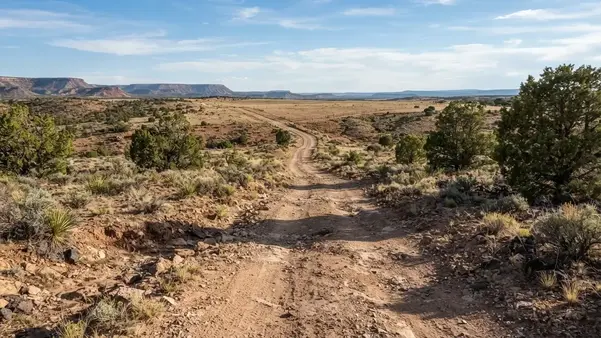
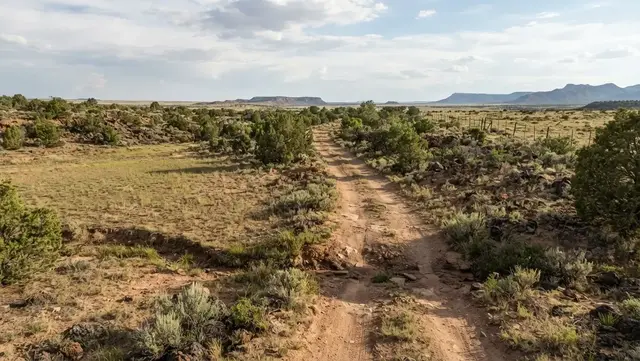
Remote dirt access road leading toward undeveloped rural property in Apache County Arizona

Rural property access should be evaluated both legally and physically, including the road's location, easements, surface conditions, terrain, drainage, and ability to support future development.

Need Help Evaluating Access to Rural Apache County Land?

A road shown on a map does not necessarily tell you whether access is legally established or physically suitable for future development. Apache County Land Services can help you connect with qualified professionals who can evaluate access routes, road conditions, terrain, drainage, easements, construction access, and the improvements that may be required to reach a rural property.

Call (928) 543-6447

What to Look for in an Apache County Rural Road

Getting to a rural parcel is only part of the access question. The condition of the road can affect everyday ownership, deliveries, emergency access, well drilling, septic installation, construction, gravel delivery, and future maintenance.

Rural roads in Apache County can vary substantially depending on terrain, surface material, drainage, weather, maintenance, and how frequently the route is used. A road that appears adequate for a passenger vehicle may still present challenges for trailers, heavy equipment, construction deliveries, or year-round access. Evaluating the actual road conditions before purchasing can help you better understand what the property may require.

Think Beyond the Day You Visit

A rural road that looks perfectly usable during a dry-weather property visit may behave very differently during snow, snowmelt, heavy rainfall, or summer monsoon runoff. The condition of the road should be considered throughout the seasons, not just during the conditions present when you inspect the property.

You should also evaluate the road based on how you intend to use the property. A route that works for occasional recreational use may require different considerations if you plan to build a home, cabin, RV site, workshop, homestead, or other improvements requiring regular deliveries and construction equipment.

Apache County Floodplains, Washes & Monsoon Runoff

Water movement is one of the easiest rural-property conditions to underestimate when viewing land during dry weather. Apache County properties can have washes, natural drainage channels, low areas, sloping ground, and runoff routes that become much more apparent during heavy summer storms, monsoon rainfall, or snowmelt.

Apache County advises rural property buyers to pay attention to drainage, topography, steep slopes, washes, and potential floodplain conditions before deciding where to build. A property does not have to contain standing water to have drainage concerns. Understanding how water moves across the parcel can affect the location of a home, driveway, septic system, well, utilities, and other permanent improvements.

Do Not Treat a Wash as Empty Building Space

Natural drainage has a purpose. A wash, low area, or runoff path may look insignificant during a dry property visit but become an important drainage feature during heavy rainfall, summer monsoon storms, or snowmelt. Apache County recommends investigating drainage and floodplain conditions before deciding where to build.

Before purchasing rural land, consider how water moves across the actual parcel and how that movement could affect the future building area, driveway, septic system, well, utility routes, and other improvements. When floodplain or drainage questions exist, current information from the appropriate Apache County department should be reviewed before making development decisions.

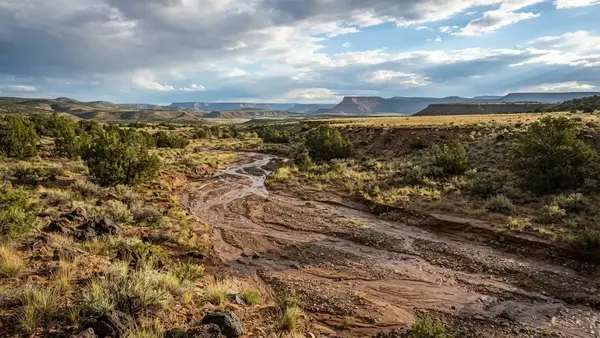
Natural wash and seasonal drainage channel crossing undeveloped rural property in Apache County Arizona

Natural washes and drainage paths can become important during monsoon storms and snowmelt, making water movement an important part of rural property due diligence.

Water & Septic: Two Questions to Answer Before Buying Rural Land

For many Apache County properties, water and wastewater are among the most important infrastructure questions to investigate before purchase. A parcel may be inexpensive to acquire but significantly more expensive to develop if water access, well drilling, septic feasibility, or site layout creates complications.

Rural properties may not have public water or sewer available, making private water and onsite wastewater planning an important part of the purchase decision. The location of a future well and septic system can also affect the building area, driveway, drainage, utility routes, construction access, and future improvements. These systems should be considered as part of the overall property layout rather than as separate projects after the purchase.

Existing Water

Determine whether the parcel already has a well or another established water source and verify what infrastructure actually exists. Do not assume that a property listing's reference to water means a functioning private water system is already in place.

Future Well

If you expect to drill a private water well, investigate the parcel-specific requirements, potential drilling conditions, equipment access, and overall water-system costs. Arizona well construction is regulated by the Arizona Department of Water Resources and may involve additional local requirements depending on the property

Septic Feasibility

Determine whether there appears to be an appropriate area for an onsite wastewater system before committing to a future home or cabin location. Septic feasibility can affect the overall development layout and should be investigated before major site improvements are planned.

Building Location

Your future building location needs to work with the well, septic system, driveway, drainage, utilities, and construction access. Choosing the building area first without considering these other components can limit your options later.

Available Development Space

Even large parcels can have limited practical development areas once water, wastewater, access, drainage, setbacks, terrain, and other site requirements are considered. The usable development envelope can be much smaller than the total acreage shown in a listing.

Future Expansion

If you eventually want additional structures, living areas, workshops, barns, parking, fencing, or other improvements, consider them when planning the initial infrastructure. Today's well, septic, and building layout should not unnecessarily restrict tomorrow's development options.

Water and Septic Should Be Evaluated Together

A well, septic system, building area, driveway, drainage, and utility routes all compete for space on a rural parcel. Choosing one location without considering the others can create conflicts or require expensive changes later.

Before purchasing Apache County land, consider how water and wastewater will fit into the overall development plan. If you are unsure whether a particular parcel can accommodate the improvements you have in mind, investigate the site-specific requirements before committing to the purchase.

Buying Raw Land vs. Improved Rural Property

Raw acreage can have a lower purchase price while requiring more work after closing. Improved rural property may cost more upfront but could already have some of the infrastructure you would otherwise need to build. Compare the total project rather than looking only at the purchase price.

The difference between raw and improved land can be significant in rural Apache County. One property may require a driveway, clearing, grading, well, septic system, power, and other improvements, while another may already have some of these components in place. Existing improvements should still be evaluated carefully because their condition, location, capacity, and suitability for your plans can vary.

Purchase Price

Raw land may have a lower entry price, but the difference can be reduced by subsequent site-development expenses. Compare the purchase price with the improvements you expect to make after closing.

Access & Driveways

Improved property may already have a driveway or usable access route, while raw land may require clearing, grading, gravel, drainage improvements, or additional road work before regular access is practical.

Water Supply

An existing well or other established water infrastructure can change the development equation substantially. However, the condition, capacity, location, documentation, and suitability of existing water infrastructure should still be evaluated.

Wastewater System

Existing septic infrastructure may reduce future work, but its condition, capacity, location, age, and suitability for your intended use still matter. Do not assume an existing system automatically meets the needs of a future home or other development.

Power & Utilities

Existing electrical service or other utility infrastructure can be valuable compared with the cost of extending service or developing an independent off-grid power system. Verify what infrastructure actually reaches the property.

Existing Site Improvements

A graded building area, established driveway, cleared homesite, drainage work, fencing, or other improvements may reduce the amount of initial site work required. Consider whether those improvements are useful for your actual development plans.

Compare Total Investment, Not Just Land Price

The better value is not always the parcel with the lowest asking price. A less expensive piece of raw land may require substantial spending on access, clearing, grading, water, septic, power, drainage, and other infrastructure before it becomes usable for your intended purpose.

When comparing Apache County properties, consider what is already in place, what will need to be installed or improved, and whether the existing improvements actually fit your plans. Looking at the complete development picture can provide a much more useful comparison than comparing purchase prices alone.

What to Look for When You Visit an Apache County Property

A listing photograph or map can show you where a property is, but it cannot tell you everything about how the land feels and functions on the ground. If you can visit before purchasing, use the visit to look for conditions that could affect access, construction, drainage, and future use.

A property visit is especially useful for comparing what you see on the ground with the listing, maps, and information provided by the seller. Rather than simply walking the acreage, evaluate the property in the same order you will eventually experience it: getting there, moving around the site, understanding the terrain and drainage, and picturing how the property could be developed.

1. Follow the Access Route

Drive the actual route from the main road to the property. Look for narrow sections, steep grades, ruts, washouts, soft areas, gates, and other conditions that could affect everyday or construction access.

2. Consider Equipment Access

Think beyond your personal vehicle. Consider whether dump trucks, trailers, excavators, concrete trucks, septic equipment, well drilling rigs, and other large vehicles could reach the property and future building areas.

3. Look for Water Evidence

Look for washes, erosion, drainage channels, low areas, sediment deposits, ruts, and other signs showing where water may move during heavy rainfall, monsoon storms, or snowmelt.

4. Walk the Terrain

Walk potential building areas and look for slopes, exposed rock, uneven ground, depressions, and other terrain conditions that could affect future grading, foundations, driveways, or other improvements.

5. Inspect Vegetation

Identify areas with brush, trees, grasses, and other vegetation that may require clearing. Also consider which vegetation could be preserved as part of the future property layout.

6. Compare the Ground With the Map

Use the visit to compare the actual parcel with maps, aerial imagery, the listing, roads, neighboring properties, and other visible features. This can help identify differences that are difficult to understand remotely.

7. Observe Fences, Gates & Features

Note visible fencing, gates, driveways, utility lines, structures, and other features that may affect how the property is accessed or used. Do not assume that a fence establishes the actual property boundary or legal access rights.

8. Picture the Future Development

Stand in potential building areas and think about where the driveway, well, septic system, power or solar equipment, drainage improvements, parking, and future structures could fit on the actual parcel. If the property is intended for remote residential use, off-grid land development should be considered as a coordinated site-planning process.

A Dry-Weather Property Visit Does Not Tell the Whole Story

If possible, consider how the property and access route may behave during snow, snowmelt, heavy rainfall, and summer monsoon runoff rather than evaluating the land only under ideal dry-weather conditions.

The goal of the visit is not simply to decide whether you like the property. It is to identify conditions that could affect how you access, use, develop, and maintain the land after purchase.

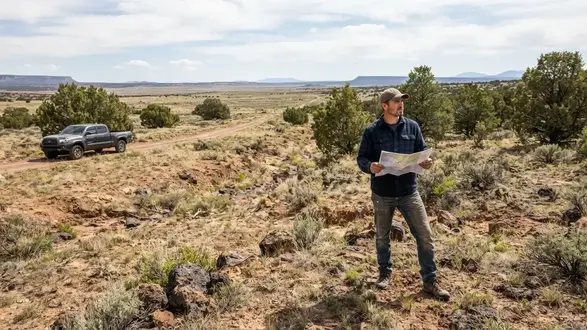
Person inspecting undeveloped rural acreage and access conditions in Apache County Arizona

Visiting rural land in person can reveal access, terrain, drainage, vegetation, and other conditions that are difficult to understand from a listing or map alone.

Want a Closer Look at What Your Property May Need?

A property visit can reveal access, terrain, drainage, vegetation, and other conditions that are difficult to understand from a listing or aerial map. Apache County Land Services can help you connect with qualified site-development professionals who can evaluate the property and identify potential considerations for access, clearing, grading, drainage, construction access, and future improvements.

Call (928) 543-6447

The Pickup Test: Can the Property Handle Construction Equipment?

A rural parcel can be easy enough to reach in a pickup and still be difficult to develop. Future construction may require much larger equipment and delivery vehicles than the vehicle you use to visit the property. Think about construction access from the beginning of the buying process.

Consider the equipment and deliveries that may eventually need to reach the property. Road width, grades, turning areas, drainage, gates, soft ground, and the distance from the existing road to the future building area can all affect whether construction access is practical.

Excavators

Land clearing, grading, trenching, drainage improvements, and building-pad preparation can require substantial equipment access. Consider whether an excavator can reach the areas where future earthwork will occur.

Dump Trucks

Gravel, road base, fill material, and other construction materials may require repeated truck access. Narrow roads, steep grades, poor surfaces, or limited turning space can make gravel and aggregate deliveries more difficult.

Well Drilling Equipment

A future private well can require specialized drilling equipment and enough room to safely reach and operate at the planned well location. Access should be considered before selecting the final well site. See our Apache County water well drilling information for more about rural well development.

Septic Equipment

Septic installation requires access for excavation equipment, tanks, materials, and other components. The route to the proposed septic area should be considered along with the building site and driveway.

Material Deliveries

Building materials, tanks, gravel, concrete, and other deliveries need a practical route from the public or private road to the work area. The property should have enough room for vehicles to reach and maneuver near the construction site.

Utility Crews

Electrical, water, communications, and other utility work may require crews and equipment to reach portions of the property that are not currently accessible. Future utility routes should be considered as part of the overall site layout, including potential utility trenching between the road, building area, well, septic system, and other improvements.

The Question Is Not Just "Can I Get There?"

Ask whether the people, equipment, materials, and infrastructure needed to develop the property can get there too. A road that works for a pickup may not be suitable for a dump truck, excavator, well drilling rig, concrete delivery, or other construction activity.

When evaluating Apache County land, think about access all the way from the public road to the future building area. The access route may ultimately become one of the most important pieces of infrastructure on the property.

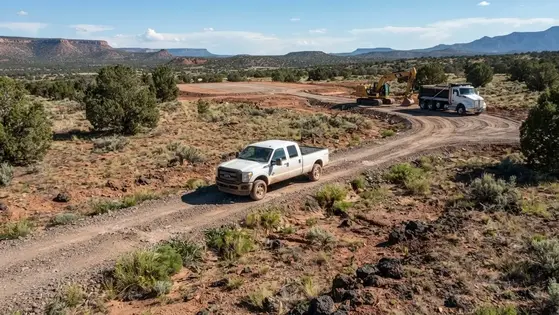
Pickup truck and construction equipment accessing a rough rural road on undeveloped Apache County Arizona land

A road that works for a pickup may still need improvements before dump trucks, excavators, well drilling equipment, and other construction vehicles can reach the site.

Questions to Ask a Land Seller Before You Buy

Before purchasing rural acreage, ask questions that go beyond the purchase price and monthly payment. The goal is to understand exactly what property you are buying, what is already known about the parcel, and which important conditions still need to be independently verified.

Seller information can be a useful starting point, but buyers should still review property-specific records, maps, zoning information, access documentation, water and wastewater considerations, and other applicable requirements before making a purchase decision.

Seller Information Is Only One Part of Your Due Diligence

Important details about access, financing, utilities, permitted uses, existing improvements, drainage, water, septic, and other property conditions should be clearly understood before you commit to a purchase.

Whenever possible, obtain important property-specific information in writing and verify it through the appropriate records, agencies, professionals, or other reliable sources. The goal is to understand the actual parcel you are buying, not simply the way the property is described in a listing.

Apache County Rural Land Red Flags to Investigate

A low asking price does not automatically mean a property is a bargain. Some of the biggest costs associated with rural land are hidden in access, infrastructure, terrain, water, wastewater, and the work required after the purchase.

Red flags do not necessarily mean you should walk away from a property. They are reasons to investigate further and understand the actual conditions before committing to the purchase. A property can still be a good fit if the costs and limitations are understood and make sense for your intended use.

Extremely Low Price

A low price may reflect access limitations, difficult terrain, lack of utilities, water or septic challenges, or other development costs. Determine what conditions may explain the price before assuming you have found a bargain.

Vague Road Access

"Road access" is not enough information by itself. Determine whether access is legally established, physically usable, maintained, and practical for your future needs, including construction equipment and deliveries.

"Water Nearby"

Nearby water infrastructure does not automatically mean your parcel has a dependable and usable water source. Determine what water options actually apply to the specific property and what requirements may be involved.

"Buildable" Marketing

Treat buildability as something to investigate for the specific parcel rather than as a guarantee based on advertising language. Zoning, access, terrain, drainage, water, septic, and other conditions can affect what is practical, including whether there is a suitable location for a properly prepared building pad.

Beautiful Low Area

A flat-looking portion of land may also be a natural drainage area. Investigate washes, low areas, runoff patterns, and floodplain conditions before choosing a building site simply because it appears level.

Large Acreage

More acreage does not automatically mean more practical building space. Access, terrain, drainage, easements, septic requirements, and the location of other infrastructure can reduce the usable development area.

"Off-Grid Ready"

Determine exactly what infrastructure exists and what does not. Off-grid development still requires planning for water, wastewater, power generation, energy storage, utility routes, access, and construction.

Pressure to Buy Quickly

Rural property deserves parcel-specific due diligence. Do not skip important research about access, zoning, water, septic, drainage, easements, or development costs simply because a property appears inexpensive or time-sensitive.

Unclear Property Boundaries

Do not assume visible fences, roads, or other features accurately identify the parcel boundaries. Verify the property's legal description and boundaries before planning improvements or assuming a particular area belongs to the property.

Unclear Easements or Restrictions

Easements, deed restrictions, CC&Rs, and other recorded limitations can affect where you can build, how you access the property, or how utilities cross the land. Review applicable documents before assuming the parcel can be used exactly as planned.

Cheap Land and Good Land Are Not Always the Same Thing

A low purchase price can be attractive, but the real value of rural land depends on how the property's purchase price, physical characteristics, development requirements, and intended use fit together.

The goal is not to avoid every property with a limitation. It is to understand those limitations before you buy so you can determine whether the property still makes financial and practical sense for what you want to do with it.

Attractive rural Apache County Arizona property with rough access, uneven terrain, drainage features, and limited practical development areas

Attractive rural acreage can still contain access, drainage, terrain, boundary, or infrastructure conditions that deserve closer investigation before purchase.

Choose Apache County Land Based on What You Actually Want to Do With It

The right parcel depends heavily on your intended use. A property that works well for weekend recreation may not be the right property for a full-time rural homesite, and land that looks attractive for an off-grid project may create challenges for water, septic, access, zoning, or construction. When comparing Apache County land for sale, think about how the property will actually be used rather than focusing only on acreage or purchase price.

Before choosing a parcel, identify how you expect to use the property now and what you may want to do with it later. Your intended use can affect the importance of legal and physical access, terrain, water, wastewater, power, building areas, construction access, and available space for future improvements. This is especially important when evaluating rural acreage, vacant land, recreational property, and off-grid land in Apache County, Arizona.

Future Home

For a future rural homesite, prioritize practical access, a suitable building area, water, septic feasibility, drainage, utilities, construction access, and room for future improvements. A larger parcel is not automatically a better homesite if the practical building area is limited.

Off-Grid Property

Look closely at water, septic, solar exposure, battery storage, electrical loads, access, building location, and long-term infrastructure needs. Off-grid land still requires careful planning for roads, wastewater, power generation, and future construction.

Recreation

Recreational acreage can be a good fit for camping, outdoor activities, or a rural retreat, but evaluate access, permitted uses, terrain, seasonal conditions, and the specific activities you have in mind before purchasing recreational land in Apache County.

Homestead

A rural homestead may require more than open acreage. Consider water, usable ground, access, fencing, agricultural goals, gardens, livestock, structures, storage, and the ability to expand infrastructure as your Apache County property develops over time.

RV Property

Verify applicable requirements before assuming an RV can be used for temporary or extended occupancy. Also consider access, parking, water, wastewater, power, and whether the parcel can support the way you intend to use an RV or camping property.

Shop or Workshop

If you want land for a shop, workshop, garage, storage building, or similar use, consider equipment access, building placement, electrical requirements, parking, deliveries, drainage, and enough space for future expansion.

Start With Your Intended Use, Then Evaluate the Property

Two parcels with similar acreage can have very different values depending on what you want to do with them. Access, terrain, water, septic, drainage, utilities, and available development area should all be evaluated against your actual goals.

Defining your intended use before purchasing can help you focus on Apache County properties that better fit your plans and avoid paying for land that cannot realistically support the way you want to use it. Whether you are looking for affordable rural acreage, an off-grid homesite, recreational land, a homestead, or property for future development, the best parcel is the one that matches your intended use and practical development needs.

Versatile Apache County Arizona rural property suitable for considering future home, off-grid, recreation, homestead, RV, or workshop uses

The best rural property depends on what you intend to do with it, from a future homesite or homestead to recreation, RV use, off-grid development, or a workshop.

What Does It Really Cost to Own Rural Land in Apache County?

The advertised land price is only the starting point. When buying rural land in Apache County, the real cost of ownership can depend on how remote the parcel is, whether it already has legal and physical road access, whether utilities are nearby, and what you eventually want to do with the property. A $10,000 parcel of vacant acreage can have a very different total cost than a $10,000 parcel that already has usable access and basic infrastructure.

Before buying cheap land or affordable acreage in Apache County, estimate the cost of getting from "I own this parcel" to "I can actually use this property." For some buyers that may mean maintaining a rural access road and visiting recreational acreage. For others, it may eventually mean clearing land, improving a driveway, grading a building area, drilling a private well, installing septic, establishing off-grid solar power, and preparing for a home, cabin, RV site, homestead, shop, or other permitted use.

Property Taxes & Carrying Costs

Even unimproved rural land has ongoing ownership costs. Budget for property taxes and any applicable association, road-maintenance, or other recurring expenses. Verify the current tax information and property-specific obligations rather than estimating ownership costs from the land payment alone.

Access, Roads & Gravel

A parcel with a dirt road nearby may still require driveway or access improvements. Depending on conditions, costs can include driveway and private road grading, gravel or road base, drainage work, culverts, erosion repairs, gates, and periodic road maintenance. Remote Apache County acreage should be evaluated for both everyday vehicle access and future construction traffic.

Water & Private Well Costs

If public water is unavailable, determine how the property could obtain a reliable water supply before assuming the land is ready for development. Depending on the parcel and intended use, this may involve well planning and private well drilling, a licensed well driller, pump equipment, pressure systems, storage, electrical power, or temporary water hauling. Water availability should be investigated for the specific parcel.

Septic & Wastewater

Rural land without public sewer may require an onsite wastewater system before permanent residential development is possible. Septic installation costs can include site evaluation, system design, permitting, excavation, tanks, distribution components, installation, and future maintenance. The available septic area can also affect where the home, driveway, and well can be located.

Off-Grid Power

Land advertised as "off-grid" does not mean electrical infrastructure is already in place. If conventional utility service is unavailable or impractical, an off-grid solar power system may require solar panels, batteries, an inverter, wiring, backup generation, equipment mounting, and future battery or component replacement. Your expected electrical loads should be considered before sizing the system.

Clearing, Grading & Building Areas

Raw acreage may require site preparation before it can support a home, cabin, RV area, shop, driveway, or other improvement. Depending on the property, this can include selective land clearing, excavation, grading, drainage work, rock removal, building-pad preparation, and creation of equipment access.

The Cheapest Acre Is Not Always the Cheapest Property to Develop.

Two Apache County parcels can have similar acreage and completely different development costs. One may have relatively straightforward access and a practical building area, while another may involve difficult roads, steep or uneven terrain, rock, drainage concerns, long utility runs, challenging well conditions, or limited septic options.

When comparing land for sale in Apache County, look at the total project cost, not just the purchase price. Ask what it will cost to access the property, obtain water, handle wastewater, establish power, prepare the site, and maintain the land based on how you actually intend to use it.

Build Your Apache County Land Development Budget Before You Buy

The purchase price of rural land is only the beginning of the financial picture. When buying vacant land or acreage in Apache County, estimate what the property may require after closing to become usable for your intended purpose. Access, terrain, water, septic, power, drainage, and site preparation can sometimes cost as much as, or more than, the original land purchase.

1. Land Purchase

Start with the actual purchase price, down payment, financing terms, closing costs, recording expenses, property taxes, and other acquisition costs. If you are comparing cheap land or owner-financed acreage in Apache County, look beyond the advertised monthly payment and understand the total purchase obligation.

2. Access & Driveway

Determine whether the parcel already has practical access or will require a new driveway or private road. Budget for grading, gravel or road base, drainage, culverts, gates, erosion repairs, and other access improvements. Also consider whether dump trucks, excavators, concrete trucks, septic equipment, and well drilling rigs can reach the property.

3. Land Clearing

Consider whether brush, trees, grasses, rocks, or other vegetation will need to be removed before development. On larger rural acreage, selective land clearing may make more financial sense than clearing the entire parcel. Identify only the areas needed for access, the building site, utilities, septic, water infrastructure, and other planned improvements.

4. Grading & Earthwork

Budget for rough grading, cut-and-fill work, slope correction, drainage grading, excavation, rock work, or other earthwork required by the property's terrain. Uneven ground, exposed rock, slopes, and natural drainage patterns can significantly affect the cost of preparing rural land for construction in Apache County.

5. Building Pad

A future home, cabin, manufactured home, workshop, or other structure may require a properly located and prepared building area. Include excavation, grading, fill, compaction, drainage, and other site preparation as appropriate. The building pad should also work with the driveway, well, septic area, utility routes, and future construction access.

6. Water & Well

If public water is unavailable, investigate the property's realistic water options before purchasing. Depending on the parcel and intended use, your budget may need to account for private well drilling, permitting, pump equipment, pressure systems, storage tanks, electrical power, water hauling, or other infrastructure needed to establish a dependable rural water supply.

7. Septic & Wastewater

Include septic site evaluation, system design, applicable permitting, installation, tanks, drainfield components, excavation, and related site work where applicable. Septic feasibility should be considered before buying because the available wastewater area can affect the location of the home, well, driveway, drainage, and other improvements.

8. Power & Energy

Determine whether conventional electrical service is practical for the property or whether an off-grid power system makes more sense. An off-grid budget may include solar panels, batteries, inverters, backup generation, wiring, equipment mounting, and future component replacement. Your expected electrical loads should be considered before determining system size and cost.

9. Utility Trenching

Water, electrical, communications, and other utilities may require utility trenching, conduit, piping, crossings, backfill, and surface restoration. Longer distances between the road, well, septic area, building pad, and other improvements can increase utility installation costs, particularly on larger or remote Apache County parcels.

10. Drainage & Runoff

Include culverts, swales, grading, erosion control, road drainage, wash crossings, and other improvements if the property requires them. Apache County land can have natural washes, slopes, monsoon runoff, snowmelt, and other drainage conditions that should be considered before finalizing the building site or access route.

Land Price + Site Preparation + Infrastructure = Your Real Project Budget

A low land price does not necessarily mean a low-cost property. A parcel may be inexpensive to purchase but require substantial investment in access, clearing, grading, a building pad, private water, septic, solar power, utility trenching, drainage, or other infrastructure before it can support the use you have planned.

You can refine individual numbers later as you obtain property-specific information and contractor estimates. The important first step is identifying the major costs that could affect the total investment required to turn Apache County raw land into a usable homesite, off-grid property, recreational retreat, homestead, RV property, workshop site, or other planned rural development.

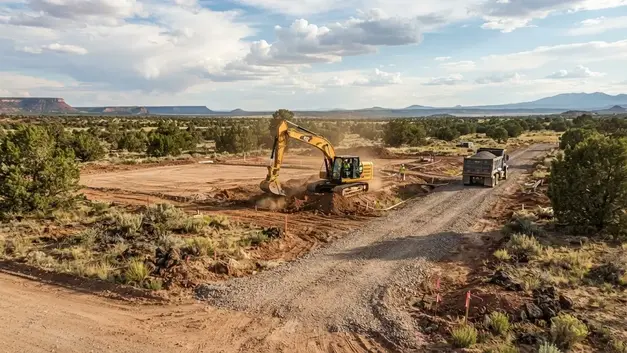
Rural Apache County Arizona property undergoing site preparation with graded building pad, access road, and construction equipment

Developing rural land can involve multiple interconnected costs, including access, clearing, grading, building-pad preparation, water, septic, power, drainage, and utility installation.

Want to Estimate Your Apache County Land Development Costs?

Before purchasing rural land, it can help to understand what the property may require after closing. Apache County Land Services can help you connect with qualified contractors and site-development professionals who can evaluate potential costs for access roads, clearing, grading, building-pad preparation, water wells, septic, drainage, utility trenching, solar, gravel, and other improvements based on the property and your intended use.

Call (928) 543-6447

Rural Land Opportunities Across Apache County

Apache County covers a large and geographically diverse area of northeastern Arizona, with rural acreage, vacant land, recreational property, and off-grid opportunities spread across many different communities and surrounding areas. Conditions can change considerably from one location to another, so buyers searching for Apache County land for sale should evaluate the actual parcel rather than assuming every property has the same access, terrain, water availability, climate, utilities, or development potential.

St. Johns

St. Johns is the Apache County seat and a useful reference point for buyers researching rural land and acreage in the surrounding area. When considering property near St. Johns, evaluate the specific parcel's access, zoning, terrain, water options, septic feasibility, utilities, and future development requirements.

Concho

Concho is an important area for buyers looking for affordable rural acreage, vacant land, recreational property, and potential off-grid opportunities in Apache County. Individual parcels can vary significantly, so investigate access, permitted use, water, septic, terrain, and the cost of future improvements.

Springerville & Eagar

The Springerville and Eagar area offers a different rural-property environment from lower-elevation portions of Apache County. Buyers considering acreage here should pay attention to elevation, seasonal weather, snow, road conditions, terrain, water, utilities, and the intended use of the property.

Vernon & Sanders

Rural properties around Vernon and Sanders can appeal to buyers seeking open acreage, recreational land, rural retreats, or property for future development. Evaluate each parcel for legal and physical access, terrain, drainage, water, septic feasibility, utilities, and the infrastructure needed after purchase.

Alpine, Greer & Nutrioso

Properties around Alpine, Greer, and Nutrioso are associated with the higher, more mountainous portions of eastern Arizona. Buyers should give particular attention to slopes, elevation, snow, seasonal road conditions, drainage, construction access, and the practical limitations of developing rural acreage.

Ganado & Window Rock

Buyers researching land around Ganado and Window Rock should evaluate the exact parcel, its ownership and access information, applicable land-use requirements, surrounding land conditions, utilities, water options, and whether the property fits the intended residential, recreational, agricultural, or other use.

Chambers, Houck & Lupton

Farther east in Apache County, buyers may encounter remote acreage with different access and infrastructure considerations. When evaluating land near Chambers, Houck, or Lupton, investigate the actual road route, parcel location, surrounding land uses, utilities, water, terrain, and development requirements before buying.

White Mountains & Eastern Arizona

Rural land in the White Mountains and eastern Arizona can have higher-elevation, mountainous conditions. Buyers should consider slopes, snow, seasonal access, drainage, vegetation, and the practical challenges of developing rural acreage.

Other Rural Communities

Apache County also includes rural areas around Adamana, Many Farms, Rock Point, Round Rock, Wide Ruins, and other communities. Evaluate each parcel for access, permitted uses, infrastructure, water, wastewater, and development conditions.

Location Matters When Comparing Apache County Land for Sale

Apache County is one of Arizona's largest counties, and rural property conditions can change substantially across the county. Elevation, climate, snow, terrain, vegetation, roads, drainage, surrounding development, utility availability, and distance to services can all affect what a particular parcel is like to own and develop.

If you are comparing land for sale near St. Johns, Concho, Springerville, Eagar, Sanders, Vernon, Alpine, Greer, Nutrioso, Ganado, Window Rock, or other Apache County communities, evaluate the individual parcel rather than choosing based only on acreage, location name, or purchase price. The right property depends on what you want to do with the land and what the actual site can realistically support.

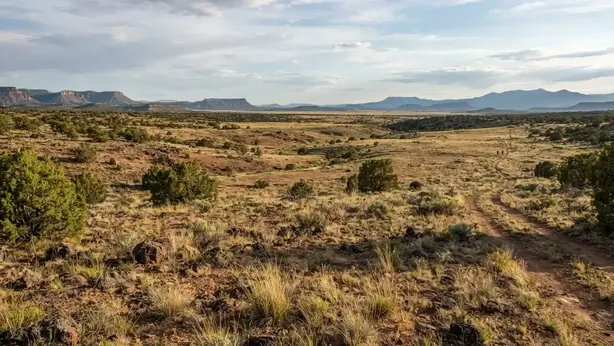
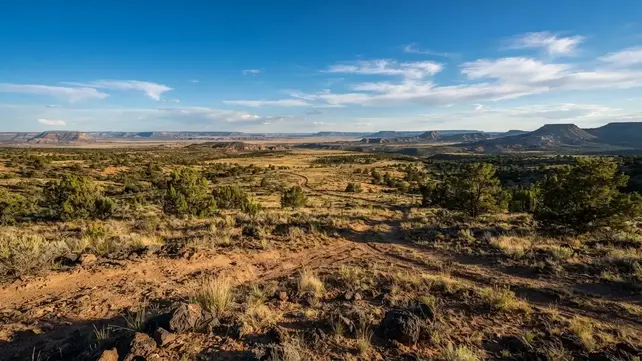
Expansive rural acreage and undeveloped land in Apache County Arizona

Rural land conditions can vary considerably across Apache County, from open high-desert acreage to higher-elevation mountainous terrain.

How to Narrow Down Your Apache County Land Search

Once you understand what to look for in rural property, narrow your Apache County land search by matching each parcel to your intended use, development goals, budget, and preferred location. The right property is not necessarily the largest or cheapest parcel, it is the one that fits what you realistically want to do with the land.

1. Define Your Intended Use

Decide whether you are looking for a future homesite, off-grid property, recreational acreage, homestead, RV property, workshop site, or another rural use. Your intended use will help determine which property characteristics matter most.

2. Choose Your Preferred Area

Narrow your search by community or general area, such as Concho, St. Johns, Springerville, Eagar, Sanders, Vernon, Alpine, Greer, or other rural parts of Apache County. Consider distance to services, roads, elevation, climate, and the overall character of the area.

3. Set Your Acreage & Budget

Determine approximately how much land you need and what you can comfortably spend on the purchase. Then leave room in your budget for access, site preparation, water, septic, power, and other improvements that may be needed after purchase.

4. Compare Available Parcels

Compare individual properties based on acreage, location, access, terrain, water, permitted use, development potential, financing terms, and other parcel-specific characteristics. Avoid choosing land based only on price or an attractive listing description.

5. Review the Specific Property

Before committing, review the exact parcel information and investigate important conditions such as APN, access, easements, zoning, water, septic feasibility, drainage, utilities, boundaries, and other factors that could affect your plans.

6. Plan What Comes After Purchase

Think beyond the closing date and consider how you will eventually access, use, and improve the property. Future planning may include a driveway, clearing, grading, well, septic system, solar power, building pad, utilities, or other rural property improvements. For larger or remote parcels, consider the broader off-grid land development requirements before making major improvements.

The Best Apache County Property Is the One That Fits Your Plan

Rural land should be evaluated according to what you actually want to accomplish. A small parcel with practical access and a usable building area may be a better choice than a much larger property with difficult terrain, limited access, or expensive infrastructure requirements.

Whether you are searching for affordable acreage, off-grid land, recreational property, a future homesite, a homestead, or land for future development, start with your goals and then compare available Apache County properties against those goals.

Looking for Land in Apache County?

Tell us what type of property you are looking for, where in Apache County you want to be, how much land you need, and what you hope to do with it. We can help you identify available land opportunities and point you toward participating land sellers.

Call (928) 543-6447

Buying Land in Apache County FAQs

Buying rural land in Apache County can be very different from purchasing property in an established subdivision. Parcel access, terrain, water, septic, utilities, permitted uses, drainage, road conditions, and future development costs can all affect whether a property is a good fit for your plans. These frequently asked questions address common concerns when searching for rural, recreational, vacant, acreage, and off-grid property throughout Apache County, Arizona.

What should I consider before buying land in Apache County?

Before purchasing rural land, consider the property's legal and physical access, APN and boundaries, easements, terrain, drainage, water availability, septic feasibility, permitted uses, utility options, road conditions, and the cost of future improvements. A large parcel is not necessarily a large buildable area, so evaluate the property based on how you actually intend to use it.

Where can I find land for sale in Apache County?

Available rural land can be found through participating land sellers, real estate listings, land marketplaces, and other property sources. Apache County Land Services helps prospective buyers explore available land opportunities and connect with participating land sellers.

Do you sell the land directly?

Apache County Land Services is not the direct seller of every property featured through this site. We help prospective buyers identify available land opportunities and connect with participating land sellers. Property-specific pricing, financing, availability, ownership, and purchase terms are determined by the individual seller.

What types of land can I buy in Apache County?

Apache County includes many different types of rural property, including vacant acreage, recreational land, rural homesites, undeveloped parcels, off-grid property, homestead-oriented acreage, and land intended for future development. The suitability and permitted uses of each parcel depend on its specific location, zoning, access, physical characteristics, and applicable requirements.

Is Apache County a good place to buy rural land?

Apache County can appeal to buyers looking for more rural space, recreational property, privacy, acreage, or potential off-grid development. However, rural land often requires more due diligence than property in an established subdivision. Buyers should evaluate the specific parcel rather than assuming every property has the same access, water, utilities, or development potential.

Is there cheap land for sale in Apache County?

Apache County has properties at a range of price points, including relatively affordable rural acreage. The purchase price is only one part of the overall cost, however. Buyers should also consider access improvements, grading, water, septic, power, roads, drainage, permits, and other development expenses before deciding whether a property fits their budget.

Is owner financing available for land in Apache County?

Owner financing may be available on some Apache County properties, depending on the individual seller and parcel. Financing terms can vary significantly, so buyers should review the specific property's purchase price, down payment, monthly payment, term, interest, fees, and other conditions before committing.

Can I buy Apache County land with no credit check?

Some participating land sellers may offer financing programs that do not use a traditional credit check. This is property- and seller-specific, so buyers should verify the exact financing requirements and terms for the parcel they are considering.

Can I buy land in Apache County and build a home later?

Potentially, but buying land does not automatically guarantee that a future home can be built anywhere on the parcel. Buyers should investigate the property's permitted uses, access, building requirements, terrain, drainage, water supply, wastewater options, and other applicable requirements before purchasing with future residential construction in mind.

Can I buy land in Apache County for an off-grid home?

Some rural properties may be suitable for off-grid development, but suitability depends on the individual parcel. An off-grid property may require planning for private water, septic or another approved wastewater solution, solar power, electrical storage, access roads, drainage, building areas, and construction access. These factors should be investigated before purchase.

Can I buy land for a cabin or recreational property?

Some Apache County properties may be suitable for recreational use, cabins, retreats, or other rural purposes. However, permitted uses vary by parcel. Always verify the property's specific zoning, restrictions, access, and applicable development requirements before assuming a particular use is allowed.

Can I use an RV on land I buy in Apache County?

RV use depends on the specific property and applicable requirements. Buyers should verify whether temporary or extended RV occupancy is permitted and whether additional requirements apply to water, wastewater, sanitation, access, or other improvements. Do not assume that purchasing rural land automatically allows permanent RV living.

Does every Apache County property have legal road access?

No. Rural parcels can have different access arrangements, including public roads, private roads, recorded easements, or other access situations. Buyers should verify legal access to the parcel before purchasing rather than assuming that a visible road automatically provides a legal right to use it.

What is the difference between legal access and physical access?

Legal access refers to having a recognized right to reach the property, while physical access concerns whether a usable road or route actually reaches the parcel. A property can have legal access but still require substantial road improvements, grading, drainage work, or other construction before normal vehicles and equipment can reach the site.

Do I need to know the APN before buying Apache County land?

The parcel's APN, or Assessor's Parcel Number, is an important piece of information when researching rural property. It can help identify the specific parcel and facilitate research into ownership, property records, boundaries, taxes, and other parcel-specific information.

Do easements matter when buying rural land?

Yes. Easements can affect access, utilities, neighboring property rights, road use, and where improvements can be placed. Buyers should identify known easements and understand how they could affect the property's practical development area before purchasing.

Does terrain matter when buying land in Apache County?

Terrain can have a major effect on development costs and construction options. Slopes, rocky ground, uneven elevations, washes, drainage patterns, and difficult equipment access can affect driveway construction, grading, building pads, septic placement, utility installation, and other improvements.

Should I look at drainage and washes before buying land?

Yes. Natural drainage patterns, washes, low areas, runoff paths, and erosion potential should be considered when evaluating rural land. Drainage can affect where a home or cabin can be located, how roads are built, where utilities run, and how much grading or drainage work may eventually be required.

Does every Apache County property have water available?

No. Rural properties can have very different water situations. Depending on the parcel, buyers may need to investigate private wells, existing wells, hauled water, storage systems, or other potential water solutions. Water availability and feasibility should be evaluated for the specific property.

Can I drill a well after buying land in Apache County?

A private well may be an option on some rural properties, but buyers should not assume that a well is guaranteed or that drilling will be inexpensive. Well feasibility and drilling, water availability, required approvals, access for drilling equipment, and the eventual water system should all be investigated before purchasing land for future development.

Should I investigate septic before buying rural land?

Yes. If the property will need an onsite wastewater system, septic feasibility is an important part of rural land due diligence. Soil conditions, available space, slope, drainage, setbacks, property layout, and applicable requirements can all affect where and whether a septic system can be installed.

What if public electricity is not available at the property?

Remote Apache County properties may not have convenient access to public electrical service. Depending on the property and intended use, buyers may need to consider solar power, battery storage, generators, utility extensions, or other electrical solutions. The distance to existing infrastructure can have a significant effect on development costs.

Is solar a good option for Apache County land?

Solar can be a practical option for some rural and off-grid properties, particularly where conventional electrical service is unavailable or expensive to extend. The appropriate system depends on the property's electrical loads, solar exposure, battery storage requirements, backup power needs, and intended use.

How much does it cost to develop land after I buy it?

Development costs vary widely from one Apache County property to another. Major expenses can include access roads, clearing, grading, building pad preparation, drainage, gravel, well drilling, septic, solar, utility trenching, equipment mobilization, and other site improvements. The purchase price of the land should therefore be considered separately from the cost of making the property usable.

Can I develop Apache County land in phases?

Yes. Many rural properties can be approached as phased development projects. Depending on the property and intended use, an owner may prioritize access, water, wastewater, drainage, a building area, essential utilities, and other improvements before completing future structures or additional improvements. A broader off-grid land development plan can help coordinate these improvements when multiple systems are involved.

What should I plan for if I want to build later?

If construction is several years away, consider future access, the building area, water and septic locations, drainage, utility corridors, solar equipment, equipment staging, and potential future structures before making major improvements. Planning these elements early can help reduce the chance of having to relocate or redo infrastructure later.

What are some common mistakes people make when buying rural land?

Common mistakes include buying based only on acreage or price, assuming road access is adequate, overlooking easements, failing to investigate water and septic, ignoring drainage, underestimating development costs, and assuming utilities will be easy to install. Another common mistake is planning the home first without considering how access, water, wastewater, power, drainage, and construction equipment will work together.

How do I get started finding land in Apache County?

Start by defining what you want the property to accomplish. Decide whether you are looking for recreational acreage, an off-grid property, a future homesite, a rural retreat, a homestead, or another use. Then review available properties, compare location and parcel characteristics, investigate the major due-diligence items, and confirm the seller's current pricing, availability, and purchase terms before moving forward.

Ready to Find Land in Apache County?

Tell us what you are looking for and we can help you explore available rural land opportunities in Apache County, Arizona. Whether you are searching for affordable acreage, an off-grid homesite, recreational land, a homestead, RV property, a future building site, or land for another rural use, the right parcel depends on more than acreage and purchase price. Location, access, terrain, water, septic feasibility, utilities, drainage, intended use, and your future development plans can all affect whether a property is a good fit. Contact Apache County Land Services with your preferred area, approximate acreage, budget, intended use, and purchase timeline so we can help you identify available opportunities and connect you with participating land sellers.

Start a Land Inquiry