
⭐ Driveway Grading • Rural Road Shaping • Access Route Construction • Easement Preparation Across Apache County Arizona
Professional Driveway and Rural Road Grading in Apache County, Arizona
Reliable access is essential for any rural property. Apache County Land Services builds and improves driveways, private roads, long easements, and access routes for homes, cabins, ranches, and off-grid development. We provide complete road shaping, driveway grading, drainage correction, slope improvement, road base installation, and rural access preparation throughout Apache County.
Serving St. Johns, Concho, Vernon, Sanders, Springerville, Eagar, Alpine, Greer, Nutrioso, Show Low and surrounding communities.
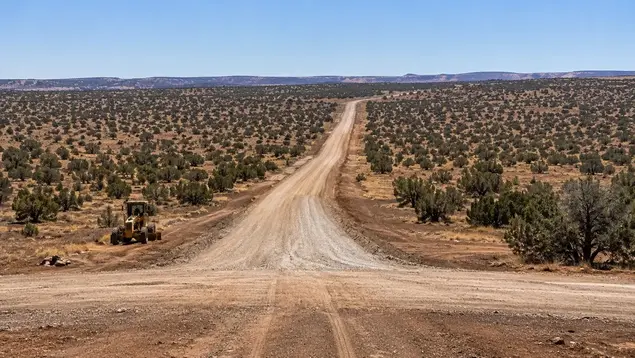
Driveways, Private Roads & Rural Access Routes We Build
Rural properties throughout Apache County do not all need the same type of access. A short residential driveway, a long ranch road, a two-track access route, and an off-grid road connecting a remote homesite can require very different grading, drainage, surface preparation, and earthwork. We evaluate the intended use of the route and the existing property conditions before determining the appropriate level of preparation.
Rural access construction can range from improving an existing dirt road to creating a new route across undeveloped acreage. The required work depends on terrain, soil, rock, drainage, route length, expected vehicle use, and whether the road will serve residential, agricultural, recreational, construction, or off-grid development.
Depending on the property and intended use, driveway and private-road projects may involve several different types of access improvements:
-
Residential Rural Driveways
Driveways connecting rural homes and future homesites to an existing public or private road. Work can include route grading, slope correction, drainage shaping, driveway approaches, surface preparation, and road-base installation where needed. Access planning can also be coordinated with future building pad preparation so the driveway and homesite work together. -
Cabin & Recreational Access
Access routes for cabins, recreational properties, hunting properties, weekend retreats, RV areas, and other rural improvements where dependable vehicle access is important but the property may remain largely undeveloped. For remote properties, access may also be one part of a broader off-grid land development project. -
Ranch & Agricultural Roads
Longer routes serving ranch improvements, barns, corrals, livestock areas, agricultural fields, equipment storage, wells, fencing projects, and other working portions of rural acreage. Reliable access can be particularly important when future improvements such as water wells and agricultural infrastructure need to be reached by service vehicles and equipment. -
Remote Property Access
Long or undeveloped access routes across rural acreage where terrain, vegetation, rock, drainage, gates, narrow entrances, and equipment logistics can make road construction substantially more involved than grading an established driveway. Where vegetation limits the proposed route, selective land clearing may be required before access construction can proceed. -
Off-Grid Access Roads
Access routes serving future off-grid homes, solar systems, water wells, septic systems, utility corridors, workshops, storage buildings, and other remote property improvements. Road planning may need to account for future well locations, septic areas, utility corridors, and solar installations so the access route supports the broader development plan. -
Construction & Contractor Access
Temporary or permanent access improvements that allow construction equipment, material deliveries, excavation crews, well contractors, septic contractors, concrete crews, and other trades to reach planned development areas. Proper access can be an important part of broader excavation and site preparation, particularly when heavy equipment must reach undeveloped portions of a property. -
Long Private Roads
Extended private access routes may require multiple drainage crossings, changes in grade, cut-and-fill work, material placement, road-base preparation, and careful coordination with the property's natural terrain. -
Existing Road Improvements
Existing dirt roads and two-track routes can often be improved by correcting ruts, low areas, erosion, drainage problems, poor transitions, and deteriorated driving surfaces.
The goal is to create practical, durable access that works with the property's existing terrain rather than forcing the entire route into an unnecessarily flat configuration. Where additional gravel, aggregate, or road-base material is needed, access construction can be coordinated with material delivery, placement, grading, drainage shaping, and final surface preparation.
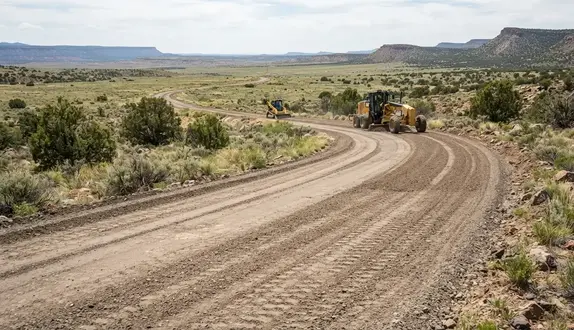
Rural driveway construction can involve route grading, drainage shaping, surface preparation, and road-base installation to create practical access across undeveloped Apache County property.
How We Evaluate a Rural Driveway or Road Route
A successful rural driveway or private road begins with understanding the route before substantial earthwork begins. Apache County properties can include steep terrain, broad mesas, shallow washes, rocky ground, caliche, loose soils, natural drainage channels, long property entrances, and remote access conditions. We evaluate the proposed route in relation to the existing terrain, drainage, property entrance, future development, vehicle requirements, and surface conditions so the finished access route is practical rather than simply cleared and flattened.
1. Property Entrance & Existing Access
We begin where the proposed driveway or private road connects to the existing access point. The entrance can affect the entire road layout, particularly where a property connects to an existing county road, private road, easement, ranch route, or established driveway. We consider the approach, available turning space, gates, existing drainage, surrounding grades, and the condition of the current entrance before establishing the route farther onto the property.
2. Natural Terrain & Elevation Changes
Apache County terrain can change considerably from one parcel to another. We look for hills, benches, ridgelines, depressions, natural shelves, rocky areas, shallow washes, and changes in elevation that could influence the most practical road alignment. The objective is not necessarily to flatten the surrounding land, but to establish a usable route that works with the property's natural contours while avoiding unnecessary earthwork.
3. Road Grade & Slope Transitions
Road grade affects vehicle access, erosion potential, drainage, traction, and long-term surface stability. We evaluate elevation changes along the proposed route and look for abrupt transitions, steep sections, low areas, and locations where the road may need to climb or descend through uneven terrain. Where site conditions allow, the route can be shaped to create smoother transitions instead of forcing vehicles through unnecessary grade changes.
4. Drainage & Natural Water Flow
Water is one of the most important considerations when planning an unpaved rural road. We identify natural drainage paths, low points, washes, roadside flow, cross-drainage areas, and locations where runoff could reach the road. Apache County's seasonal monsoon storms can expose weak drainage quickly, so the route needs to be shaped with water movement in mind. Depending on site conditions, drainage planning may involve crowning, ditches, swales, crossings, or locations prepared for culverts. Where surrounding elevations need to be changed, grading and drainage shaping can help establish the intended road profile.
5. Soil, Caliche & Ground Conditions
Existing ground conditions determine how easily a driveway can be excavated, shaped, compacted, and surfaced. Apache County properties can contain loose soils, sandy areas, compacted native material, caliche, coarse rock, volcanic material, and organic surface material. We evaluate these conditions to determine where material may need to be cut, redistributed, stabilized, removed, or supplemented with suitable road base or aggregate. Hard or rocky conditions may require additional excavation and site preparation before the road can be constructed.
6. Cut-and-Fill Requirements
Uneven rural properties may require material to be cut from higher areas and placed in suitable lower areas to establish a more practical road profile. We consider the balance between cut and fill, onsite material suitability, hauling requirements, equipment access, and finished elevations. Proper earthwork planning can reduce unnecessary material movement while creating a more consistent driving surface across uneven terrain.
7. Vehicle & Equipment Requirements
A driveway serving a small residence may have very different requirements from a ranch road, construction access route, agricultural road, or long private road serving multiple improvements. We consider the types of vehicles and equipment expected to use the route, including passenger vehicles, trailers, delivery trucks, construction equipment, tractors, livestock equipment, and emergency access needs where applicable.
8. Road Width, Turning Areas & Transitions
Road width should match the property's intended use rather than being selected without considering vehicles, terrain, drainage, and available space. We evaluate the usable driving corridor, entrance width, turning areas, approaches, curves, transitions, and locations where vehicles may need additional room. Ranches, remote homesites, construction projects, and large equipment access can require different configurations than a simple residential driveway.
9. Vegetation, Rock & Property Disturbance
Rural road construction does not always require clearing a wide corridor across an entire parcel. Where practical, the proposed route can be evaluated around existing vegetation, mature junipers, pinyons, natural rock features, usable terrain, and areas that do not need to be disturbed. Selective route planning can help limit unnecessary clearing while still establishing dependable access, with selective land clearing performed where vegetation or other obstacles prevent the planned route.
10. Future Homesite & Property Improvements
The driveway is often only the first part of a larger rural development project. On remote properties, access may need to be coordinated with future homesites, wells, septic systems, solar equipment, utility corridors, workshops, and other improvements. This broader sequencing is especially important when the property is being prepared for off-grid land development, where there may be no established infrastructure serving the planned homesite.
11. Seasonal Weather & Monsoon Exposure
A road that performs well during dry weather may respond very differently after heavy rainfall. We consider how seasonal precipitation can affect the road surface, shoulders, drainage paths, low areas, and exposed slopes. Apache County's summer monsoon conditions make it particularly important to understand where water will travel across and alongside the proposed route before final grading and surface preparation are completed.
12. Remote Property & Equipment Access
Remote Apache County properties can present logistical challenges before grading even begins. Long distances, rough existing access, narrow gates, steep approaches, limited turning space, vegetation, rocky terrain, and other site conditions can affect how equipment reaches the work area. Evaluating equipment access as part of the route helps identify potential construction constraints before major earthwork starts.
The best rural driveway is not necessarily the shortest, straightest, or flattest route. It is the route that works with the property's terrain, manages water appropriately, provides practical vehicle access, minimizes unnecessary earthwork, and supports the property's long-term development plans. Careful route evaluation is especially important on large and remote Apache County parcels where changing an established road later can require significant additional excavation, grading, drainage work, and material hauling.
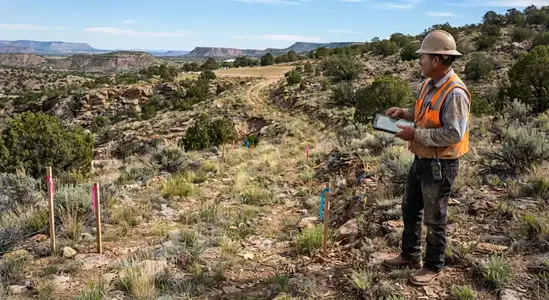
Evaluating the property before grading helps identify practical road alignments, elevation changes, drainage patterns, ground conditions, equipment access, and future development constraints.
Need a Rural Driveway or Private Road Route Evaluated?
Before major grading, excavation, or gravel delivery begins, the proposed access route should be considered in relation to terrain, drainage, soil, existing access, equipment requirements, and future property development. If you are planning a new driveway, private road, or remote access route in Apache County, tell us about the property and what you need the road to serve.
Call (928) 543-6447Apache County Terrain, Soils & Ground Conditions That Affect Roads
Road construction conditions can change substantially across Apache County. A driveway near St. Johns or Concho may have very different ground and drainage characteristics from a mountain access route near Alpine, Greer, or Nutrioso. Rural road construction should therefore be evaluated from the actual property rather than treated as a one-size-fits-all grading job.
Caliche & Cemented Ground
Caliche and other hardened subsurface material can affect excavation depth, drainage, grading production, and equipment requirements. Hard layers may require additional excavation and site preparation methods depending on their depth, thickness, and location along the proposed road route.
Sandy & Loose Surface Material
Loose or sandy material can move under repeated vehicle traffic and concentrated runoff. Where native material does not provide adequate stability, proper grading, drainage, surface preparation, and suitable aggregate or road-base material may be necessary.
Rocky & Volcanic Ground
Rock can affect route selection, excavation production, cut-and-fill quantities, equipment requirements, and finished road elevations. Where practical, selecting an alignment that minimizes unnecessary rock excavation can make the project more efficient.
Mountain & Sloped Terrain
Routes through higher-elevation and sloped areas require attention to grade transitions, drainage, side slopes, erosion, and cut-and-fill requirements. The objective is to establish a usable driving surface while working with the property's natural terrain.
Washes, Swales & Natural Drainage
Depressions, washes, swales, drainage channels, and seasonal flow paths can cross otherwise practical road alignments. These areas should be identified before final grading so water can be managed appropriately rather than unintentionally concentrated against or across the finished road.
Seasonal Moisture & Monsoon Conditions
Seasonal moisture can change how native soil behaves beneath equipment and vehicle traffic. Wet conditions may affect grading production, rutting, compaction, and surface stability, making construction timing, drainage, and appropriate surface preparation important considerations.
Apache County's varied terrain is one reason there is no universal driveway design or per-foot construction approach that works for every property. The appropriate road construction strategy depends on the actual route, ground conditions, drainage, elevation changes, intended traffic, and future use of the property.
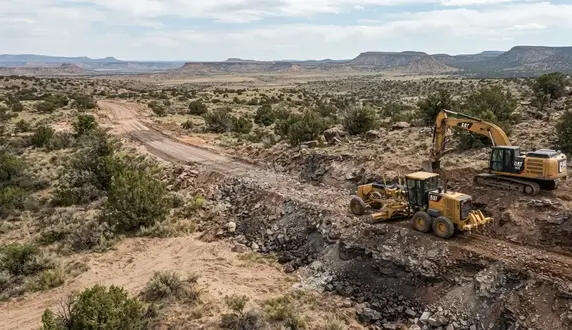
Soil, caliche, rock, elevation, and surface conditions can change significantly across Apache County properties, affecting excavation, grading, drainage, and road-surface preparation.
Rural Road Drainage, Runoff & Washout Prevention
Water is one of the biggest factors affecting the life of an unpaved rural road. A driveway or private road that looks excellent when dry can deteriorate quickly when stormwater is concentrated along the driving surface, allowed to cross the road uncontrolled, or trapped in low areas. Apache County's seasonal monsoon storms make drainage an important part of planning, grading, and maintaining rural access routes.
Effective road drainage is not simply about moving water away as quickly as possible. The route needs to work with existing washes, swales, slopes, natural drainage patterns, and surrounding elevations. Properly planned drainage can help reduce standing water, rutting, erosion, shoulder damage, and washouts while allowing the road to remain usable during changing weather conditions.
Rural road drainage may require targeted improvements such as:
Road Crown & Cross Slope
Where site conditions allow, shaping the road with an appropriate crown or cross slope helps water leave the primary driving surface instead of collecting in wheel tracks. Proper surface shaping can reduce standing water and help limit deterioration caused by repeated traffic over wet areas.
Roadside Ditches
Ditches can provide a defined path for runoff alongside a road where the terrain and drainage conditions make roadside drainage appropriate. Their placement and grade should work with the surrounding property rather than simply concentrating water into an uncontrolled erosion path.
Swales & Natural Flow Paths
Swales and planned flow paths can help guide water away from the driving surface while working with existing drainage patterns. Maintaining practical runoff routes can reduce the chance of water becoming trapped against the road or crossing it at unintended locations.
Driveway & Road Culverts
Where an access route crosses an established drainage path, a properly selected culvert may allow water to pass beneath the road instead of flowing directly across the driving surface. Culvert requirements depend on the drainage area, expected flow, road configuration, and site conditions. The surrounding road grades and drainage profile also need to work with the crossing so water is not redirected toward the road.
Low Spots & Standing Water
Simply adding material to a low spot does not always solve the underlying drainage problem. The surrounding grades, road profile, subgrade, and runoff path should be considered together so the finished road does not continue collecting water after additional material is placed. Corrective grading and drainage shaping may be necessary when elevation is part of the problem.
Monsoon Runoff & Washout Repair
Intense summer storms can expose weaknesses in rural road drainage and cause ruts, shoulder erosion, washouts, and displaced surface material. Repair work may include reshaping damaged areas, restoring drainage paths, rebuilding shoulders, and correcting locations where runoff has become concentrated.
The goal is not simply to move water away from the road. Effective drainage should manage runoff without creating a new erosion problem somewhere else. Existing washes, natural drainage patterns, downstream conditions, road grades, and the capacity of drainage features all need to be considered when developing a durable rural access route. Addressing drainage as part of the initial road work can help reduce costly washouts and repeated repairs later.
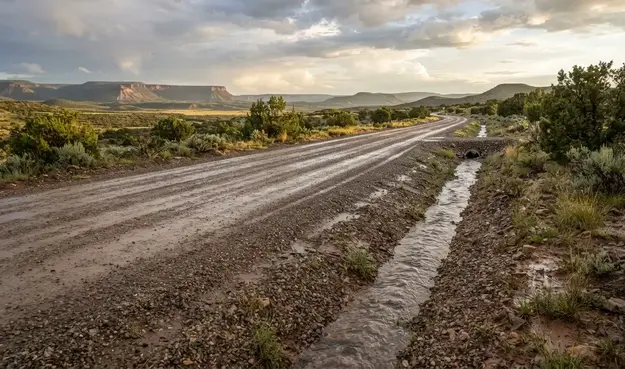
Proper road crown, drainage paths, swales, ditches, and crossings can help move monsoon runoff away from the driving surface and reduce rutting, erosion, and washout damage.
Road Subgrade, Base Material, Gravel & Finished Driving Surface
A durable gravel driveway is not created simply by spreading rock over an unsuitable surface. The existing ground, drainage, road profile, subgrade condition, material selection, placement depth, shaping, and compaction all influence how the finished route performs. Each layer of the road serves a different purpose and should be considered as part of the overall access construction.
Depending on the property and intended use, rural road construction may involve several different layers and material considerations:
-
Native Subgrade
The existing ground beneath the road provides the foundation for the finished surface. Its strength, moisture condition, soil composition, rock content, and drainage characteristics influence how much preparation may be required before additional material is placed. -
Imported Fill
Suitable imported material may be needed where existing grades cannot be achieved using onsite material or where additional structural fill is appropriate. Imported material can help establish elevations, rebuild low areas, or prepare portions of the route where native material is unsuitable. -
Road Base
Selected aggregate can provide a more stable structural layer when the native surface alone is not adequate for the expected traffic and site conditions. Road-base requirements depend on the existing subgrade, drainage, vehicle use, material characteristics, and finished-road objectives. -
Surface Gravel & Aggregate
Finished gravel or aggregate forms the primary driving surface and can be selected according to traffic, drainage, local material availability, and desired road performance. Proper placement and shaping help create a usable and maintainable surface. -
Proper Material Depth & Shaping
Adding material is only part of building a durable road. The placement depth, finished elevation, cross slope, crown, edges, and transitions all affect how vehicles use the route and how water leaves the driving surface. -
Placement & Compaction
Where project conditions require it, placed material should be properly distributed and compacted to establish a more stable road structure. Compaction requirements can vary according to material, moisture, depth, subgrade conditions, and intended use. -
Drainage & Surface Performance
Road materials must work together with the finished drainage profile. If water remains trapped within the road structure or repeatedly crosses the driving surface, even a properly placed gravel layer can deteriorate. Surface shaping and drainage should therefore be considered together. -
Material Selection for Intended Traffic
A lightly traveled residential driveway may have different material requirements from a ranch road, construction access route, delivery route, or long private road. Expected vehicle loads and traffic frequency should be considered when determining the appropriate surface approach.
When Additional Road Material May Be Needed
-
Unstable Native Material
Existing material becomes unstable, soft, or excessively displaced under normal vehicle traffic. -
Inadequate Existing Surface
Native soil does not provide the desired finished driving surface for the property's intended use. -
Recurring Rutting After Rain
Repeated rainfall creates ruts, soft areas, standing water, or surface deterioration that cannot be corrected through simple reshaping alone. -
Heavy Vehicle & Equipment Traffic
The route needs to support heavier trucks, trailers, construction equipment, agricultural machinery, or other concentrated traffic. -
Drainage-Related Road Repairs
Drainage improvements require portions of the road to be rebuilt, raised, reshaped, or surfaced with additional suitable material. -
Cut-and-Fill Elevation Changes
Earthwork creates areas that require additional suitable fill, aggregate, or road base to achieve the desired finished elevations and surface. -
More Reliable All-Weather Access
The property owner wants a more dependable gravel surface capable of handling changing weather and regular vehicle use. -
Existing Two-Track Upgrades
An existing two-track or dirt road requires substantial reconstruction rather than simple maintenance or surface smoothing.
Road material requirements should be determined from the actual site rather than assuming every Apache County driveway requires the same aggregate depth, material type, or construction method. Subgrade conditions, drainage, terrain, expected traffic, available onsite material, and the intended life of the road all influence the most appropriate surface construction.
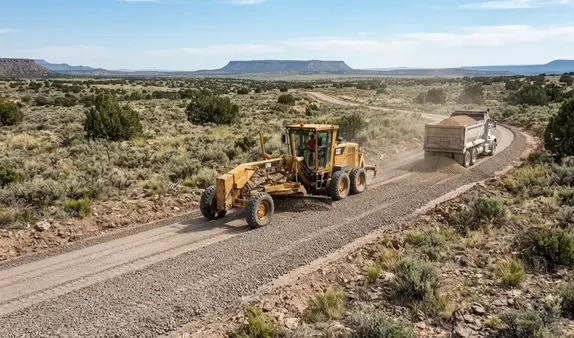
Road-base and aggregate requirements depend on the native subgrade, drainage, expected traffic, material characteristics, and intended performance of the finished access route.
Cut-and-Fill, Elevation Changes & Slope Management
Rural roads frequently cross property where the natural ground is not already at the desired elevation. Rather than flattening the entire property, road construction can use controlled cut-and-fill work to create a practical corridor through the existing terrain. The amount and type of earthwork depend on the route, elevation changes, material conditions, drainage, equipment access, and intended use of the road.
Depending on the property, road grading may involve several different types of elevation and slope work:
Cutting High Areas
Higher portions of the planned route may be excavated to reduce abrupt elevation changes and establish a more practical road profile. Cutting can help create smoother transitions while reducing unnecessary steep sections where the terrain allows.
Filling Low Areas
Suitable material may be placed in lower portions of the route to establish required elevations where conditions allow. Fill placement must account for material suitability, drainage, depth, subgrade conditions, and the intended traffic using the finished road.
Balancing Earthwork
Where suitable onsite material can be reused, material cut from higher areas may reduce the amount of imported fill or hauling required. Excavated material should not automatically be assumed suitable for road fill because rock, organic material, loose soil, or other conditions may affect its use.
Managing Steep Terrain
Steeper routes may require additional grading, smoother grade transitions, drainage controls, side-slope work, or an alternative alignment. The practical approach depends on the available corridor, terrain, road length, and intended vehicle use.
Rock Excavation
Rocky ground can increase excavation time, equipment requirements, and the amount of earthwork needed to establish the route. Where practical, adjusting the alignment or working around significant rock features can reduce unnecessary excavation and disturbance.
Working With the Property
A well-planned rural road does not necessarily require making the surrounding acreage flat. The objective is to establish a functional access route that works with practical terrain, drainage patterns, existing elevations, and property constraints while avoiding unnecessary reshaping.
Effective cut-and-fill work is about establishing useful road elevations rather than simply moving the largest possible amount of material. By considering existing terrain, suitable onsite material, drainage, slope transitions, rock conditions, and the intended use of the route, road grading can create practical access while limiting unnecessary excavation and disturbance.
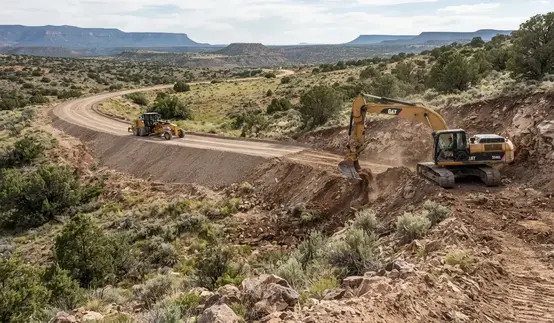
Controlled cut-and-fill work can establish practical road elevations across uneven terrain without unnecessarily flattening the surrounding Apache County property.
Need a Driveway Graded Across Uneven Apache County Terrain?
If your proposed driveway or private road crosses hills, low areas, steep sections, rocky ground, or changing elevations, the route may require cut-and-fill grading rather than simply spreading gravel over the existing surface. Tell us about the property, approximate road length, terrain, and intended use so the potential grading and access requirements can be evaluated.
Call (928) 543-6447Access Roads for Homes, Cabins, Ranches & Off-Grid Property
The right driveway or private road depends partly on how the property will actually be used. A residential driveway serving a future homesite has different requirements from a ranch road, construction access route, cabin road, or long off-grid route. Vehicle types, traffic, route length, terrain, drainage, and future development should all be considered when establishing the road layout and finished grade.
Future Homesites & Rural Residences
Rural residential driveways should connect the property entrance with the planned homesite while coordinating with building elevations, drainage, utilities, and construction access. Establishing the route early can provide reliable access for equipment and material deliveries while helping prevent future grade conflicts with building pad preparation.
Cabins & Recreational Properties
Cabin and recreational properties may require access across undeveloped terrain, rocky ground, existing two-track roads, or natural drainage areas. Routes can be shaped for dependable vehicle access while limiting unnecessary disturbance to surrounding terrain and portions of the property that do not need development.
Ranch & Agricultural Properties
Ranch roads may serve pickups, trailers, tractors, livestock equipment, barns, corrals, fields, wells, and other working areas. These routes may require greater width, stronger surface preparation, suitable turning areas, and drainage improvements based on the type and frequency of agricultural traffic.
Off-Grid Property Development
Remote off-grid properties often need an access road before wells, septic systems, solar equipment, buildings, or other improvements can be installed. Coordinating the route with planned development areas helps provide practical access while reducing conflicts with future utilities, structures, and drainage.
Workshops, Shops & Agricultural Buildings
Access to shops, barns, workshops, storage buildings, and agricultural structures should account for vehicle movement, trailers, loading areas, entrances, and drainage. The road alignment and finished elevations can be shaped around how equipment and vehicles will actually use the surrounding work area.
Construction & Contractor Access
Construction projects often require dependable access for excavators, concrete trucks, well rigs, septic equipment, material deliveries, and other contractors. Where practical, temporary construction access can be incorporated into the future permanent driveway to reduce duplicated grading and earthwork.
Long Private Roads & Multiple Access Points
Large rural properties may require extended roads connecting entrances with homesites, cabins, ranch improvements, wells, or multiple development areas. Longer routes can encounter changing slopes, drainage crossings, soil conditions, and rock, making continuous route planning important for consistent grades and reliable access.
Heavy Equipment & Delivery Routes
Roads serving dump trucks, concrete deliveries, well rigs, septic equipment, agricultural machinery, trailers, and construction equipment can experience substantially greater loading than passenger-vehicle driveways. Expected traffic should be considered when determining grading, road-base needs, turning areas, and surface preparation.
Remote & Undeveloped Acreage
Remote Apache County properties can have rough entrances, gates, fences, vegetation, rocky terrain, steep approaches, narrow access points, and limited equipment staging areas. Route planning helps identify practical access corridors while avoiding unnecessary disturbance to natural terrain outside the planned development area.
Access roads should be planned around how the property will function over time, not simply where a vehicle can travel today. Future homesites, ranch operations, cabins, outbuildings, wells, septic systems, solar installations, utility corridors, construction traffic, and drainage can all influence the best route. On large Apache County parcels, considering these relationships before major earthwork can reduce rework and create a more functional long-term access system.
New Driveway Construction vs. Existing Road Repair
Not every access project starts with bare ground. Some Apache County properties already have an old dirt driveway, two-track road, ranch road, or partially established access route. The appropriate scope depends heavily on what is already there, the condition of the existing route, drainage problems, subgrade conditions, and how the property owner intends to use the road.
New construction and existing-road improvements can involve many of the same earthwork principles, but the starting conditions are different:
-
Establish a New Route
New driveway construction begins by determining a practical alignment based on the property entrance, terrain, drainage, future improvements, and intended vehicle use. -
Prepare the Access Corridor
New routes may require vegetation removal, obstruction removal, surface preparation, and working-area preparation before grading can begin. -
Perform Cut-and-Fill Grading
New construction may require cutting higher areas and building suitable lower areas to establish practical road elevations and smoother transitions. -
Establish Drainage
New access routes can be shaped around natural drainage patterns with appropriate crowns, ditches, swales, crossings, or culvert locations where site conditions require them. -
Prepare the Subgrade
Existing ground may need to be shaped, stabilized, compacted, or supplemented with suitable material before the finished driving surface is installed. -
Install Road Base or Gravel
Where appropriate, suitable road base, aggregate, or gravel can be placed and shaped to create a more reliable finished driving surface. -
Reshape Existing Ruts & Low Areas
Existing roads may be improved by correcting ruts, low spots, uneven surfaces, and other areas that have developed through traffic, weather, or inadequate drainage. -
Restore Road Crown & Surface Profile
An established dirt road may need its crown, cross slope, shoulders, and transitions restored so water can leave the driving surface more effectively. -
Correct Existing Drainage Problems
Recurring washouts, erosion, standing water, and concentrated runoff may require drainage corrections rather than simply adding more surface material. -
Redistribute Existing Material
Suitable material already present on an existing road may sometimes be reshaped or redistributed as part of the improvement work, depending on its condition and suitability. -
Add Material Where Necessary
Existing roads may require additional road base, aggregate, or gravel where the native surface or remaining material cannot provide the desired performance. -
Address the Underlying Problem
Repeated road deterioration should be evaluated for its actual cause, such as drainage, subgrade weakness, grade problems, inadequate material, or traffic loads, rather than simply covering the problem with new gravel.
The best approach depends on the condition of the existing access and the property's long-term needs. New construction allows the route to be planned from the beginning, while existing-road improvements can focus on correcting the specific grade, drainage, subgrade, and surface conditions responsible for poor performance.
Grading Remote & Hard-to-Reach Apache County Properties
Remote acreage creates a second problem beyond the road itself: getting construction equipment to the work area. Long existing roads, narrow gates, rough approaches, steep entrances, vegetation, soft ground, bridges, utility conflicts, and limited turning space can all affect equipment logistics. Planning equipment access before construction begins can help identify potential constraints and reduce delays during the road project.
Existing Property Entrance
The property entrance needs to accommodate the equipment required for the project. A narrow, steep, poorly shaped, or obstructed entrance can become a construction constraint before road work even begins. Access conditions should be considered before equipment mobilization.
Long Equipment Travel
Remote sites may require equipment to travel substantial distances across existing access routes before reaching the proposed road corridor. Rough or deteriorated approaches can affect how equipment reaches the actual work area.
Gate & Fence Access
Existing gates and fencing can influence equipment access, turning space, and mobilization. Gate locations and corridor width should be considered before construction equipment is brought onto the property.
Turning & Staging Areas
Larger equipment needs practical space to turn, work, load, unload, and reposition during road construction. Remote properties may require temporary staging or turning areas so equipment can operate efficiently along the route.
Rough Existing Roads
Sometimes the route used to reach the project is itself part of the problem. Temporary access improvements may be necessary before larger equipment can reach the final work area, particularly where existing roads have severe ruts, washouts, steep sections, or narrow approaches.
Remote Development Logistics
Road construction can be coordinated with future well drilling, septic work, excavation, solar installation, building construction, material deliveries, and other rural development activities. Planning access around these improvements can help reduce future conflicts and repeated disturbance.
Remote road construction requires consideration of both the finished route and the logistics required to build it. Evaluating entrances, existing access, gates, staging areas, terrain, and future development needs can help identify equipment constraints before major earthwork begins.
Plan the Driveway Around Future Property Development
A driveway should not be viewed as an isolated strip of dirt. On undeveloped rural property, the access route can influence nearly every improvement that follows. Establishing the road with future development in mind can reduce unnecessary regrading, trenching, excavation, and surface disturbance later.
1. Coordinate the Building Pad
Driveway elevations and the building pad should work together so vehicles can transition naturally from the road to the finished building area. Considering the relationship between the access route, finished building elevation, and surrounding drainage can help prevent unnecessary grading later.
2. Plan for Water Well Access
Well drilling equipment requires suitable access to reach the planned drilling location. A properly considered road can provide a practical route for well contractors, equipment deliveries, and future service vehicles.
3. Consider Septic System Locations
Septic areas and access routes should be considered together so future excavation, installation, maintenance, or replacement work does not unnecessarily damage a newly completed driveway or conflict with the established road corridor.
4. Coordinate Utility Corridors
Electric, water, communications, and other utility routes can cross or run beside access roads. Planning these corridors alongside the driveway can reduce future excavation and help avoid unnecessary disturbance to the finished driving surface.
5. Allow for Solar Equipment Access
Off-grid solar equipment may require delivery, installation, maintenance, and replacement access. Road planning remains important even when the solar array is located away from the primary homesite or building area.
6. Plan for Future Buildings
Shops, barns, garages, RV areas, storage buildings, livestock facilities, and other improvements can affect future turning, parking, loading, and access requirements. Considering these uses early can help keep the primary road useful as the property develops.
On undeveloped acreage, it is often easier to establish the primary access corridor before buildings, utilities, fencing, septic systems, landscaping, and other improvements limit the available routes. Planning the driveway as part of the property's larger development layout can reduce future conflicts and unnecessary rework.
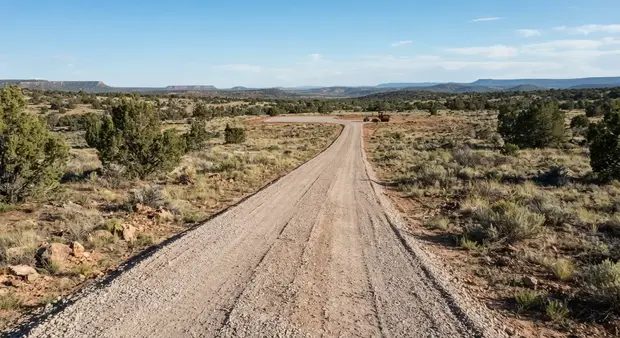
Planning the primary driveway around future homesites, wells, septic systems, solar, utilities, and buildings can reduce conflicts and unnecessary rework as rural property develops.
Apache County Driveway Access, Right-of-Way & Permit Considerations
Not every rural driveway project has the same permitting or access requirements. The property's location, the road being accessed, the scope of grading, drainage conditions, right-of-way boundaries, and applicable jurisdiction can all affect what approvals or coordination may be necessary. Understanding these considerations before construction can help prevent delays or conflicts later.
Private Property Access
A driveway located entirely within private property may have different considerations from work that connects to or affects a public roadway. Property boundaries, existing easements, access rights, and the proposed scope of work should be understood before construction begins.
Public Road Connections
The connection between private property and a public roadway can be subject to access, drainage, safety, and jurisdictional requirements. The road authority responsible for the connecting roadway may have specific requirements for the entrance or approach.
State Highway Right-of-Way
Work within an ADOT right-of-way can require an encroachment permit. ADOT lists activities including driveways and grading among work that may require an encroachment permit when performed within state highway right-of-way.
Drainage Crossings
Driveways crossing washes, drainage paths, or other watercourses may require appropriate drainage structures and additional project-specific coordination. Culverts, crossings, and drainage modifications should be considered as part of the overall access plan.
Surveying & Engineering
Larger, more complex, or regulated projects may require surveying, engineered drainage information, design documents, or other professional services. The need for these services depends on the specific property, road, terrain, and project requirements.
Right-of-Way & Easements
Long rural access routes may cross easements or other property interests. Ownership, legal access, recorded easements, and the physical construction route should be understood before substantial grading or road construction begins.
Permit and engineering requirements vary by project. We do not assume that every driveway is exempt from permitting or that every project requires the same approvals. Property owners should verify applicable requirements with the responsible agency or jurisdiction before construction, particularly where a project connects to or enters a public roadway or right-of-way.
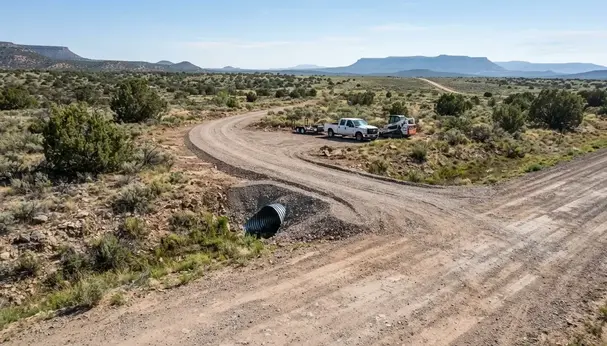
Rural driveway access can involve different considerations depending on the private property entrance, public roadway, right-of-way, easements, drainage conditions, and jurisdiction responsible for the connecting road.
Need Help Planning Access to Your Apache County Property?
If your driveway will connect to a public roadway, cross a drainage area, involve an easement, or require work near a right-of-way, the access conditions should be understood before major grading begins. Tell us where the property is located, what type of access you are planning, and what work you need completed so the project requirements can be discussed with the appropriate professionals and agencies.
Call (928) 543-6447Common Driveway & Private Road Problems We Correct in Apache County
A rural driveway can look like a simple dirt or gravel surface, but the road is actually a small drainage and earthwork system. When water, grade, subgrade, traffic, and surface material stop working together, problems usually show up first as ruts, potholes, loose gravel, washouts, or standing water. Apache County's combination of high-desert terrain, seasonal monsoon storms, sandy and rocky soils, caliche, elevation changes, and remote access can make those problems especially persistent.
One important distinction is that the visible problem is not always the actual problem. A pothole may be caused by trapped water beneath the surface. A washout may originate several feet uphill where runoff becomes concentrated. A driveway that keeps developing the same ruts may have a weak subgrade rather than simply needing another load of gravel. Repairing only what is visible can make the road look better temporarily without correcting the condition that caused the failure.
-
Deep Wheel Ruts & Tire-Track Channels
Deep ruts develop when repeated vehicle loading pushes or displaces surface material, particularly when the road is wet or the underlying ground is weak. On long rural driveways and ranch roads, the problem can become self-reinforcing: tires follow the existing tracks, water collects in those depressions, and every subsequent vehicle makes the channels deeper. Reshaping the route, correcting drainage, and addressing weak material may be more effective than simply filling the tracks. -
Monsoon Washouts
Apache County's summer monsoon storms can expose drainage weaknesses very quickly. Runoff entering a road from an uphill slope, crossing a driveway at a low point, or concentrating beside the road can remove surprisingly large amounts of loose material. A proper repair may involve rebuilding the road profile and controlling where the water enters, crosses, and leaves the access route, not simply replacing the gravel that washed away. -
Standing Water & Persistent Low Spots
Water that repeatedly collects in the same location is often telling you something about the road's elevation or drainage. Simply dumping gravel into a low spot can raise the surface temporarily while leaving the water trapped underneath or beside it. The surrounding grades, road crown, subgrade, and available drainage outlet should be considered together before the low area is rebuilt. -
Lost Road Crown & Poor Cross Slope
Gravel roads need a surface profile that allows rainfall to leave the driving lane. Repeated traffic, grading, tire loading, and weather can gradually flatten that profile until water begins traveling down the road instead of off it. Once runoff starts using the driving surface as its drainage channel, relatively minor rainfall can accelerate erosion and surface deterioration. -
Eroded Road Shoulders & Edge Failure
The edge of a rural road can be surprisingly vulnerable. When water repeatedly leaves the driving surface at the same location, it can cut into the shoulder and gradually undermine the road edge. This can make a driveway appear narrower over time and may eventually create a noticeable drop-off between the driving surface and surrounding ground. Shoulder shaping and drainage correction can be just as important as repairing the center of the road. -
Steep Grades & Abrupt Elevation Transitions
A road does not have to be extremely steep to become difficult to use. Abrupt changes between flatter and steeper sections can create scraping, traction, trailer clearance, drainage, and vehicle-control problems. These transitions can become particularly noticeable on long approaches to homesites, cabins, mountain properties, and remote parcels. Where the available terrain permits, reshaping the transition can create a more practical route. -
Loose Gravel That Will Not Stay in Place
More gravel is not automatically the answer to a deteriorating gravel road. If the underlying surface is unstable, drainage is poor, or the aggregate is not appropriate for the application, new material can migrate into wheel tracks, collect along the edges, or move downhill during heavy runoff. Proper subgrade preparation, material selection, grading, and compaction all influence whether added aggregate actually improves the road. -
Deteriorated Two-Track Roads
Old two-track access routes can gradually develop two deep tire channels with a raised center section between them. That center can prevent water from crossing the route properly while the tire tracks collect runoff. Rebuilding the surface may require more than smoothing the two tracks; the entire road profile may need to be reshaped so traffic and water can use the route more effectively. -
Water Crossing the Driveway
Some properties naturally direct runoff across the same low point year after year. Allowing stormwater to repeatedly flow directly over an unprotected driving surface can quickly create channels and remove aggregate. Depending on the location and drainage conditions, the solution may involve a culvert, crossing, swale, grade adjustment, or another method of directing water through the route. -
Roads Built Too Low Relative to the Surrounding Ground
A subtle problem on rural property is a driveway that sits in a natural collection area. If surrounding land drains toward the road, the road can become the lowest and easiest path for stormwater. Raising or reshaping portions of the route may sometimes be more effective than repeatedly repairing the surface after every significant storm. -
Weak or Saturated Subgrade
A road can have plenty of gravel on top and still fail underneath. If the native subgrade becomes soft, saturated, or unstable, vehicle loads can cause the surface material to deform, rut, or migrate. In those situations, the repair may require addressing the underlying material and drainage before installing additional road base or aggregate. -
Rock, Caliche & Difficult Excavation
Not every Apache County road can be shaped as easily as loose native soil. Caliche, coarse rock, volcanic material, and shallow rock can affect excavation production, grading methods, cut-and-fill quantities, and equipment requirements. Sometimes the most efficient solution is not to force a straight route through difficult material but to adjust the alignment where the property allows. -
Seasonal & Freeze-Thaw Deterioration
Road conditions can change with the seasons. Summer monsoon rainfall can saturate and erode exposed surfaces, while higher-elevation areas around the White Mountains can experience colder conditions that affect wet ground and surface stability. A road that performs well during a dry period may reveal completely different weaknesses after significant precipitation or seasonal temperature changes. -
Recurring Repairs in the Same Location
One of the strongest clues that a road has an underlying problem is when the same section fails repeatedly. If the same pothole, washout, rut, low spot, or eroded shoulder returns after each major storm, repeatedly repairing the surface may only treat the symptom. The grade, drainage path, subgrade, surrounding terrain, and traffic pattern should be evaluated together.
What We Look For Before Simply Adding More Gravel
Before rebuilding a deteriorated rural road, it is useful to understand where the water is coming from, where it wants to go, and what happens to the road when that water gets there. We also look at the existing grade, road crown, tire tracks, shoulders, subgrade condition, surrounding terrain, material already on the road, and the types of vehicles using the route.
-
Where Does the Water Enter?
Runoff may originate above the road, from a neighboring slope, from a natural drainage area, or from the property itself. Identifying the source can reveal why one particular section keeps failing. -
Where Does the Water Leave?
A drainage improvement is only useful if there is an appropriate place for the water to go. Simply redirecting runoff away from one problem area can create erosion somewhere else. -
What Does the Existing Road Profile Tell Us?
Tire tracks, flattened crowns, eroded edges, sediment deposits, exposed aggregate, and vegetation growing in drainage areas can provide clues about how water and traffic have been interacting with the road. -
What Traffic Is the Road Actually Carrying?
A seasonal cabin driveway used by a few passenger vehicles has different requirements from a ranch road carrying trailers, a construction route serving heavy equipment, or an access road used by delivery trucks. -
Is the Problem on Top or Below the Road?
Surface deterioration can sometimes be corrected with reshaping and additional material. In other cases, the underlying subgrade or drainage condition must be addressed first. Distinguishing between the two can prevent unnecessary material and repeated repairs. -
Does the Repair Fit the Rest of the Property?
A driveway is connected to the surrounding terrain. Future homesites, wells, septic systems, utility routes, barns, solar installations, gates, and other improvements can all influence where and how an access route should be repaired or rebuilt.
A Road Can Be "Fine" Until the First Big Storm
One of the easiest mistakes with rural roads is judging the finished work only during dry weather. A smooth driveway immediately after grading may look excellent while still having drainage weaknesses that will not become obvious until the next major rainfall. For Apache County properties, the better question is not simply, "Does the road look good today?" but "Where will the water go the next time the property receives significant runoff?"
Rural road repair works best when the visible damage is treated as a clue rather than the entire diagnosis. Deep ruts, washouts, standing water, loose gravel, eroded shoulders, and deteriorated two-track routes can all have different causes. On Apache County properties, the combination of terrain, caliche, rock, seasonal moisture, monsoon runoff, road profile, subgrade, and intended traffic should guide the repair strategy. Correcting the cause, not simply smoothing the symptom, can produce a more dependable access route and reduce the cycle of repairing the same section over and over.
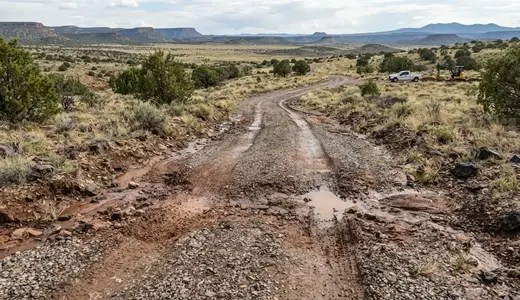
Ruts, washouts, low spots, eroded shoulders, and loose aggregate can indicate deeper problems involving drainage, road profile, subgrade conditions, traffic, or surrounding terrain rather than a simple need for more gravel.
What Affects Driveway & Private Road Grading Cost?
Rural driveway and private road pricing in Apache County cannot be accurately determined from road length alone. A mile of relatively straightforward road across stable ground can require far less work than a much shorter route crossing steep terrain, rocky ground, washes, caliche, or difficult access points. The actual cost comes from the amount of earthwork, drainage work, material, equipment time, hauling, and site preparation the property requires.
This is particularly important on large rural parcels around areas such as St. Johns, Concho, Vernon, Sanders, Springerville, Alpine, Greer, and Nutrioso, where terrain and access conditions can change substantially from one property to the next. A property-specific evaluation helps identify where the real work is before equipment arrives.
Road Length & Route Complexity
Longer roads generally require more grading, equipment time, material handling, and mobilization. But length is only part of the equation. A winding route with multiple elevation changes, drainage crossings, or difficult sections can require substantially more work than a straight road of similar distance.
Terrain & Elevation Changes
Hills, slopes, benches, depressions, mesas, and changing elevations influence how much material must be cut, moved, or placed. Routes that can follow the natural contours of the property may require less earthwork than an alignment that attempts to force a uniform grade through uneven terrain.
Rock, Caliche & Difficult Excavation
Rocky ground and hardened caliche can slow excavation and change equipment requirements. The depth, thickness, and location of hard material matter. A short section of difficult ground can sometimes have a disproportionate effect on production compared with a much longer stretch of easily workable soil.
Drainage & Water Crossings
Drainage can become one of the largest variables on a rural road project. Ditches, swales, culverts, wash crossings, outlet areas, erosion repairs, and road-profile changes may all be required depending on how water moves across the property. Simply adding gravel to a road that repeatedly carries runoff usually does not solve the cause.
Subgrade & Existing Ground Conditions
The material underneath the road matters just as much as the visible driving surface. Weak, wet, loose, organic, or otherwise unsuitable material may require additional preparation before aggregate is placed. In some locations, the native ground may perform well with proper shaping; in others, additional base or corrective earthwork may be needed.
Road Base, Gravel & Material Hauling
Imported road base or surface aggregate can add substantially to project cost, particularly on long rural roads where large quantities must be delivered. Hauling distance, material availability, placement depth, spreading, shaping, and compaction all influence the finished price.
Equipment Access & Mobilization
Getting equipment to a remote work area is part of the project. Narrow gates, steep entrances, rough existing roads, limited turning space, soft ground, fences, bridges, or long travel distances can increase mobilization requirements before road construction even begins.
Vegetation, Trees & Clearing
Juniper, pinyon, brush, fallen timber, stumps, and other obstructions may need to be removed through selective clearing of the proposed corridor. The amount of clearing depends on the route rather than simply the acreage of the property. A carefully selected alignment may avoid unnecessary clearing and reduce both disturbance and preparation work.
Existing Road Condition
An established driveway or two-track can sometimes be upgraded more economically than building a completely new route. However, severe rutting, washouts, drainage failures, unstable subgrade, or extensive erosion may require reconstruction rather than simply smoothing the surface and adding more gravel.
Cut-and-Fill Requirements
Where the natural ground does not match the desired road elevation, material may need to be excavated from high areas and placed in suitable low areas. The amount of usable onsite material, balance between cut and fill, finished elevations, and need for imported material can all affect the earthwork portion of the project.
Seasonal Conditions & Construction Timing
Soil moisture can affect equipment production, rutting, compaction, and surface stability. Apache County's summer monsoon season can also expose drainage weaknesses that are easy to overlook during dry weather. Timing and existing site conditions can therefore influence how efficiently certain work can be performed.
Future Property Development
A driveway may eventually serve a home, cabin, shop, barn, well, septic system, solar installation, agricultural area, or multiple buildings. Planning the road around those future improvements can affect its alignment, width, grade, turning areas, finished elevations, and may prevent expensive rework later.
Why Two Roads of the Same Length Can Cost Very Different Amounts
Consider two hypothetical 1,000-foot driveways. One follows relatively stable ground with straightforward access, little clearing, and natural drainage that can be managed without major crossings. The other climbs through uneven terrain, crosses a seasonal drainage path, encounters rocky or cemented material, requires substantial cut-and-fill work, and needs imported aggregate hauled to a remote property. The tape measure says both roads are the same length. The amount of construction work is not.
This is why a meaningful estimate should be based on the proposed route and the work required to make that route functional, not simply a price multiplied by the number of feet. In some cases, changing the alignment slightly can reduce rock excavation, avoid a drainage crossing, shorten the cut-and-fill section, or preserve an existing usable grade. Route selection itself can therefore become a cost-control decision.
Why We Prefer Property-Specific Estimates
We prefer to evaluate the actual access route before giving a meaningful project estimate. The goal is to understand the terrain, existing road conditions, drainage, ground material, equipment access, required earthwork, and intended use before assigning a scope of work. That produces a more useful estimate than applying a generic per-foot or per-mile number to every Apache County property.
The most economical rural road is not necessarily the shortest road or the one with the least initial gravel. It is the route and construction approach that balances earthwork, drainage, subgrade conditions, material requirements, equipment access, and long-term use. On remote Apache County acreage, thoughtful route planning can sometimes reduce excavation, hauling, clearing, and future repair costs before construction even begins.
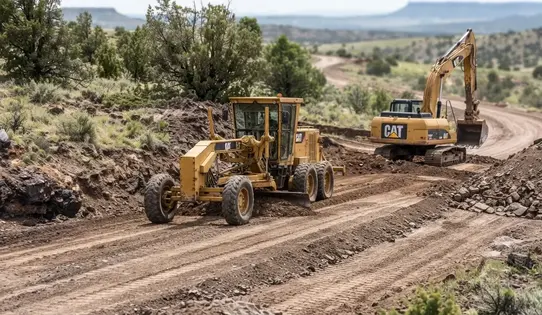
Terrain, elevation changes, rock, caliche, drainage, clearing, cut-and-fill requirements, equipment access, and material hauling can all influence the amount of work required to construct or improve a rural driveway.
Driveway & Rural Road Grading Costs in Apache County: What Property Owners Should Expect
Driveway and private road grading costs in Apache County depend on much more than the length of the road. Each property can have different terrain, elevation changes, soil conditions, caliche, volcanic rock, drainage requirements, equipment access, and road-base needs. A short driveway on relatively easy ground may require limited earthwork, while a long remote access road can involve substantial grading, cut-and-fill work, drainage improvements, material placement, and hauling.
We evaluate the actual conditions of the property and the intended use of the access route before determining the appropriate scope of work. The goal is not simply to move dirt, but to establish a practical road profile with usable grades, controlled drainage, suitable surface preparation, and access that works with the property's existing terrain.
Typical Driveway & Road Grading Price Ranges
Small Rural Driveway & Homesite Access
$2,500 – $8,000+
Short residential driveways and basic homesite access routes may involve route grading, minor elevation correction, drainage shaping, driveway approach work, and surface preparation. Final cost depends on terrain, existing conditions, and whether additional aggregate or road base is required.
Driveway Construction & Access Route Grading
$3,000 – $12,000+
Longer or more involved driveways may require substantial grading, crowning, slope correction, drainage improvements, cut-and-fill work, and preparation for gravel or road base. Route length and changing terrain can significantly affect the amount of earthwork required.
Long Private Roads & Rural Easements
$10,000 – $50,000+
Extended private roads may cross multiple terrain types and drainage areas while connecting a property entrance with homesites, cabins, ranch improvements, wells, or other development areas. Longer routes can require additional grading, drainage crossings, road base, material hauling, and equipment time.
Cut-and-Fill & Elevation Correction
$5,000 – $20,000+
Uneven properties may require cutting high areas, filling low sections, reshaping slopes, and redistributing suitable onsite material. The amount of elevation change, material available for reuse, soil conditions, rock, and required finished grades all influence the total earthwork.
Drainage, Washout & Road Grade Correction
$3,000 – $15,000+
Roads with washouts, ruts, low areas, standing water, eroded shoulders, or concentrated runoff may require more than surface regrading. Depending on site conditions, work may include crown correction, ditching, swales, drainage crossings, culvert preparation, erosion correction, and additional surface material.
Rocky, Steep & Difficult Terrain
Custom Quote
Rocky ground, hard caliche, steep slopes, difficult access, significant elevation changes, and limited equipment staging can substantially increase earthwork requirements. These projects may require heavier equipment, additional excavation, ripping, specialized material handling, or more extensive cut-and-fill operations.
These ranges are general planning figures rather than fixed prices. Actual driveway and road grading costs depend on the specific property, including route length, terrain, slope, drainage, soil and rock conditions, existing road condition, equipment access, material availability, road-base requirements, and hauling distance. Two properties with similar driveway lengths can require very different amounts of work.
For larger Apache County properties, pricing is generally more meaningful when based on the actual earthwork and improvements required rather than a simple price per acre or price per linear foot. A property-specific evaluation can identify where grading, drainage correction, material placement, or road-base installation is actually necessary.
From Rural Property to Reliable Access
Building or improving a rural driveway is a sequence of decisions rather than simply moving dirt from one place to another. We look at the property, understand what the access route needs to accomplish, identify terrain and drainage constraints, determine the appropriate earthwork, and then establish a driving surface suited to the property's actual use.
1. Start With the Property & Access Goal
We begin with the property location, existing entrance, approximate route, intended destination, and reason for the project. Whether the goal is access to a future homesite near Concho, a cabin in the White Mountains, a ranch improvement, or a remote off-grid parcel, the intended use helps establish the appropriate approach from the beginning.
2. Evaluate Existing Access
We consider the current entrance and any existing driveway, two-track, ranch road, gate, fence opening, or access easement. An existing road may be a useful foundation for improvement, or it may contain drainage, grade, or subgrade problems that need to be corrected before it can reliably support the intended traffic.
3. Understand Terrain & Ground Conditions
The proposed route is considered against slopes, elevation changes, rocky areas, caliche, sandy or loose material, natural benches, washes, and other ground conditions. Apache County properties can change considerably over relatively short distances, so the route itself matters more than applying a standard driveway design to the entire parcel.
4. Identify Drainage & Water-Management Needs
Natural drainage paths, low areas, swales, washes, roadside flow, and seasonal runoff are considered before final road shaping. The objective is to keep water from becoming the road's recurring maintenance problem. Depending on the property, the solution may involve road crowning, ditches, swales, crossings, culverts, or other site-appropriate drainage measures.
5. Determine Earthwork & Grade Requirements
Once the route and constraints are understood, the required earthwork can be considered. High areas may need to be cut or excavated, suitable material may be placed in lower areas, and steep or abrupt transitions may require reshaping. The goal is to create a practical road profile without unnecessarily flattening surrounding acreage.
6. Determine Subgrade & Surface Requirements
The existing ground is evaluated in relation to the expected traffic and finished road requirements. Some routes may perform well with properly prepared native material, while others may require additional road base, aggregate, or surface gravel. Material decisions should follow the actual site conditions rather than assuming every driveway needs the same construction depth.
7. Plan Equipment Access & Construction Sequence
Remote properties can present construction challenges before grading even starts. Gates, narrow entrances, rough approaches, vegetation, steep access, limited turning areas, and long equipment travel can affect how the work is staged. Planning mobilization and the construction sequence helps avoid discovering an equipment access problem after the project is already underway.
8. Coordinate With Future Development
Where applicable, the access route is considered alongside future homesites, cabins, shops, barns, wells, septic systems, solar equipment, utility corridors, fencing, and other improvements. Establishing the route before those improvements are built can reduce future conflicts with finished elevations, drainage, utilities, and construction access.
9. Perform Grading & Road Construction
The planned work is carried out according to the property's requirements. This can include clearing the necessary corridor, cut-and-fill work, grading, drainage shaping, subgrade preparation, placement of suitable material, and development of the finished driving surface.
10. Shape & Finish the Driving Surface
The completed route is shaped for practical vehicle use, with attention to grade transitions, cross slope, shoulders, drainage, turning areas, and surface condition. Where road base or gravel is part of the project, the material is placed and shaped according to the requirements of the finished route.
11. Review the Completed Access
The finished route is reviewed for practical access, surface condition, drainage behavior, grade transitions, and the requirements established for the property. The objective is not simply a road that looks finished, but an access route that makes sense for the vehicles, terrain, and property improvements it is expected to serve.
A reliable rural driveway is the result of connecting several pieces of the property together: entrance conditions, terrain, drainage, earthwork, subgrade, surface material, equipment access, and future development. Taking those factors into account before major earthwork begins can help reduce unnecessary disturbance and produce an access route that is better suited to the realities of rural Apache County property.
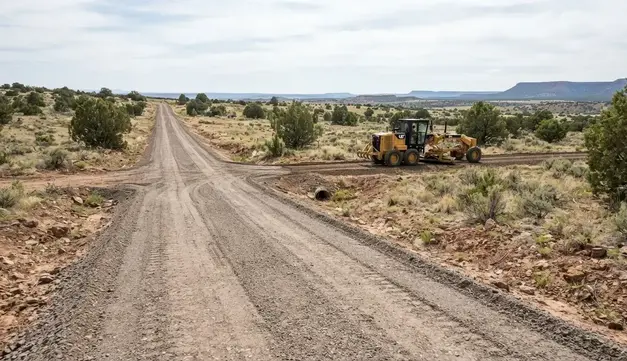
A rural driveway can be planned as part of the property's larger development layout, providing construction access while working with future homesites, drainage, utilities, wells, septic systems, agricultural improvements, and other planned uses.
Planning a Driveway Around Your Future Apache County Property?
If your driveway will provide access to a future homesite, cabin, well, septic system, solar installation, shop, barn, utilities, or other improvements, the access route should be considered as part of the larger property layout. Tell us where your Apache County property is located, what you plan to develop, and what the driveway or private road needs to accomplish.
Call (928) 543-6447Driveway & Private Road Grading Throughout Apache County
Apache County is large enough that rural road conditions can change significantly from one area to another. Elevation, terrain, vegetation, rock, drainage, soil conditions, road length, and equipment access all influence how a driveway or private road should be built.
St. Johns & Surrounding Acreage
Rural properties around St. Johns often include large open parcels, ranch improvements, homesites, and long private access routes. Road projects may require careful grading, drainage planning, and surface preparation over substantial distances.
Concho & Vernon
Concho and Vernon include rural homesites, ranch properties, existing dirt roads, and two-track access routes. Loose surface material, drainage, rutting, and long approaches can all influence how an existing or new road should be improved.
Springerville & Eagar
Higher-elevation properties around Springerville and Eagar experience different terrain and seasonal conditions than lower portions of the county. Road construction may need to account for slopes, drainage, moisture, surface stability, and winter conditions.
Alpine, Greer & Nutrioso
Mountain properties around Alpine, Greer, and Nutrioso can involve steeper grades, forest vegetation, rock, and more constrained construction corridors. Route selection and drainage become especially important when working with uneven mountain terrain.
McNary & White Mountain Area
Properties around McNary and the White Mountain area can transition between forested ground, slopes, and open areas. Vegetation, seasonal moisture, elevation changes, and limited working space can affect grading and equipment access. Where a road corridor requires vegetation removal, selective land clearing may be part of the access preparation.
Sanders, Chambers & Eastern Apache County
Eastern Apache County contains extensive rural acreage and long access routes to remote homesites and ranch improvements. Road length, drainage, material delivery, existing two-tracks, and equipment mobilization can become important project factors.
Ganado, Window Rock & Northern Apache County
Road projects around Ganado, Window Rock, and nearby communities can involve different property, right-of-way, ownership, and jurisdictional considerations. The physical road route and applicable access requirements should be understood before substantial grading or construction begins.
Many Farms, Rock Point & Round Rock
Rural properties in the northern county can include remote homesites, ranch roads, long dirt routes, and undeveloped acreage. Existing access, drainage crossings, road length, and future development can all influence the construction approach.
Wide Ruins, Lupton, Houck & Remote Acreage
More isolated properties may require substantial equipment travel before road work even begins. Long approaches, gates, rough access, turning space, and aggregate delivery can affect project logistics along with the actual earthwork.
Communities & Rural Areas We Serve
Our Apache County service area includes St. Johns, Springerville, Eagar, Concho, Vernon, Alpine, Greer, Nutrioso, McNary, Sanders, Chambers, Ganado, Window Rock, Many Farms, Rock Point, Round Rock, Wide Ruins, Lupton, Houck, Adamana, and surrounding rural areas, subject to property access, jurisdiction, and project requirements.
Location is only the starting point. The actual road design and construction approach depend on the property's terrain, drainage, ground conditions, existing access, road length, equipment requirements, and intended use. That is especially important on Apache County's large and remote rural parcels, where two properties in the same general area can have very different road-building requirements.
Service Area
We provide driveway and rural road grading throughout Apache County, Arizona. Our work supports homeowners, ranchers, cabin owners, agricultural users, and off-grid landowners with private road shaping, driveway construction, access route grading, drainage improvements, slope correction, road base placement, and long easement preparation for reliable year round access.
- St. Johns, AZ
- Springerville, AZ
- Eagar, AZ
- Concho, AZ
- Vernon, AZ
- Sanders, AZ
- Alpine, AZ
- Nutrioso, AZ
- Greer, AZ
- McNary, AZ
- Ganado, AZ
- Window Rock, AZ
- Adamana, AZ
- Chambers, AZ
- Houck, AZ
- Lupton, AZ
- Many Farms, AZ
- Rock Point, AZ
- Round Rock, AZ
- Wide Ruins, AZ
- Surrounding Rural Communities
If your property is located anywhere in Apache County or the surrounding rural communities, we can help build or improve your driveway, private road, or access route. Our road grading services are designed for Arizona high desert terrain, caliche shelves, volcanic rock, seasonal monsoon drainage, and the unique access needs of rural and off-grid properties.
Driveway & Private Road Grading FAQs
Rural driveway and private road construction in Apache County involves more than simply smoothing a dirt path. Long access routes, uneven terrain, sandy soils, caliche, volcanic rock, seasonal monsoon runoff, drainage crossings, and remote equipment access can all affect how a driveway or private road should be built and maintained. The answers below address common questions about driveway grading, private roads, road base, drainage, washout correction, access routes, and rural property development throughout Apache County.
- What is the difference between driveway grading and private road construction?
- Driveway grading generally focuses on shaping an access route to establish practical elevations, slopes, drainage, and a usable driving surface. Private road construction can involve a larger or longer access route and may require clearing, excavation, cut-and-fill work, drainage improvements, road-base installation, and additional preparation. The appropriate scope depends on the length, terrain, soil conditions, traffic, and intended use of the road.
- Can you build a driveway on undeveloped Apache County property?
- Yes. A new driveway can be established across undeveloped rural property when the route, access conditions, terrain, drainage, and project requirements are suitable. New driveway construction may involve route preparation, vegetation removal, excavation, grading, drainage shaping, road-base preparation, and surfacing. The final approach depends on the property's existing conditions and where the driveway needs to connect to the homesite, cabin, ranch improvement, or other planned development.
- Can you grade an existing dirt driveway?
- Yes. Existing dirt driveways can often be reshaped to correct ruts, uneven areas, poor transitions, erosion, drainage problems, and surface deterioration. Depending on the condition of the road, work may include regrading, crowning, ditching, adding or redistributing material, correcting low areas, and preparing the surface for additional gravel or road base.
- Why do rural driveways wash out?
- Washouts can occur when runoff concentrates on the road surface instead of being directed away from it. Poor crown, excessive grades, inadequate drainage, missing culverts, eroding shoulders, weak surface material, and intense storm runoff can all contribute. Apache County's summer monsoon storms can expose drainage weaknesses quickly, making proper road shape and water management important for long-term access.
- Can driveway grading help prevent washouts?
- Proper grading can reduce conditions that contribute to washouts by establishing practical slopes, a suitable crown, stable transitions, and controlled drainage. Depending on the property, additional drainage features such as ditches, swales, or culverts may also be necessary. Grading alone cannot guarantee that a road will never wash out because storm intensity, soil conditions, traffic, and drainage structures also affect performance.
- What is road crowning?
- Crowning shapes the road surface so the center is slightly higher than the edges, allowing surface water to move away from the primary driving path. Proper crowning can help prevent water from sitting in wheel tracks and reduce the concentration of runoff along the center of an unpaved road. The appropriate road shape depends on the surface material, slope, drainage conditions, and intended use.
- Does every rural driveway need a crown?
- Not every access route will have exactly the same finished profile. Road shape depends on the width, grade, drainage conditions, surface material, terrain, and how water naturally moves across the property. Where appropriate, a crowned surface can help shed water away from the driving lane, while other site-specific drainage solutions may be needed on steeper or more complex routes.
- Can you improve a steep driveway?
- Some steep driveways can be improved by reshaping grades, creating smoother transitions, cutting high areas, filling low areas, or adjusting the route where property conditions allow. The practical solution depends on the existing slope, available space, soil and rock conditions, drainage, and intended vehicle use. Extremely steep terrain may require more extensive earthwork or additional engineering considerations.
- Can you build roads across sloped or uneven rural property?
- Many rural roads can be constructed across uneven terrain by using appropriate cut-and-fill techniques, slope transitions, drainage features, and surface preparation. The goal is generally to create a practical route rather than flattening the entire property. Terrain, rock, soil, access, and drainage all influence where a road can be established efficiently.
- What is cut-and-fill work for a driveway?
- Cut-and-fill work involves lowering higher portions of the planned road route and using suitable material to raise lower areas when conditions permit. This can help establish a more practical road profile across uneven terrain and may require excavation and site preparation as part of the overall earthwork. Not all excavated material is suitable for fill, so soil composition, rock content, moisture, and the intended road surface all affect how onsite material can be reused.
- Can you reuse material from the property when building a driveway?
- Sometimes. Suitable onsite material can potentially be cut, moved, and reused elsewhere on the road project, reducing the need for hauling. Whether material is appropriate for fill or road preparation depends on its composition, moisture, rock content, stability, and intended application. Organic material, unsuitable soils, or certain rocky materials may require separate handling.
- Will I need gravel or road base for my driveway?
- Not every rural access route requires the same surface treatment. Some roads may function adequately with properly shaped native material, while others benefit from imported gravel, aggregate, or engineered road base. Traffic, soil conditions, weather, drainage, slope, and the desired level of reliability all influence whether additional surface material should be installed.
- What is the difference between grading a driveway and installing road base?
- Grading establishes the road's underlying shape, elevations, slopes, and drainage. Road-base installation adds selected aggregate or other suitable material to create a stronger driving surface or improve the stability of the road. Depending on the project, the existing ground may need to be graded and prepared before road base is delivered, spread, shaped, and compacted.
- Can you repair a driveway with deep ruts?
- Yes. Rutted driveways can often be reshaped by regrading the surface and correcting the conditions that caused the rutting. Depending on the severity, repairs may also require additional material, drainage correction, subgrade preparation, or compaction. Simply filling the ruts without addressing drainage or underlying conditions may provide only temporary improvement.
- Can you fix low spots and standing water on a dirt road?
- Localized grading can sometimes correct low areas that collect water by reshaping the surface and establishing better drainage. The underlying cause needs to be considered, however. Poor road crown, inadequate ditching, compacted subgrade, natural drainage, or insufficient outlet capacity may require additional work beyond simply filling a low spot.
- Can you install or improve driveway drainage?
- Depending on the project, driveway drainage improvements can include shaping roadside swales, establishing drainage ditches, creating appropriate cross slopes, improving approaches, and preparing locations for culverts or other drainage features. The correct solution depends on how water moves across the property and where runoff needs to go without creating new erosion or flooding problems.
- Do rural driveways need culverts?
- Some do, particularly where a driveway crosses an existing drainage path, roadside ditch, swale, or seasonal flow area. A culvert can allow water to pass beneath the road rather than flowing across the driving surface. Whether one is appropriate depends on the site's drainage patterns, expected runoff, road layout, and applicable project requirements.
- Can you grade a driveway before building a house or cabin?
- Yes. Establishing access before construction can provide a practical route for property owners, contractors, equipment, deliveries, and future site development. The driveway grade should be coordinated with the planned building area, finished elevations, drainage, utilities, and other improvements so the access route does not have to be substantially reworked later.
- Can you build access roads for off-grid properties?
- Yes. Off-grid properties often require access before other improvements such as homes, cabins, wells, septic systems, solar equipment, fencing, or utility infrastructure can be completed. Access-road work can include route preparation, grading, drainage shaping, difficult-terrain correction, and road-base preparation as part of a broader off-grid land development plan, based on the property's conditions and intended use.
- Can you grade ranch roads and agricultural access routes?
- Yes. Ranch and agricultural properties may require longer private roads and multiple working routes for trucks, tractors, livestock operations, equipment, barns, corrals, fields, or other improvements. These routes may require different levels of preparation depending on traffic, seasonal conditions, drainage, and the type of equipment using them.
- What types of soil affect driveway and road construction in Apache County?
- Apache County properties can have sandy soils, compacted ground, caliche, coarse rock, volcanic material, and other varying surface conditions. These materials affect how easily a road can be cut and shaped, whether onsite material can be reused, how well the surface drains, and whether additional aggregate or road base may be needed.
- Can you build a driveway through rocky or caliche-heavy ground?
- Many rocky or caliche-heavy properties can be prepared for access, but harder ground may require additional excavation, ripping, heavier equipment, or more extensive cut-and-fill work. The amount of rock, depth of hard material, terrain, access, and desired road profile all influence the appropriate construction approach.
- What equipment is used for driveway and road grading?
- Equipment depends on the size and conditions of the project. Depending on the work, driveway and road construction may involve dozers, excavators, motor graders, skid steers, loaders, compactors, water equipment, and other attachments. Terrain, access, road length, material type, drainage requirements, and the amount of earthwork influence equipment selection.
- How wide should a rural driveway be?
- The appropriate width depends on the property, vehicle types, expected traffic, terrain, turning requirements, drainage, and intended use. A simple residential access route may require a different configuration than a ranch road used by large equipment or a private road serving multiple structures. The available property layout and site conditions should be considered before establishing the final road width.
- How long does it take to build a rural driveway?
- Project duration varies based on driveway length, terrain, access, vegetation, soil and rock conditions, drainage requirements, material availability, and the amount of grading or road-base work required. A short driveway requiring basic grading may be completed much faster than a long remote access route involving substantial cut-and-fill work and drainage improvements.
- How much does driveway and road grading cost in Apache County?
- Costs vary according to road length, terrain, elevation changes, soil and rock conditions, drainage requirements, equipment access, material availability, hauling, road-base needs, and the amount of earthwork required. A short driveway needing localized regrading can be considerably less expensive than a long private road requiring excavation, drainage work, imported material, and extensive grading. A property-specific evaluation provides a more useful estimate than a simple per-foot or per-acre price.
- Does the length of the driveway affect the price?
- Yes. Longer driveways generally require more grading time, equipment movement, material, drainage work, and potentially more road-base material. However, length is only one factor. Terrain, access, soil conditions, slope, rock, drainage, and the condition of the existing route can have an equally significant effect on the total project cost.
- Can you improve a long two-track road?
- Yes. Existing two-track roads can sometimes be upgraded by correcting ruts, reshaping the road surface, improving drainage, establishing more consistent grades, and adding suitable material where necessary. The extent of improvement depends on how heavily the route is damaged, the existing subgrade, drainage conditions, and the level of access reliability the property owner needs.
- Can driveway grading preserve trees and natural terrain?
- Often, yes. Rural driveway construction does not necessarily require clearing a wide corridor across the entire property. Where the site allows, the route can be planned and graded to work with existing terrain while avoiding unnecessary disturbance to mature junipers, pinyons, natural rock features, usable slopes, and other portions of the property that do not need to be disturbed.
- Can you grade roads on remote Apache County properties?
- Remote properties can often be serviced when equipment can safely reach the work area. Long access routes, gates, narrow entrances, steep approaches, rough existing roads, vegetation, turning space, and distance from established routes can all affect equipment logistics and project scheduling. Access conditions are an important part of evaluating any remote driveway or private-road project.
- Can driveway grading be coordinated with future utilities and septic work?
- Yes. Driveway elevations and routes can affect future utility trenches, septic areas, wells, building pads, solar installations, drainage improvements, and other development. Planning the access route alongside these improvements can reduce conflicts and prevent newly completed roads from being unnecessarily disturbed later. Regulated installations may have separate design, engineering, and permitting requirements.
- Is driveway grading the same as land grading?
- They overlap, but the purpose is different. General land grading establishes usable elevations and slopes across areas of a property, while driveway and road grading focuses specifically on creating a functional transportation surface with appropriate grades, transitions, drainage, and surface preparation. A driveway project may also require excavation, cut-and-fill work, drainage construction, and road-base installation.
- Do you repair roads damaged by monsoon storms?
- Storm-damaged roads can often be regraded and reshaped when the underlying conditions are suitable. Repairs may include filling and reshaping ruts, correcting washouts, restoring road crown, rebuilding eroded shoulders, improving drainage, and adding material where necessary. More severe damage may require excavation or reconstruction of portions of the road before the finished surface can be restored.
- Can driveway grading improve access during wet weather?
- Proper road shape and drainage can improve performance during wet conditions, but no unpaved road can be expected to remain unaffected by severe weather. Soil moisture, rainfall intensity, drainage capacity, traffic, road-base quality, and slope all influence how a driveway performs. Designing the route to shed water and avoiding unnecessary concentration of runoff can help reduce weather-related deterioration.
- Does driveway construction require permits or engineering?
- Requirements depend on the property's location, the scope of work, access point, drainage conditions, planned improvements, and applicable local or project-specific requirements. Some projects may involve surveying, drainage design, engineering, right-of-way issues, culvert requirements, or other approvals. Any specialized or regulated work should be coordinated with the applicable requirements before construction begins.
- Can you build a driveway from the property entrance to a homesite?
- Yes. A driveway can be planned and graded to connect an existing property entrance with a future or existing homesite, cabin, shop, barn, RV area, or other improvement. The route should consider the natural terrain, finished building elevation, drainage, turning requirements, vehicle access, and future development so the driveway functions as part of the overall property layout.
- Which Apache County communities do you serve for driveway and road grading?
- Driveway and private-road services can be provided throughout Apache County, including rural areas around St. Johns, Springerville, Eagar, Concho, Vernon, Sanders, Alpine, Nutrioso, Greer, McNary, Chambers, Ganado, Window Rock, and surrounding communities. Conditions vary significantly across the county, so recommendations are based on the specific property, access route, terrain, and intended use.
- How do I get started with a driveway or private road project?
- Start with the property's location, the existing access point, the approximate length of the proposed route, current road conditions, and what the road needs to serve. From there, the project can be evaluated for route grading, excavation, cut-and-fill work, drainage improvements, road-base preparation, or other necessary access improvements. The actual site conditions determine the most practical approach and project scope.
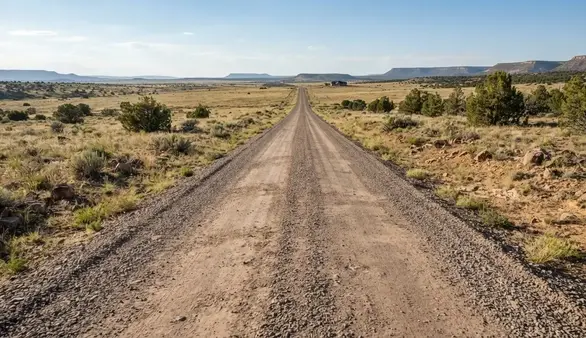
A properly graded private road can provide dependable access while working with the property's terrain, drainage, and long-term development needs.
Ready to Build or Improve Your Apache County Driveway?
Create reliable access to your rural Arizona property with professional driveway and private road grading designed around your terrain, drainage, soil conditions, and intended use. Whether you need a new driveway to reach a future homesite, an existing ranch road improved, a rough access route graded, drainage corrected, or road base and gravel installed, we plan the access route around the realities of your Apache County property. Contact Apache County Land Services to discuss your driveway or private road project and receive a detailed estimate based on the actual site conditions, earthwork, access requirements, and finished road specifications.
Call (928) 543-6447